
Wheel Bearing Maintenance Schedule: Inspection Guide
A wheel bearing should not be replaced at an invented universal mileage. Maintenance starts by identifying whether the vehicle uses a sealed hub, a pressed-in sealed bearing or a serviceable wheel end, then following the vehicle maker’s schedule and escalating documented warning signs.
What is the correct wheel bearing maintenance schedule?
Use the vehicle manufacturer’s current interval when one is specified. For sealed hubs, attach condition checks to tire, brake, suspension and impact-related service and investigate noise, play, heat, leakage or ABS symptoms promptly. For serviceable wheel ends, follow the exact lubrication, seal, adjustment and endplay procedure for that design. Duty and exposure can justify shorter inspections, but there is no safe one-size-fits-all replacement mileage.
Why there is no universal wheel-bearing replacement interval
Wheel-bearing maintenance depends on construction and duty. Many modern passenger vehicles use sealed, unitized hub bearings that are not opened, cleaned or re-greased during routine service. Older or serviceable tapered-roller arrangements, trailers and some commercial wheel ends have defined lubrication, inspection and adjustment procedures. Applying the schedule for one design to another can cause damage or hide a real problem.
The vehicle maker’s current maintenance and service information is the controlling reference. It can specify inspection events, lubricant, adjustment method, one-time fasteners and exact torque sequences. A bearing supplier’s general guide is useful for recognizing conditions and organizing records, but it does not replace the vehicle-specific procedure. If a schedule does not list routine bearing replacement, that does not mean the wheel end should be ignored; it means condition checks and related service events become the practical triggers.
Maintenance rule: identify the wheel-end design first. Inspect sealed hubs by condition and at relevant service events; service adjustable bearings only with the specified lubricant, setting method and replacement parts.
Identify the wheel-end design before planning maintenance
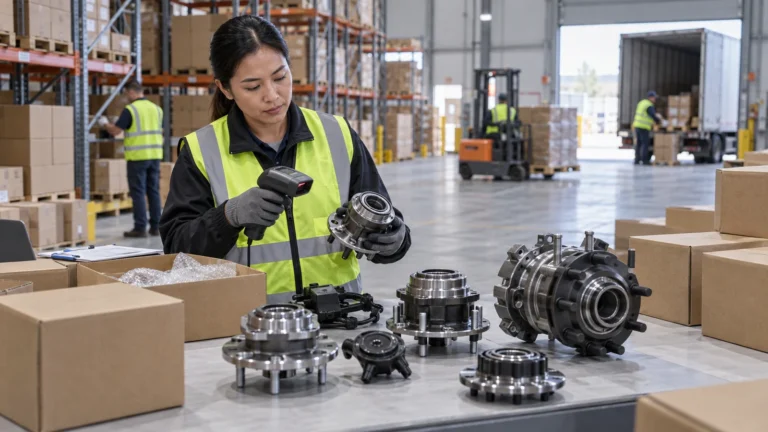
A sealed hub assembly commonly integrates the bearing, seals and one or more mounting functions. It may include wheel studs, a splined center, a magnetic encoder, sensor or cable. The internal lubricant and bearing setting are established during manufacture. Opening the unit or forcing grease past its seals is not routine maintenance and can contaminate or damage it.
A pressed-in sealed bearing may be separate from the hub but is still normally replaced rather than re-lubricated. Its service risk is installation: load must pass through the supported ring, and retaining features, encoder orientation and mating surfaces must follow the procedure. A serviceable tapered-roller wheel end uses separate cups and cones, lubricant, a seal, adjustment hardware and sometimes a hub cap. It requires a design-specific process for cleaning, inspection, packing or filling, setting and endplay verification.
Record the construction in the fleet or workshop system rather than using a generic “wheel bearing” task. Useful fields include axle position, driven status, hub or bearing type, serviceable or sealed, ABS configuration, lubricant type where applicable, fastener policy and the source and revision of the procedure.
Build the schedule around events, conditions and evidence
A practical plan combines three layers: the manufacturer’s time or distance interval where one exists, inspections attached to related work, and condition-triggered escalation. Related work includes tire rotation or replacement, brake inspection, suspension or alignment work, accident repair and any job that exposes the hub. The technician is already close to the wheel end, so a documented check adds less labor than a separate visit.
Operating conditions can justify shorter inspection intervals without inventing a universal mileage. Deep-water exposure, frequent pressure washing at the seal area, road salt, dust, overloading, curb or pothole impacts, towing, repeated high-temperature braking, long storage and rough-road duty all change risk. The responsible maintenance owner should document why an interval was shortened and which observation will return it to normal.
| Trigger | Minimum wheel-end check | Escalate when | Record |
|---|---|---|---|
| Routine tire or brake service | Noise history, visual condition, rotation feel and play using the approved method | Roughness, looseness, heat, seal damage or warning lights are present | Date, mileage/hours, axle position and observations |
| Impact, curb strike or collision | Wheel, tire, hub, knuckle, fasteners, runout and alignment-related inspection | Geometry, rotation, sensor or mounting evidence is abnormal | Incident, affected corner and measurements |
| Water, mud, salt or wash exposure | Seal area, corrosion, lubricant leakage and sensor/connector condition | Contamination, damaged sealing or electrical faults are suspected | Exposure and follow-up decision |
| Complaint of hum or vibration | Controlled road-condition review followed by tire, brake, driveline and hub checks | The source cannot be isolated safely or bearing damage is indicated | Speed, load, turn direction and surface conditions |
| Serviceable wheel-end interval | Follow the exact cleaning, inspection, lubrication, seal and adjustment procedure | Damage, incorrect endplay or lubricant contamination is found | Parts, lubricant, settings, readings and technician |
A repeatable condition-inspection workflow
Start with the driver or customer report
Ask when the symptom occurs: road speed or engine speed, acceleration or coast, straight travel or turning, braking, a particular road surface, temperature or load. “Wheel bearing noise” is a hypothesis, not an observation. Tire tread, alignment, brakes, CV joints, differential components and loose trim can create similar sounds. Timken’s public hub-check guide specifically recommends verifying road surface, tread design, wear pattern, alignment and suspension conditions before blaming the hub.
Perform a visual inspection
Look for impact damage, missing or loose fasteners, rust tracks, grease leakage, damaged seals, a displaced sensor lead, connector corrosion and debris around a magnetic encoder or tone ring. Check the wheel and tire for irregular wear and damage. Heat discoloration or a strong temperature difference needs investigation, but temperature should be measured consistently and interpreted with brake use and ambient conditions in mind.
Check rotation and play with the approved setup
Support the vehicle safely at designated points and follow the service information before rotating or rocking a wheel. Brake drag, driveline connection and suspension joints can affect the feel. Timken’s light-vehicle check describes hand rotation and checks at the 3-and-9 and 12-and-6 positions, followed by direct hub inspection after wheel and brake components are removed. Roughness, looseness or noise at the hub can indicate damage, but the procedure and acceptance limit must come from the vehicle application.
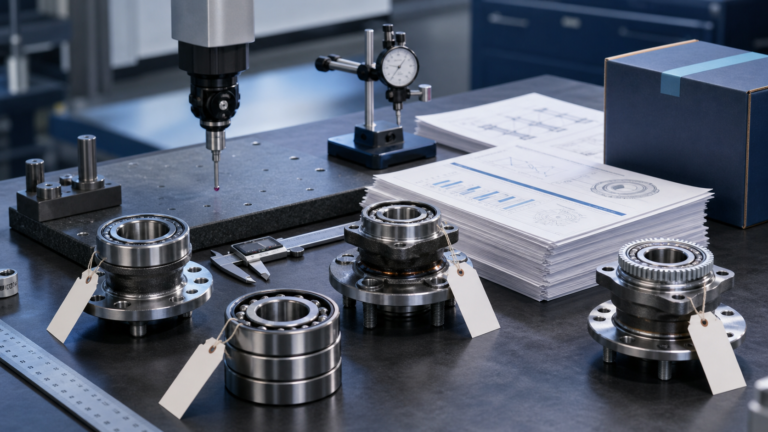
A dial indicator can turn a subjective observation into a recorded measurement when the service procedure specifies fixture location, direction and limit. Do not publish or reuse one endplay limit across unrelated vehicles. Commercial adjustable, pre-adjusted and unitized systems use different settings, and a sealed passenger-car hub may have no field adjustment.
Maintaining serviceable bearings without introducing damage
For a serviceable wheel end, cleanliness begins before disassembly. Protect exposed components from dirt, identify the arrangement and keep removed parts tied to their position. Inspect rollers, races, cage, seal surfaces and lubricant for scoring, pitting, flaking, corrosion, heat evidence, contamination and abnormal wear. ISO 15243 supplies standardized terms for bearing damage modes, but it does not determine root cause from appearance alone.
Replace cups and cones as the matched set specified by the manufacturer. Do not mix worn and new rolling-contact parts to save material. Use the approved cleaning and inspection process; spinning an unlubricated bearing with compressed air is unsafe and can damage it. When repacking is allowed, work the specified grease through the roller assembly and control cleanliness. The lubricant type and quantity matter—different greases are not automatically compatible, and excess or insufficient fill can both create problems.
Install a new seal with the correct driver and orientation when the procedure requires it. Protect the seal lip and spindle, and inspect the wear surface. Adjustment must follow the exact tighten-rotate-backoff-lock-and-verify sequence for that wheel end. Timken’s trailer guide illustrates why rotation during seating and measured endplay are separate steps; its numeric values belong to the covered trailer arrangement, not every vehicle.
What maintenance means for a sealed hub assembly
A sealed hub is maintained by preserving its environment and detecting deterioration early. Keep mounting faces clean during brake work, route sensor leads correctly, protect connectors and use specified fasteners and torque sequences. Avoid striking the hub, pressing through the rolling elements or directing aggressive wash pressure at seals and connectors. If the hub is removed, inspect the knuckle bore, axle threads, spline, mating face and brake interfaces before fitting a replacement.
Replacement is appropriate when the manufacturer’s diagnostic criteria are met, not merely because a vehicle reached a generic mileage. Confirm the source of the complaint, then replace a non-serviceable unit if roughness, unacceptable looseness, physical damage, sensor failure attributable to the unit or another specified condition is verified. Do not attempt to hide looseness with extra axle-nut torque; incorrect clamping can damage the bearing and its mating parts.
Warning signs that require prompt inspection
- A growl, hum or rumble that changes with road speed or cornering load.
- Roughness, binding or noise during a correctly isolated hand-rotation check.
- Measured play outside the vehicle maker’s limit, or visible movement at the hub.
- Abnormal wheel-end heat after accounting for brake use and measurement conditions.
- Seal damage, lubricant leakage, water entry, corrosion or contaminated lubricant.
- ABS or stability-control warnings accompanied by verified encoder, sensor or connector evidence.
- Wheel-speed data that is inconsistent with the other wheels after wiring and sensor checks.
- Impact damage, damaged studs, axle threads or a loose clamping fastener.
Do not continue driving a vehicle that has severe looseness, grinding, binding, smoke, a loose wheel, a compromised retaining fastener or another condition that could affect control. Arrange professional inspection or recovery. Remote symptom descriptions cannot establish whether a vehicle is safe to drive.
Use maintenance records to find repeat failures
A useful record identifies vehicle, mileage or hours, axle and side, complaint, operating condition, inspection method, measurements, related tire/brake/suspension observations, replaced part, supplier and lot, procedure revision, torque or setting evidence, and post-repair verification. Photos should show the installed orientation, mating surfaces and returned-part condition before cleaning destroys evidence.
Analyze returns by application and failure observation rather than counting every hub replacement as the same event. A cluster on one side may point to road or duty exposure; a cluster after one service campaign may point to installation or catalog error; scattered high-mileage wear may show a different pattern. Separate confirmed bearing damage from no-fault-found returns so purchasing decisions are based on evidence.
For wholesale programs, link the approved application record to the wheel hub bearing range or wheel hub assembly range. Use the OE-number RFQ guide when a maintenance finding becomes a sourcing request.
Maintenance evidence should improve the next RFQ
When a bearing is replaced, the purchasing record should include the complete OE reference, vehicle model year and market, axle position, drive configuration, ABS or encoder arrangement, connector details, dimensions or photos needed to distinguish candidates, and the observed failure. Do not ask a supplier to confirm fitment from “front bearing” or a photograph of the box.
Ask what is included in the supplied kit and which fasteners are single-use. Confirm packaging protection for seal faces, studs, threads and sensor leads. For recurring fleet demand, request lot traceability and change notification so a new seal, sensor, grease or production source is not introduced silently. The maintenance team’s return observations can then be linked to the actual production lot rather than only to a reseller invoice.
Audit the maintenance program, not only the failed part
A fleet or workshop audit should begin with a sample of completed work orders. Check whether the vehicle and wheel position are identifiable, the wheel-end construction is correct, the procedure source is recorded and measurements include units and acceptance limits. Compare the planned interval with actual completion and ask how overdue work is escalated. A checklist that is always marked “OK” without observations, readings or technician identity does not demonstrate control.
Review lubricant and seal storage for serviceable systems. Containers should remain identified and protected from contamination, with shelf-life and compatibility controlled where required. Tools used to pack, adjust and measure bearings should be clean, suitable and calibrated when measurement affects release. Returned parts should be tagged before cleaning so wear, corrosion, ingress and installation evidence remain connected to the vehicle.
Then compare failures with operating exposure. Segment vehicles by route, load, trailer use, water or salt exposure, brake duty and wheel-end design. If one group shows a higher verified event rate, shorten inspection for that group and document the reason; do not impose the same response on unrelated vehicles. After corrective action, review whether the event rate and no-fault-found replacements changed. This closes the maintenance loop with evidence rather than relying on a fixed mileage copied from another fleet.
Include parts availability in the review without turning inventory age into a replacement rule. Critical vehicles may justify an approved spare, but the spare must retain its identity, corrosion protection and revision status. Recheck long-stored stock before issue and confirm that the application or service bulletin has not changed. A maintenance plan is stronger when the correct part, procedure and tools are available before a condition becomes an unscheduled vehicle-down event.
Review the schedule after any verified failure, operating-duty change or manufacturer service-information update, and record who approved the revision.
Frequently asked questions
At what mileage should wheel bearings be replaced?
There is no responsible universal mileage. Follow the vehicle maker’s schedule and diagnostic limits, identify whether the bearing is sealed or serviceable, and use documented condition and duty as the replacement basis.
Can a sealed wheel hub be greased?
Normally it should not be opened or injected with grease. The internal lubricant and seals are part of the manufactured unit. Follow the product and vehicle instructions; replace a damaged non-serviceable hub rather than attempting an improvised lubrication repair.
Should both sides be replaced together?
Not automatically. The decision depends on the application, confirmed condition, mileage, duty, repair access and fleet policy. Inspect both sides and document the reason. Do not present paired replacement as a universal technical requirement.
Can wheel-bearing noise wait until the next service?
The severity and source cannot be judged from the word “noise.” New wheel-end noise, looseness, heat, grinding or warning indicators deserves prompt professional inspection. Stop using the vehicle when control or wheel retention may be affected.
Primary technical references
- Timken Automotive TechTips — hub checking, symptoms, installation, commercial systems and trailer maintenance resources.
- Timken LV3: Checking a Hub Bearing Assembly — source isolation and hands-on inspection sequence.
- Timken LV12 trailer guide — a design-specific example of inspection, lubrication, adjustment and measurement.
- ISO 15243:2017 — official scope for rolling-bearing damage and failure terminology.
- NHTSA TireWise — related tire condition, alignment and maintenance context.
Need a bearing or hub quotation checked against an OE list?
Send the OE reference, vehicle model and year, axle position, quantity and destination market. Huayuan Bearing will review the available application data before confirming a supply proposal.
Send Your OE ListEditorial responsibility: Published by Huayuan Bearing. Written and technically reviewed by Andy. This guide supports buyer-side screening; it does not replace the vehicle maker’s current parts catalog, service procedure or torque specification.