
Author: Andy

Andy is a technical content editor for Huayuan Bearing. He reviews wheel bearing and wheel hub assembly articles for OE-reference clarity, fitment terminology, product-identification accuracy and B2B sourcing usefulness. Product fitment must still be confirmed against the vehicle specification before ordering.
  • EU 2026/1738 Readiness for Used and Remanufactured Wheel Hub Sales

    First ask qualified EU counsel or the responsible compliance owner to determine whether the organization, vehicle category, part, transaction and date fall within each provision. The regulation entered into force in 2026, while provisions cited for trade in used, remanufactured or refurbished parts apply from later dates, including 1 September 2029 for Article 31. Build a traceable matrix linking applicable articles to roles, part condition, authorized-treatment documentation where relevant, labels, function and performance evidence, contracts, online listings and record retention. Preserve non-applicable and not-yet-applicable decisions with sources and dates. Do not advertise compliance, remanufacturability or market access until the authorized owner approves evidence for the exact case.

  • Remanufactured Wheel Hub Labeling: Condition and Rebuilder Disclosure

    Identify the market, customer type, seller role and applicable legal or contractual source before approving wording. Use one controlled condition term that accurately reflects prior use and the process performed; do not substitute new, recycled, repaired, rebuilt, remanufactured or refurbished without review. Where required, disclose the rebuilder separately from the original manufacturer and avoid logos or wording that implies unauthorized origin. Link the label to the exact part, lot or serial traceability and warranty record. Test every physical and digital channel for consistent wording, language, prominence and effectivity. Route legal interpretation to qualified counsel and correct all destinations when the status or text changes.

  • Remanufactured Wheel Hub End-of-Line Test Evidence

    Define the required functions and safety-relevant characteristics for the exact authorized design, then map each one to a validated test or to another controlled inspection. Preserve equipment identity and status, software or recipe version, setup verification, unit or lot identity, raw result, acceptance source, operator or system, timestamp and disposition. Include sensor function where present, but use product- and application-specific requirements rather than universal values. Challenge failure detection and bypass controls before production approval. Quarantine failed or incomplete records, investigate rework and retest separately, and release only when every required characteristic has a valid disposition.

  • Wheel Hub Reman Process Validation: Work Instructions and Change Control

    Begin with an engineering-approved, serviceable product family and define the incoming core ranges the process is allowed to accept. Map each operation, equipment item, fixture, material, work instruction, inspection and hold point. Run documented challenge builds across relevant core conditions and approved variants, preserving actual parameters, measurements, failures, rework and dispositions. Evaluate whether controls prevent or detect the identified failure modes; do not replace this review with a single yield or pass-rate claim. Approve the exact configuration tested, train authorized personnel, and require change review and revalidation when the product, core source, component, tool, method, software or acceptance rule changes.

  • Wheel Hub Reman Cleaning and Dimensional Requalification

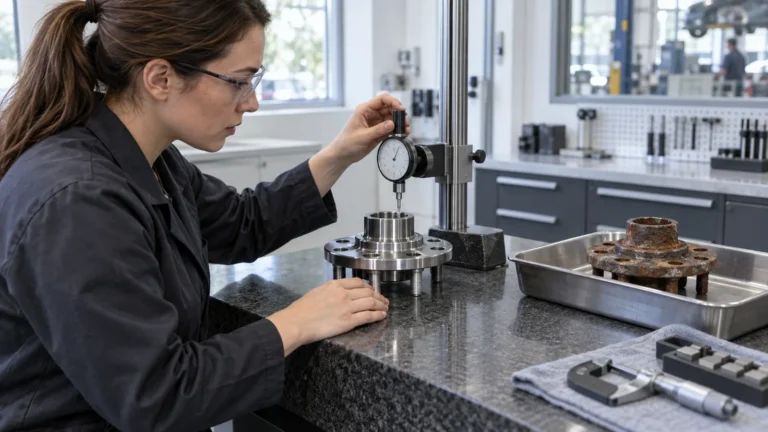
    Confirm that the exact design has an approved remanufacturing route before specifying any cleaning or measurement. Freeze allowed cleaning media, exposure, masking, handling and post-cleaning preservation. Inspect for cracks, corrosion, fretting, impact, unauthorized machining and material loss before dimensional acceptance. Measure only defined characteristics against the controlled drawing or engineering criteria, using stated datums, calibrated equipment and a documented decision rule. Preserve raw results and photographs, separate cosmetic observations from functional characteristics, and hold parts near limits or affected by uncertain damage for qualified engineering review. Never infer internal bearing condition from a cleaned exterior.

  • Remanufactured Wheel Hub BOM: Reused, Repaired and New Components

    Start with an engineering-approved product structure for the exact serviceable design. For every component, define whether it may be retained, inspected, repaired, replaced with new material or rejected, and name the evidence required for that status. Link retained parts to the parent core, new parts to supplier and lot records, and repaired parts to the authorized operation and inspection result. Control alternatives, effectivity and substitutions through formal approval. Reconcile the as-built record with the released unit and its label. If a unitized hub cannot be opened under authoritative instructions, do not create a fictional internal BOM that suggests otherwise.

  • Wheel Hub Core Traceability: Custody and Donor Identity

    Assign a stable core or controlled-container identity at the earliest reliable custody point and link it to the return authorization, sender, receipt, product-family decision and available donor evidence. Record every custody and status change, including quarantine, inspection, dismantling only when authorized, component disposition, processing, testing and final release or rejection. Distinguish verified donor facts from seller statements and unknowns. Reconcile quantities at each split, merge and scrap event. Preserve the relationship between the core, any retained component and the released product without claiming they share a one-to-one identity unless the process actually proves it.

  • Wheel Hub Core Acceptance: Identification, Damage and Quarantine

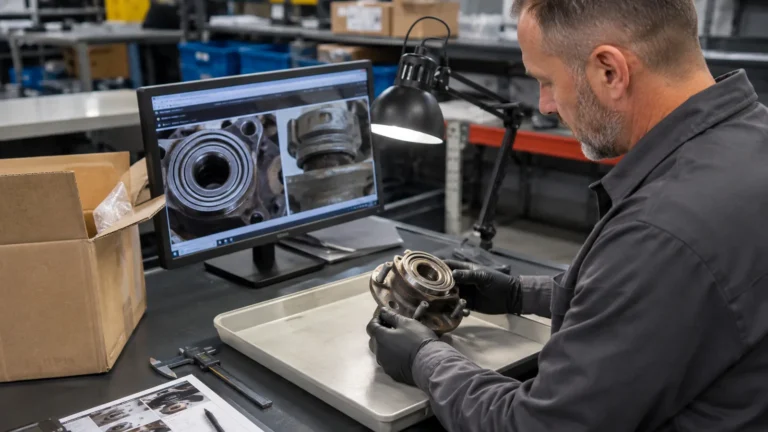
    Define the eligible product families and technical serviceability decision before accepting returns. At receipt, identify the core against controlled references, record its source and custody, inspect packaging and condition, and classify visible damage, missing features, corrosion, contamination and evidence of prior unauthorized work. Do not use appearance as proof of internal suitability. Place ambiguous, mixed, unsafe or unsupported cores in a physically and digitally controlled quarantine status. Grade only against documented program rules, retain photographs and identifiers, and route each core to accept, conditional review, reject or regulated disposal. Keep commercial core-credit decisions separate from technical eligibility.

  • Unitized Wheel Hub Remanufacturing: Serviceability Decision Gate

    Do not assume so. Identify the exact hub generation and product design, then follow the vehicle, hub or bearing manufacturer’s authoritative instructions and applicable engineering controls. Timken warns not to disassemble and reassemble unitized wheel-end hubs, and SKF describes hub-bearing products that are sealed for life. If the proposed work conflicts with authoritative restrictions, or if the supplier cannot show a product-specific engineering route, treat the assembly as non-serviceable for that program. A sustainability goal, visual inspection or successful dismantling trial does not establish safety, durability or fitment. Record the technical authority, decision owner and disposition for each product family.

  • Remanufactured Wheel Hub Sourcing: Claim and Evidence Review

    Define the offered condition in the destination market, identify the exact part and donor or core boundary, and confirm that the design has an approved technical route for the proposed work. Unitized hub assemblies require special caution because manufacturer guidance may prohibit disassembly and reassembly. Request the incoming-core rules, controlled process, replaced and reused component record, dimensional and functional release evidence, traceability, labeling, warranty terms and change controls. Compare those records with the buyer’s application and OE evidence, but do not infer fitment or life from appearance. Hold the RFQ when the condition term, product identity, serviceability basis or release evidence is unresolved.

  • AI Provider Procurement for Wheel Hub Data: Contract and Exit Review

    Describe the intended workflow, users, decisions and prohibited uses before comparing providers. Identify every data class submitted or retrieved, including catalogs, fitment records, quotations, supplier documents, warranty files and personal information. Clarify retention, training use, subprocessors, location, access, security, incident notice and deletion evidence with qualified legal, privacy and security owners. Require enough service and version information to evaluate the actual configuration, plus notice and re-test rights for material changes. Define ownership and export of prompts, outputs, evaluation records and corrections; then test suspension, export, termination, deletion and manual fallback before dependency becomes difficult to unwind.

  • AI Model and Data Change Control for Wheel Hub Catalog Workflows

    Inventory the complete configuration that affects output: provider and model identifier, service date, system instructions, prompt templates, retrieval sources, catalog and fitment snapshots, preprocessing, thresholds, business rules and connected channels. Classify proposed changes by the decisions and data they can affect. Re-run a controlled regression set containing ordinary, ambiguous and high-consequence cases, compare error categories and investigate unexpected differences. Approve the exact configuration and deployment window, monitor live exceptions, and preserve the prior version, data and operating instructions needed for rollback. Provider changes that cannot be reproduced still require documented impact review and contingency.

  • AI Wheel Hub RFQ Comparison: Normalization and Approval Controls

    Lock the RFQ baseline and preserve every supplier’s original quotation. Extract each field with a citation to the exact page, table or message, then normalize currency date, commercial unit, pack quantity, Incoterm and named place, tooling, samples, documents, payment terms, validity and exclusions without inventing equivalence. Keep missing information visible and ask suppliers to clarify rather than filling gaps. Review technical fitment and quality evidence separately from price. Let the system present scenarios and variances, not an unexplained winner. A designated buyer should approve the comparison, record sensitivity and exceptions, and retain the final award rationale.

  • AI Supplier Questionnaire Analysis for Wheel Hub Procurement

    Freeze the questionnaire version, supplier identity, scope and original response before analysis. Define whether AI may classify completeness, summarize evidence, map answers to buyer requirements or suggest follow-up questions. Require citations back to the exact answer and attachment, label absent or ambiguous information instead of inferring it, and prohibit automatic supplier ratings or approvals. A qualified buyer, quality, technical, legal or security owner should verify consequential claims in their own domain, record exceptions and request clarifications. Preserve the prompt, model/service version, output, reviewer changes and final decision so later updates do not erase the audit trail.

  • AI Wheel Hub Warranty Triage: Human Review and Feedback Evidence

    Limit the system to a defined task such as routing, completeness checks, similarity search or priority suggestions. Preserve the claimant’s original text, images, installation and vehicle data, product and lot identity, timeline and prior handling. Test the tool on representative approved claims, including incomplete and conflicting cases, and review false escalation, missed severity and unequal treatment across channels. Present reasons and uncertainty to a qualified reviewer, who makes the disposition under the warranty terms. Separate feedback labels from unverified allegations, protect personal data, and provide a documented re-review route when new evidence arrives.

  • AI Wheel Hub Demand Forecasts: Override and Purchase-Decision Control

    Define the forecast level, horizon and decision it supports, then inventory the sales, stock, returns, supersession, promotion and external data used. Separate genuine demand from stockouts, one-time orders, channel transfers and catalog corrections. Evaluate forecasts by SKU group and decision cost, not only one average statistic. Present uncertainty and alternate scenarios to the planner, require documented overrides, and keep purchase-order approval independent from the model. Monitor bias, repeated stockouts, excess inventory and data drift; when a model or input changes, re-test affected segments and preserve a safe manual fallback.

  • AI Wheel Hub Image Classification: Validation and Exception Review

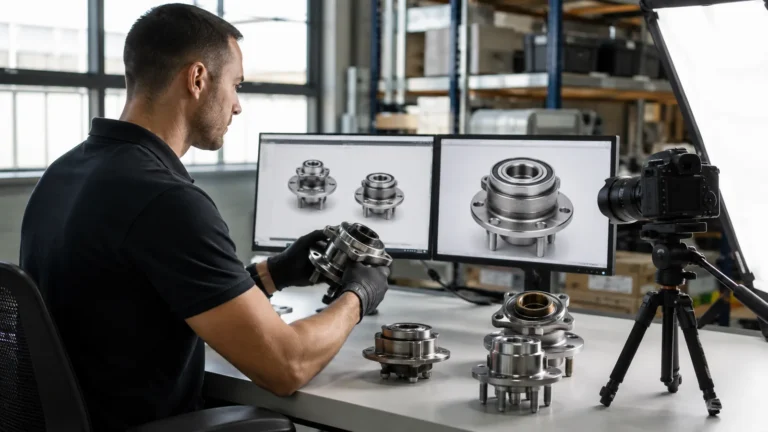
    Define whether the system is identifying product family, view angle, asset quality, possible mismatch or a different task. Build a labeled dataset from controlled wheel hub records, keeping duplicate shots and near-identical variants from leaking across training and acceptance sets. Include difficult lighting, packaging, occlusion, mirrored views, similar flanges and products with different encoder or spline details. Review false accepts and false rejects separately, require human escalation for uncertain or consequential cases, and bind release to the tested model, preprocessing and camera workflow. Never convert a visual label into fitment approval unless independent authoritative data confirms it.

  • AI-Generated Wheel Hub Catalog Copy: Source and Approval Control

    Start with an approved source packet for the exact SKU or product family, including controlled descriptions, dimensions, application data, packaging facts and claim restrictions. Tell the system to leave unsupported fields blank and prohibit invented fitment, torque, certification, material, warranty, origin, MOQ, lead time and capability statements. Preserve the prompt, source set and output version. A catalog reviewer should trace every factual sentence to a source, validate structured fields separately, inspect title and keyword use for clarity rather than stuffing, and approve channel-specific copy. When a fact changes, correct the authoritative record and every distributed version, not only the generated paragraph.

  • AI Wheel Hub Fitment Recommendations: Evaluation Before Catalog Release

    It must show performance on a representative, source-controlled test set that reflects the buyer’s actual catalogs, vehicle regions, years, positions and edge cases. Define the intended use and unacceptable outcomes before testing. Keep training, tuning and acceptance records separated where possible, label each expected result from authoritative application evidence, and measure false recommendations, missed valid options, unsupported answers and abstentions. Review consequential errors by category rather than relying on one average score. Release only the tested model, data and configuration; monitor live exceptions and retain a rollback path when the system or catalog changes.

  • AI-Assisted Wheel Hub Parts Identification: Human Verification Gate

    Treat the model output as a candidate list, not as an approved part number. Preserve the source photograph or measurement record, define what the tool was asked to do, and record the model or service version used. A qualified catalog reviewer should compare OE references, application records, dimensions, flange pattern, mounting position, drive configuration and encoder requirements against authoritative data. Reject low-quality inputs, contradictory evidence and candidates that cannot be separated by the available facts. Release a cross-reference only through the buyer’s normal approval route, with the source, reviewer, date, limitations and later correction path retained.

  • Wheel Hub Cybersecurity Contract Schedule: Evidence, Exceptions and Exit

    Identify the parties, services, systems, data classes and integrations covered, then assign responsibilities between buyer, supplier and service providers. Translate risk decisions into clear requirements for access, protection, logging, vulnerability and change communication, incident coordination, recovery, evidence and record retention. State how evidence is requested and protected, how exceptions are approved and time-bound, how subcontractors and material service changes are handled, and what happens at suspension or exit. NIST CSF 2.0 outcomes and informative references can help organize requirements, but they are not a certification clause and do not replace qualified legal review or jurisdiction-specific duties.

  • Wheel Hub Supplier Remote Support Access: Approval and Session Evidence

    Approve one support case before access begins, naming the affected system, task, data sensitivity, buyer owner and supplier technician. Use only an authorized remote-access method and a named identity with the minimum permissions and time window. Verify the technician through a trusted contact path, monitor or record the session according to policy, capture commands or changes at a useful level, and stop access if the scope expands. Afterward, test the intended result, review logs for unexpected activity, remove temporary software, accounts, tokens and sessions, and retain closure evidence. Never publish addresses, credentials, network topology or session recordings in an SEO article.

  • Wheel Hub Bank-Detail Change Verification Against Business Email Compromise

    Treat every payment-account change as high risk. Preserve the original request without using its links or contact details as the verification source, place the change and affected payment on hold, and contact the supplier through a previously approved independent channel. Require dual review across procurement or vendor management and finance, confirm the legal entity and beneficiary evidence, record what was verified and by whom, and allow the change only in the approved supplier-master workflow. Recheck the first payment under the organization’s policy and maintain an escalation route for conflicts. Cybersecurity guidance supports phishing awareness, MFA and incident reporting, but it does not replace banking, legal, sanctions or local payment requirements.

  • Wheel Hub Master Data Integrity: Approval, Detection and Recovery Evidence

    Identify the authoritative source for each critical field and preserve its revision, owner and evidence link. Route changes through a request that shows the prior value, proposed value, reason, affected SKUs and channels, reviewer and effective date. Use technical integrity signals such as file hashes, version control, database logs or reconciled exports where appropriate, but do not treat any one signal as proof that fitment or product content is correct. Monitor unusual or mass changes, investigate against source evidence, contain affected outputs, restore only a known-good state, and reconcile downstream catalogs and open transactions before release.

  • Wheel Hub Third-Party SaaS Register for Catalog and Order Data

    List each service that stores, transforms, transmits or authenticates catalog, fitment, quotation, order, payment-support or shipment data. Record the business owner, technical owner, provider, contracted entity, data classes, user and machine access, integrations, upstream and downstream dependencies, backup/export capability, monitoring, incident contact, renewal and exit requirements. Validate actual use rather than relying only on procurement records, and distinguish the provider’s responsibilities from the customer’s configuration duties. Review the register after integration, ownership, contract or service changes and before termination so data export, access removal and evidence retention are planned.