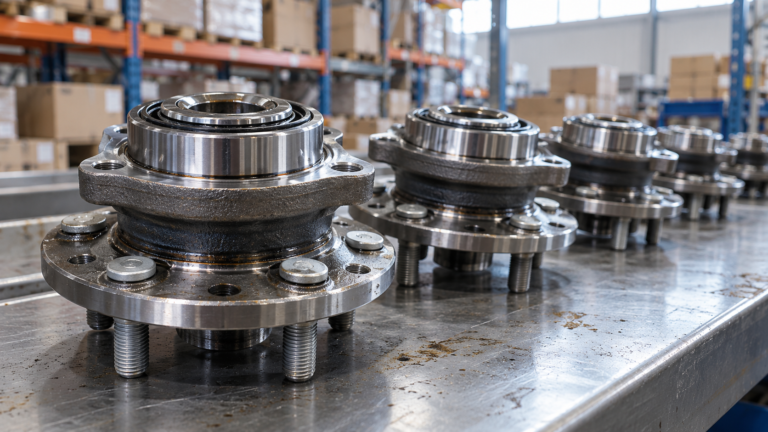

Unitized Wheel Hub Remanufacturing: Serviceability Decision Gate
Circular-economy interest does not make every wheel-end design safely serviceable. A unitized hub decision must distinguish replaceable systems from pre-set, pre-greased and pre-sealed assemblies before any core program is approved.
Can a unitized wheel hub assembly be remanufactured?
Do not assume so. Identify the exact hub generation and product design, then follow the vehicle, hub or bearing manufacturer’s authoritative instructions and applicable engineering controls. Timken warns not to disassemble and reassemble unitized wheel-end hubs, and SKF describes hub-bearing products that are sealed for life. If the proposed work conflicts with authoritative restrictions, or if the supplier cannot show a product-specific engineering route, treat the assembly as non-serviceable for that program. A sustainability goal, visual inspection or successful dismantling trial does not establish safety, durability or fitment. Record the technical authority, decision owner and disposition for each product family.
Classify the wheel-end design
Separate serviceable components from unitized assemblies before planning work. In a unitized wheel hub remanufacturing serviceability workflow, the practical risk is similar external shapes can hide different preload, sealing and sensor architectures. Treat the task as a release gate with a named owner, an evidence date and a defined output. The output may be approved, rejected or held; all three are useful when the reason is visible.
The starting packet contains generation, bearing arrangement, flange integration, sealing, sensor, fasteners and manufacturer designation. Reviewers should preserve what the customer, warehouse or supplier actually sent before they use controlled product literature and drawings rather than photographs alone. Separating received data from interpreted data prevents a later correction from rewriting history and allows two plausible candidates to stay separate while evidence is gathered.
Decision rule and evidence owner
A durable entry will retain the classify record, evidence source and date, reviewer, decision scope and unresolved exceptions. It should be readable outside an email thread and portable into the product master, purchase order or claim system. The record is not extra administration: it is the mechanism that keeps sales copy, receiving checks and supplier communication attached to the same configuration.
Example: a Gen 3 assembly is treated like a loose tapered-roller hub. Pause when the design category remains ambiguous. A pause is cheaper than releasing inventory with a convenient assumption. State which evidence would close the issue, who must provide it and which downstream records are blocked until that evidence is accepted.
Find authoritative service instructions
Base the decision on product-specific technical direction. In a unitized wheel hub remanufacturing serviceability workflow, the practical risk is generic reman methods can conflict with warnings for tightly fitted unitized components. Treat the task as a release gate with a named owner, an evidence date and a defined output. The output may be approved, rejected or held; all three are useful when the reason is visible.
The starting packet contains vehicle manual, component bulletin, safety warning, engineering approval, revision and application scope. Reviewers should preserve what the customer, warehouse or supplier actually sent before they compare the proposed operation line by line with authoritative restrictions. Separating received data from interpreted data prevents a later correction from rewriting history and allows two plausible candidates to stay separate while evidence is gathered.
A workable release condition
A durable entry will retain the authority record, evidence source and date, reviewer, decision scope and unresolved exceptions. It should be readable outside an email thread and portable into the product master, purchase order or claim system. The record is not extra administration: it is the mechanism that keeps sales copy, receiving checks and supplier communication attached to the same configuration.
Example: a work instruction permits pressing apart an assembly that its maker calls non-serviceable. Pause when no current technical authority supports the route. A pause is cheaper than releasing inventory with a convenient assumption. State which evidence would close the issue, who must provide it and which downstream records are blocked until that evidence is accepted.
Map disassembly and reassembly risks
Make irreversible or hidden damage visible before approval. In a unitized wheel hub remanufacturing serviceability workflow, the practical risk is press loads, seal disturbance, sensor damage and lost bearing setting may not be apparent after cleaning. Treat the task as a release gate with a named owner, an evidence date and a defined output. The output may be approved, rejected or held; all three are useful when the reason is visible.
The starting packet contains load path, fixtures, retained features, replacement parts, inspection access, sensor handling and rejection points. Reviewers should preserve what the customer, warehouse or supplier actually sent before they review failure modes with qualified engineering and quality owners. Separating received data from interpreted data prevents a later correction from rewriting history and allows two plausible candidates to stay separate while evidence is gathered.
How to document the exception
A durable entry will retain the risk record, evidence source and date, reviewer, decision scope and unresolved exceptions. It should be readable outside an email thread and portable into the product master, purchase order or claim system. The record is not extra administration: it is the mechanism that keeps sales copy, receiving checks and supplier communication attached to the same configuration.
Example: a puller loads through the rolling elements while removing the flange. Pause when a consequential failure mode has no detection or prevention control. A pause is cheaper than releasing inventory with a convenient assumption. State which evidence would close the issue, who must provide it and which downstream records are blocked until that evidence is accepted.
Control any authorized feasibility trial
Keep exploratory work separate from saleable production. In a unitized wheel hub remanufacturing serviceability workflow, the practical risk is a single rotating sample can be mistaken for validated production. Treat the task as a release gate with a named owner, an evidence date and a defined output. The output may be approved, rejected or held; all three are useful when the reason is visible.
The starting packet contains sample identity, authorization, process parameters, destructive checks, functional tests, findings and disposition. Reviewers should preserve what the customer, warehouse or supplier actually sent before they label trials as non-saleable unless a defined approval route says otherwise. Separating received data from interpreted data prevents a later correction from rewriting history and allows two plausible candidates to stay separate while evidence is gathered.
A case that exposes the hidden risk
A durable entry will retain the trial record, evidence source and date, reviewer, decision scope and unresolved exceptions. It should be readable outside an email thread and portable into the product master, purchase order or claim system. The record is not extra administration: it is the mechanism that keeps sales copy, receiving checks and supplier communication attached to the same configuration.
Example: a prototype is returned to stock after an informal bench spin. Pause when trial status or disposition is unclear. A pause is cheaper than releasing inventory with a convenient assumption. State which evidence would close the issue, who must provide it and which downstream records are blocked until that evidence is accepted.
Record the family-level disposition
Prevent the question from being reopened without new evidence. In a unitized wheel hub remanufacturing serviceability workflow, the practical risk is commercial pressure can override an undocumented technical rejection. Treat the task as a release gate with a named owner, an evidence date and a defined output. The output may be approved, rejected or held; all three are useful when the reason is visible.
The starting packet contains approved, prohibited or further-study status, scope, rationale, owner, date, review trigger and affected records. Reviewers should preserve what the customer, warehouse or supplier actually sent before they publish the decision to sourcing, catalog, receiving and warranty roles. Separating received data from interpreted data prevents a later correction from rewriting history and allows two plausible candidates to stay separate while evidence is gathered.
What a second reviewer should see
A durable entry will retain the decision record, evidence source and date, reviewer, decision scope and unresolved exceptions. It should be readable outside an email thread and portable into the product master, purchase order or claim system. The record is not extra administration: it is the mechanism that keeps sales copy, receiving checks and supplier communication attached to the same configuration.
Example: sales quotes reman units after engineering rejected the design. Pause when the disposition is absent from downstream controls. A pause is cheaper than releasing inventory with a convenient assumption. State which evidence would close the issue, who must provide it and which downstream records are blocked until that evidence is accepted.
Unitized hub serviceability decision register
Use this receiver-side register to separate file presence, technical validation, open exceptions and authorized release.
| Acceptance control | Evidence to retain | Hold trigger |
|---|---|---|
| Classify the wheel-end design | generation, bearing arrangement, flange integration, sealing, sensor, fasteners and manufacturer designation | the design category remains ambiguous |
| Find authoritative service instructions | vehicle manual, component bulletin, safety warning, engineering approval, revision and application scope | no current technical authority supports the route |
| Map disassembly and reassembly risks | load path, fixtures, retained features, replacement parts, inspection access, sensor handling and rejection points | a consequential failure mode has no detection or prevention control |
| Control any authorized feasibility trial | sample identity, authorization, process parameters, destructive checks, functional tests, findings and disposition | trial status or disposition is unclear |
| Record the family-level disposition | approved, prohibited or further-study status, scope, rationale, owner, date, review trigger and affected records | the disposition is absent from downstream controls |
Circularity never overrides a safety warning
Timken's installation guidance expressly warns against disassembling and reassembling unitized wheel-end hubs and bearing assemblies.
SKF describes hub-bearing kits with sealed-for-life designs and application-specific grease, reinforcing the need to identify the exact architecture.
Industry remanufacturing definitions describe a process and output expectation; they do not make a prohibited or unsupported design serviceable.
Claim boundary: No unitized hub is declared remanufacturable, repairable, safe, durable or approved for JNHJDP; manufacturer and vehicle instructions control the technical decision.
Additional review scenarios for unitized wheel hub remanufacturing serviceability
Review scenario 1 for unitized wheel hub remanufacturing serviceability: Start from generation, bearing arrangement, flange integration, sealing, sensor, fasteners and manufacturer designation. The reviewer should use controlled product literature and drawings rather than photographs alone. An independent checker then tests the conclusion against the stated decision boundary and confirms that the record will retain the classify record, evidence source and date, reviewer, decision scope and unresolved exceptions. If the design category remains ambiguous, keep the affected line on hold, name the missing evidence and prevent the provisional interpretation from entering a quote, catalog, purchase order or customer promise. The case can move again when the evidence owner closes that exact field; a general assurance, familiar photograph or previous order is not a substitute for the missing source.
Review scenario 2 for unitized wheel hub remanufacturing serviceability: Start from vehicle manual, component bulletin, safety warning, engineering approval, revision and application scope. The reviewer should compare the proposed operation line by line with authoritative restrictions. An independent checker then tests the conclusion against the stated decision boundary and confirms that the record will retain the authority record, evidence source and date, reviewer, decision scope and unresolved exceptions. If no current technical authority supports the route, keep the affected line on hold, name the missing evidence and prevent the provisional interpretation from entering a quote, catalog, purchase order or customer promise. The case can move again when the evidence owner closes that exact field; a general assurance, familiar photograph or previous order is not a substitute for the missing source.
Review scenario 3 for unitized wheel hub remanufacturing serviceability: Start from load path, fixtures, retained features, replacement parts, inspection access, sensor handling and rejection points. The reviewer should review failure modes with qualified engineering and quality owners. An independent checker then tests the conclusion against the stated decision boundary and confirms that the record will retain the risk record, evidence source and date, reviewer, decision scope and unresolved exceptions. If a consequential failure mode has no detection or prevention control, keep the affected line on hold, name the missing evidence and prevent the provisional interpretation from entering a quote, catalog, purchase order or customer promise. The case can move again when the evidence owner closes that exact field; a general assurance, familiar photograph or previous order is not a substitute for the missing source.
Review scenario 4 for unitized wheel hub remanufacturing serviceability: Start from sample identity, authorization, process parameters, destructive checks, functional tests, findings and disposition. The reviewer should label trials as non-saleable unless a defined approval route says otherwise. An independent checker then tests the conclusion against the stated decision boundary and confirms that the record will retain the trial record, evidence source and date, reviewer, decision scope and unresolved exceptions. If trial status or disposition is unclear, keep the affected line on hold, name the missing evidence and prevent the provisional interpretation from entering a quote, catalog, purchase order or customer promise. The case can move again when the evidence owner closes that exact field; a general assurance, familiar photograph or previous order is not a substitute for the missing source.
Review scenario 5 for unitized wheel hub remanufacturing serviceability: Start from approved, prohibited or further-study status, scope, rationale, owner, date, review trigger and affected records. The reviewer should publish the decision to sourcing, catalog, receiving and warranty roles. An independent checker then tests the conclusion against the stated decision boundary and confirms that the record will retain the decision record, evidence source and date, reviewer, decision scope and unresolved exceptions. If the disposition is absent from downstream controls, keep the affected line on hold, name the missing evidence and prevent the provisional interpretation from entering a quote, catalog, purchase order or customer promise. The case can move again when the evidence owner closes that exact field; a general assurance, familiar photograph or previous order is not a substitute for the missing source.
Related wheel hub buyer resources
- Wheel Hub Assembly catalog
- Wheel Hub Bearing catalog
- wheel bearing versus wheel hub assembly guide
- ABS encoder identification guide
- wheel hub OE number and RFQ guide
- fitment verification workflow
- sample approval workflow
- kit contents and BOM verification
- supplier evaluation evidence guide
- export packaging checklist
- MOQ and lead-time planning guide
- incoming inspection checklist
- About Jinan Huayuan Auto Bearing
Sources, dates and claim boundaries
- Timken Hub Unit Bearing Installation Tech Series — official safety and installation guidance warning against disassembling and reassembling unitized wheel-end hubs
- Timken automotive TechTips training resources — official collection covering hub inspection, installation, damage analysis, bearing setting, seals and lubrication
- SKF wheel hub bearings and kits — official description of wheel-hub generations, sealed-for-life designs, ABS features, kits and fitting resources
- Remanufacturing Industries Council Reman 101 — industry council explanation of its consensus remanufacturing definition and process standard
Technical review: Jinan Huayuan Auto Bearing editorial review for source fidelity, procurement-data consistency and unsupported-claim removal. This review does not replace an OE catalog, vehicle service procedure, legal or customs advice, a customer-approved drawing, or mutually agreed commercial and inspection terms.
Corrections: Send the page URL and supporting evidence through the contact page. Material corrections are reviewed, linked records are rechecked and the updated date is changed when warranted.