
EV Wheel Hub Bearings: Fitment and Buyer Technical Guide
An electric vehicle wheel hub bearing is not selected by an EV label alone. A defensible RFQ connects the OE reference and exact vehicle configuration to axle position, driven status, flange and spline geometry, wheel-speed sensing, sealing, installation interfaces and the evidence used to approve each field. This guide turns those inputs into a buyer-side release workflow.
What changes when sourcing a wheel hub bearing for an EV?
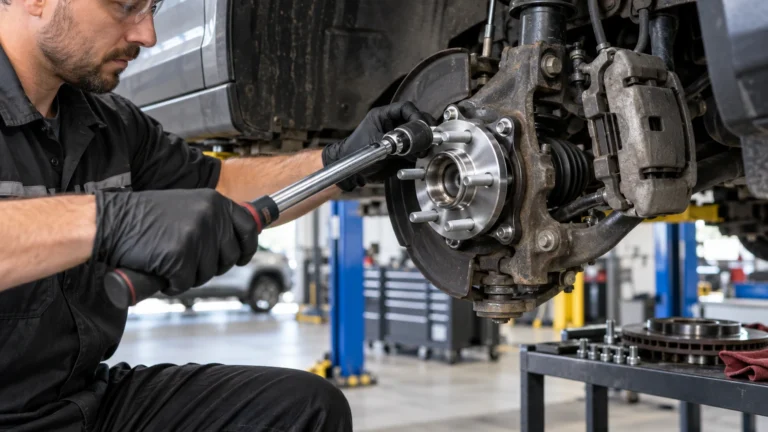
For an electric vehicle or other new energy vehicle, buyers should expect the same fitment discipline used for any safety-relevant wheel end, plus closer review of application load, running torque, sealing, noise behavior and wheel-speed sensing. The phrase EV hub bearing does not prove interchangeability. Confirm the OE number, vehicle model and year, market, VIN where appropriate, front or rear axle, left or right side where differentiated, driven or non-driven layout, spline and flange dimensions, bolt pattern, ABS or magnetic encoder configuration, connector and lead routing, supplied hardware and installation procedure. Treat low-friction claims as design-specific evidence, not as a generic benefit of every EV bearing. Release the product only when catalog evidence, drawings or verified samples support the same configuration.
Define the EV application before discussing bearing technology
Start with the exact vehicle and wheel-end identity rather than a broad electric-vehicle category. The value of this control in electric vehicle wheel hub bearing sourcing is that one EV platform can use different front and rear units, driven and non-driven designs, model-year changes or market-specific sensor configurations. A fast answer is useful only when another reviewer can see how it was reached and where its limits begin. Speed without an evidence trail simply moves the delay to receiving, returns or customer service.
Use the OE reference, manufacturer, model, model year, market, VIN or catalog qualifier where appropriate, axle, side and drivetrain layout as the intake baseline. Next, normalize the application fields, retain every source reference and compare them against the candidate product without filling gaps from a visually similar hub. Make each transformation visible: converted units, normalized numbers, translated wording and calculated totals belong in separate fields from source values. This design exposes errors early and prevents a spreadsheet formula from being mistaken for a supplier commitment.
Decision rule and evidence owner
The approved record should show which source supports the OE relationship, axle position, driven state and each vehicle qualifier, plus the reviewer and date. Link it to the exact SKU, RFQ line, purchase order or lot that it controls. If one attribute changes, reviewers can then locate the affected outputs without replacing unrelated descriptions or repeating the entire investigation.
For example, an RFQ says only new energy vehicle hub bearing while the buyer’s list contains two OE numbers used on different axles. Stop release where the exact vehicle configuration or OE relationship remains unresolved. Capture the reason, the evidence requested and the next review point. A clear hold code is operationally better than an informal warning that warehouse or sales staff may never see.
Evaluate low-friction claims without turning them into generic promises
Separate a manufacturer’s tested design from the commercial description of another product. The value of this control in electric vehicle wheel hub bearing sourcing is that running torque can be influenced by raceway design, preload, lubricant, seal contact and the conditions used for measurement. A fast answer is useful only when another reviewer can see how it was reached and where its limits begin. Speed without an evidence trail simply moves the delay to receiving, returns or customer service.
Use the tested part number, drawing revision, grease and seal specification, test method, temperature, speed, load, sample count and comparison baseline as the intake baseline. Next, ask for claim-level evidence and state whether the result is supplier data, third-party data or a buyer verification rather than copying an industry headline. Make each transformation visible: converted units, normalized numbers, translated wording and calculated totals belong in separate fields from source values. This design exposes errors early and prevents a spreadsheet formula from being mistaken for a supplier commitment.
A workable release condition
The approved record should connect any published percentage or energy effect to the exact tested design and preserve the calculation assumptions and exclusions. Link it to the exact SKU, RFQ line, purchase order or lot that it controls. If one attribute changes, reviewers can then locate the affected outputs without replacing unrelated descriptions or repeating the entire investigation.
For example, a supplier cites an NTN low-friction percentage as proof that an unrelated aftermarket hub will extend vehicle range. Stop release where the claim cannot be traced to the offered product and a defined comparison method. Capture the reason, the evidence requested and the next review point. A clear hold code is operationally better than an informal warning that warehouse or sales staff may never see.
Match hub-unit generation and mechanical interfaces
Confirm the complete construction and mating geometry before comparing photographs or overall diameter. The value of this control in electric vehicle wheel hub bearing sourcing is that Generation 1, 2 and 3 hub units integrate different levels of races, hubs and mounting flanges, while the vehicle still controls the actual interface requirements. A fast answer is useful only when another reviewer can see how it was reached and where its limits begin. Speed without an evidence trail simply moves the delay to receiving, returns or customer service.
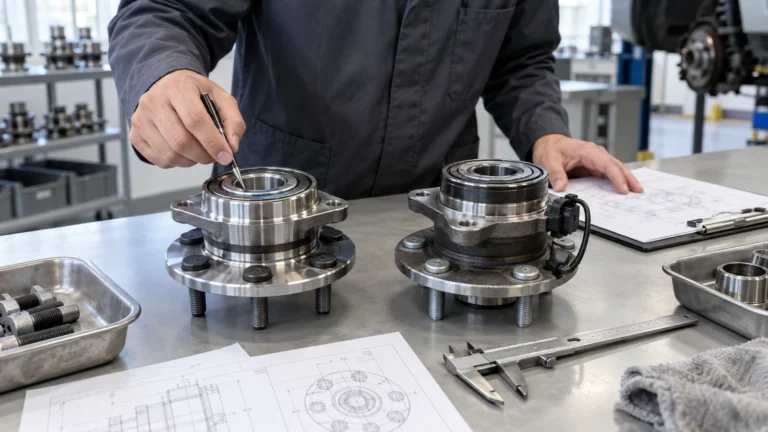
Use bearing or hub generation, center interface, spline count and form where driven, pilots, flange offsets, bolt or stud pattern, mounting holes, threads and supplied hardware as the intake baseline. Next, compare functional interfaces line by line against controlled application data or an approved sample and use dimensions to reject conflicts rather than invent fitment. Make each transformation visible: converted units, normalized numbers, translated wording and calculated totals belong in separate fields from source values. This design exposes errors early and prevents a spreadsheet formula from being mistaken for a supplier commitment.
How to document the exception
The approved record should retain annotated drawings or photographs, units, datums, tolerances where authorized, sample identity and every unresolved interface. Link it to the exact SKU, RFQ line, purchase order or lot that it controls. If one attribute changes, reviewers can then locate the affected outputs without replacing unrelated descriptions or repeating the entire investigation.
For example, two units share a five-stud wheel flange but differ in spline, mounting offset and knuckle-bolt arrangement. Stop release where any safety-critical mating feature is hidden, estimated or supported only by a marketplace image. Capture the reason, the evidence requested and the next review point. A clear hold code is operationally better than an informal warning that warehouse or sales staff may never see.
Treat the ABS encoder and wheel-speed signal as configuration fields
Document sensing details separately because a correct mechanical fit does not prove a correct signal interface. The value of this control in electric vehicle wheel hub bearing sourcing is that wheel-speed information supports ABS and stability functions, and magnetic impulse-ring orientation can vary by hub-unit design and installation procedure. A fast answer is useful only when another reviewer can see how it was reached and where its limits begin. Speed without an evidence trail simply moves the delay to receiving, returns or customer service.
Use encoder presence and side, sensor included or separate, connector shape and key, pin count, cable length, clips, grommets, lead routing and application notes as the intake baseline. Next, record direct observations separately from catalog statements and compare connector and routing details without assuming electrical interchange from pin count alone. Make each transformation visible: converted units, normalized numbers, translated wording and calculated totals belong in separate fields from source values. This design exposes errors early and prevents a spreadsheet formula from being mistaken for a supplier commitment.
A case that exposes the hidden risk
The approved record should link the encoder or sensor evidence to the exact OE reference, vehicle qualifier, sample and installation instruction used for approval. Link it to the exact SKU, RFQ line, purchase order or lot that it controls. If one attribute changes, reviewers can then locate the affected outputs without replacing unrelated descriptions or repeating the entire investigation.
For example, a hub bolts to the knuckle but its magnetic ring faces the wrong direction for the specified wheel-speed sensor. Stop release where encoder orientation, electrical behavior or lead routing remains inferred. Capture the reason, the evidence requested and the next review point. A clear hold code is operationally better than an informal warning that warehouse or sales staff may never see.
Balance sealing, lubricant and running-torque requirements
Review friction and contamination protection as one design system instead of treating less seal contact as automatically better. The value of this control in electric vehicle wheel hub bearing sourcing is that low-viscosity grease or reduced seal contact can change torque while water, mud, dust, temperature and service life still need application-appropriate control. A fast answer is useful only when another reviewer can see how it was reached and where its limits begin. Speed without an evidence trail simply moves the delay to receiving, returns or customer service.
Use seal geometry and material designation where available, grease specification, filling control, contamination tests, operating environment and supplier change-control status as the intake baseline. Next, compare the proposed construction with customer specifications and evidence for both torque and sealing rather than accepting an isolated spin demonstration. Make each transformation visible: converted units, normalized numbers, translated wording and calculated totals belong in separate fields from source values. This design exposes errors early and prevents a spreadsheet formula from being mistaken for a supplier commitment.
What a second reviewer should see
The approved record should preserve test conditions, sample quantity, acceptance criteria, revisions, deviations and the relationship between tested samples and production lots. Link it to the exact SKU, RFQ line, purchase order or lot that it controls. If one attribute changes, reviewers can then locate the affected outputs without replacing unrelated descriptions or repeating the entire investigation.
For example, a free-spinning sample is approved without evidence for water ingress, grease retention or the customer’s environmental duty. Stop release where the evidence covers only one performance branch or the production specification is not frozen. Capture the reason, the evidence requested and the next review point. A clear hold code is operationally better than an informal warning that warehouse or sales staff may never see.
Send an EV hub-bearing RFQ that a supplier can answer precisely
Ask for missing evidence in separate fields so confidence language cannot replace a technical response. The value of this control in electric vehicle wheel hub bearing sourcing is that a short OE list may omit axle, market, model-year break, sensor configuration, quantity, inspection level and destination packaging needs. A fast answer is useful only when another reviewer can see how it was reached and where its limits begin. Speed without an evidence trail simply moves the delay to receiving, returns or customer service.
Use OE and interchange references, vehicle qualifiers, axle and driven state, dimensions or drawing, encoder details, sample need, quantity, destination and commercial timing as the intake baseline. Next, request the proposed supplier model, source relationship, exceptions, document revision, sample plan and each open field as discrete response columns. Make each transformation visible: converted units, normalized numbers, translated wording and calculated totals belong in separate fields from source values. This design exposes errors early and prevents a spreadsheet formula from being mistaken for a supplier commitment.
Handling the unresolved branch
The approved record should preserve the supplier answer, attachments, reviewer decision, claim boundary and the exact wording released to the catalog or quotation. Link it to the exact SKU, RFQ line, purchase order or lot that it controls. If one attribute changes, reviewers can then locate the affected outputs without replacing unrelated descriptions or repeating the entire investigation.
For example, a supplier replies suitable for EVs but does not confirm the OE relationship, axle position or encoder configuration. Stop release where the response cannot close the buyer’s critical fitment and sensing fields. Capture the reason, the evidence requested and the next review point. A clear hold code is operationally better than an informal warning that warehouse or sales staff may never see.
EV wheel hub bearing RFQ and approval matrix
The matrix keeps application evidence, product construction and commercial release in the same traceable record.
| Control field | Evidence to retain | Release question |
|---|---|---|
| Application | OE, vehicle, year, market, VIN qualifier | Exact application supported? |
| Wheel end | Axle, side, driven state, hub generation | Correct position and architecture? |
| Interfaces | Spline, pilots, flanges, bolts, offsets | All critical mating fields agree? |
| Sensing | Encoder, sensor, connector, pins, lead routing | Mechanical and signal configuration agree? |
| Performance | Torque, sealing, noise and test conditions | Claim tied to the offered design? |
| Approval | Sample, drawing, revision, lot and inspection plan | Production traceable to approval? |
| RFQ | Quantity, destination, packaging and open fields | Quotation states exceptions and boundaries? |
What primary technical sources support — and what they do not
NTN Technical Review reports a 62 percent running-torque reduction for its Low Friction Hub Bearing III and an expected vehicle fuel-efficiency effect of about 0.53 percent under NTN's stated example. That is useful evidence that grease and seal design can matter to vehicle efficiency, but it is not a transferable guarantee for every electric vehicle wheel hub bearing or supplier.
SKF's hub-unit evolution material distinguishes Generation 1, 2 and 3 architectures, while its wheel-end mounting resources identify magnetic impulse-ring orientation as an installation concern across multiple hub-unit types. Buyers still need the exact vehicle and OE application source because a generation name or visible flange does not establish interchangeability.
SKF's bearing-damage guide presents the ISO 15243 classification around visible characteristics and recognized failure modes, while keeping root-cause analysis separate from a quick visual label. A warranty photo, heat report or noise complaint should therefore remain evidence to investigate, not an automatic proof of material, manufacturing or installation cause.
Claim boundary: This guide does not approve a specific EV application, publish a universal load, torque, temperature, service-life or range claim, or replace the vehicle maker's catalog and installation procedure, an approved drawing, a validated sample plan or mutually agreed inspection terms.
Related wheel hub buyer resources
- Wheel Hub Assembly catalog
- Wheel Hub Bearing catalog
- wheel bearing versus wheel hub assembly guide
- ABS encoder identification guide
- wheel hub OE number and RFQ guide
- fitment verification workflow
- sample approval workflow
- kit contents and BOM verification
- supplier evaluation evidence guide
- export packaging checklist
- MOQ and lead-time planning guide
- incoming inspection checklist
- About Jinan Huayuan Auto Bearing
Sources, dates and claim boundaries
- NTN Technical Review No. 87: Low Friction Hub Bearing III — manufacturer-specific development data for raceway, grease and seal friction; not an HJDP product performance claim
- NTN Technical Review No. 89: responding to EVs and automotive electrification — hub-bearing friction contributors, low-friction grease and seal-development principles
- SKF Automotive: hub unit evolution — Generation 1, 2 and 3 wheel-hub-unit architecture and the integrated flanges used by Generation 3 designs
- SKF Automotive: wheel-end mounting instructions — application-specific installation resources and magnetic impulse-ring orientation across hub-unit generations
- SKF Bearing Damage Guide: ISO 15243 classification — manufacturer guidance presenting the ISO 15243 failure-mode structure and visible-feature investigation boundary
Technical review: Jinan Huayuan Auto Bearing editorial review for source fidelity, procurement-data consistency and unsupported-claim removal. This review does not replace an OE catalog, vehicle service procedure, legal or customs advice, a customer-approved drawing, or mutually agreed commercial and inspection terms.
Corrections: Send the page URL and supporting evidence through the contact page. Material corrections are reviewed, linked records are rechecked and the updated date is changed when warranted.