What Causes Wheel Bearings to Go Bad? Common Failure Factors
Quick answer: Wheel bearings commonly fail from contamination, water ingress, overload, impact, poor installation, incorrect preload, or seal and encoder damage.
What Causes Wheel Bearings to Go Bad? Common Failure Factors is easier to answer when the vehicle, axle position, OE reference, and service design are recorded together.
Why this question matters
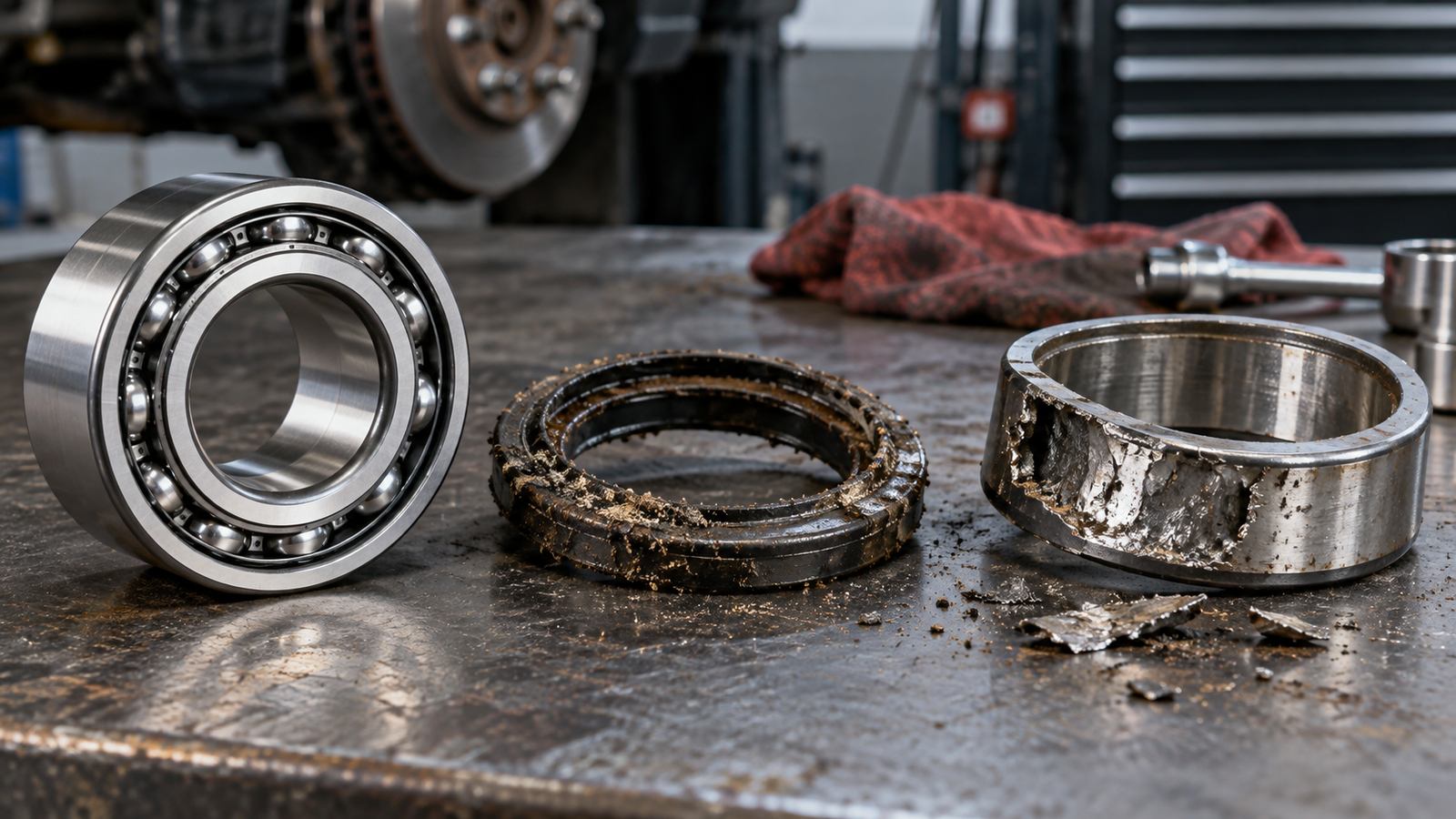
Replacing the bearing without checking the cause can lead to another early failure. The old unit provides useful evidence.
Technical context
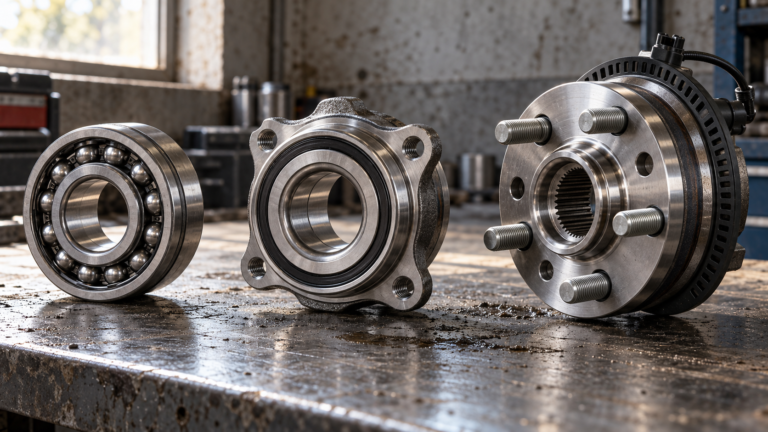
Wheel bearings commonly fail from contamination, water ingress, overload, impact, poor installation, incorrect preload, or seal and encoder damage. The wheel-end system also carries steering, braking, road impact, and wheel-speed sensing loads. That is why a catalogue match must cover the full assembly interfaces and the vehicle build range, not only a familiar product name. When a replacement is being evaluated, compare the original part with the drawing, dimensions, connector, and supplied hardware. If one of those details is unknown, record it as an open fitment question instead of assuming that a similar-looking part will work.
Common mistakes to avoid
- Ordering from the model name alone when several axle or engine configurations exist.
- Ignoring the ABS encoder, connector, spline, or flange because the bearing size appears similar.
- Reusing a one-time-use fastener or applying a generic torque value.
- Closing a warranty or return request without photos, measurements, and batch information.
What good documentation looks like
A clear service record connects the symptom, inspection result, original reference, replacement reference, installation torque, and final test. For a distributor, the same evidence can be condensed into a product page: state the position, vehicle range, part contents, key interfaces, and the information required for a quote. This makes the page useful to a technician and to a purchasing team, while reducing avoidable returns and follow-up emails.
When to ask for a fitment review
Request a second check when the vehicle has more than one engine or transmission, when a model changed during the year, or when the original hub has a different sensor and flange. Include photographs from the front and rear, a readable OE marking, the VIN, and the intended installation side. A supplier can then compare the catalogue record with the source part and explain any uncertainty before money and freight are committed.
For wholesale and fleet orders
Purchasing teams should treat fitment as part of the product specification. State the target market, forecast quantity, packaging and labelling requirements, delivery term, and warranty expectation. Ask for a sample or drawing where the application is new, and keep the approved reference with the purchase order. This creates a consistent hand-off from product data to warehouse receiving and after-sales support.
Checks that give you a useful answer
- Look for water, dirt, rust, or damaged seals.
- Check for pothole, kerb, collision, or bent mounting evidence.
- Verify the hub and knuckle are clean, flat, and undamaged.
- Confirm the correct preload or torque procedure.
- Inspect the ABS encoder and sensor for handling damage.
A practical workshop workflow
- Describe the symptom or service need and identify the exact vehicle.
- Inspect the original unit and record its position and visible interfaces.
- Match the replacement catalogue data to the OE reference and VIN.
- Install with clean mating faces, correct force path, and specified torque.
- Verify wheel play, ABS signal, brake operation, and road performance.
Information to record before ordering
| Item | What to record |
|---|---|
| Contamination | Water or grit past a damaged seal |
| Impact | Pothole, kerb, collision, or bent mount |
| Overload | Excess load, towing, or wheel offset |
| Installation | Wrong ring force or incorrect torque |
| Electrical | Damaged sensor or encoder |
How a replacement buyer should decide
Record batch traceability and installation notes. Buyers should report operating conditions and photos, not only a replacement number.
Frequently asked questions
Does water always destroy a bearing?
It accelerates corrosion and lubricant damage, but extent varies.
Can wheel offset affect it?
Changed load geometry can increase bearing load.
Does over-tightening cause failure?
Incorrect torque or preload can damage the bearing.
Next step
Treat the failed unit as evidence and correct the cause before fitting a new part.
For product matching, see the Wheel Hub Assembly catalogue or request a product quote with the OE number, VIN, quantity, and destination market.