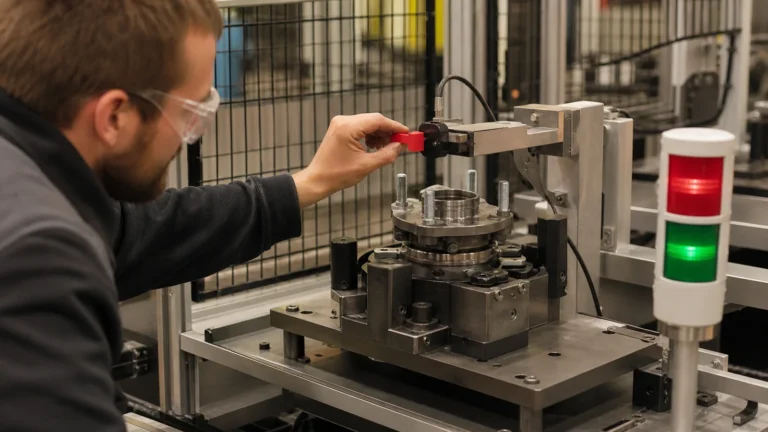

Wheel Hub Automated Inspection Validation: False Accept and Bypass Control
A camera, sensor or algorithm can produce consistent results while consistently answering the wrong question. Buyers need validation of the complete decision path, including sample population, program selection, bypass and change controls.
What should a wheel hub automated inspection validation demonstrate?
Define the exact characteristic, defect condition, product family, operating range and decision authority. Build a traceable validation set that represents conforming, nonconforming and boundary conditions, then compare automated outputs with an approved reference and investigate both false accepts and false rejects. Challenge lighting, orientation, presentation, contamination and other relevant conditions without claiming a universal rate. Control recipes, software, users, overrides and bypasses; monitor performance after release; and revalidate when product, hardware, software, threshold or environment changes.
Define intended use and decision scope
State what the system detects, measures or identifies. For wheel hub automated inspection validation, that boundary matters because machine vision may be used beyond the defect classes it was validated for. The responsible reviewer should decide the question being answered before opening a catalog, measuring a sample or requesting a supplier statement. A narrow decision can be audited; a broad promise assembled from partial clues cannot.
Begin with characteristic, defect catalog, product range, station, output, authority and exclusions. Keep the original input unchanged beside every normalized value, translation or derived field. Then write a bounded use statement linked to the control plan. Unknown is a controlled status, not permission to copy the most common value from a neighboring SKU. A field remains open until the cited evidence actually resolves it.
Decision rule and evidence owner
The retained record should retain requirement, owner, revision and limitations. This makes a later quotation, receipt, complaint or correction understandable to someone who did not take part in the first conversation. If the team cannot reconstruct the source and decision, the status should return to review rather than remain approved through habit.
Consider this case: a label-reading camera is later used to judge seal damage. The stop condition is the automated decision scope is ambiguous. Record the conflict at field level, identify an owner and ask one precise question. Do not hide the open point inside a general note such as “please confirm,” because that wording rarely survives into the next system or order revision.
Build a representative validation set
Challenge the system with traceable conditions across intended use. For wheel hub automated inspection validation, that boundary matters because only clear examples can inflate apparent performance. The responsible reviewer should decide the question being answered before opening a catalog, measuring a sample or requesting a supplier statement. A narrow decision can be audited; a broad promise assembled from partial clues cannot.
Begin with sample IDs, reference status, defect types, boundary examples, orientation and environment. Keep the original input unchanged beside every normalized value, translation or derived field. Then select and preserve representative conforming and adverse cases. Unknown is a controlled status, not permission to copy the most common value from a neighboring SKU. A field remains open until the cited evidence actually resolves it.
A workable release condition
The retained record should record provenance, reference method and limitations. This makes a later quotation, receipt, complaint or correction understandable to someone who did not take part in the first conversation. If the team cannot reconstruct the source and decision, the status should return to review rather than remain approved through habit.
Consider this case: the set contains no low-contrast encoder condition. The stop condition is the challenge population does not support the claimed use. Record the conflict at field level, identify an owner and ask one precise question. Do not hide the open point inside a general note such as “please confirm,” because that wording rarely survives into the next system or order revision.
Measure disagreement and investigate errors
Expose false accepts, false rejects and indeterminate outputs. For wheel hub automated inspection validation, that boundary matters because one overall accuracy number can hide a high-risk missed condition. The responsible reviewer should decide the question being answered before opening a catalog, measuring a sample or requesting a supplier statement. A narrow decision can be audited; a broad promise assembled from partial clues cannot.
Begin with automated result, reference result, defect class, confidence or score, repeat and cause. Keep the original input unchanged beside every normalized value, translation or derived field. Then analyze disagreement by condition without inventing an acceptance threshold. Unknown is a controlled status, not permission to copy the most common value from a neighboring SKU. A field remains open until the cited evidence actually resolves it.
How to document the exception
The retained record should retain raw outputs, images or signals, review and disposition. This makes a later quotation, receipt, complaint or correction understandable to someone who did not take part in the first conversation. If the team cannot reconstruct the source and decision, the status should return to review rather than remain approved through habit.
Consider this case: a known wrong orientation is repeatedly accepted. The stop condition is an adverse disagreement remains open. Record the conflict at field level, identify an owner and ask one precise question. Do not hide the open point inside a general note such as “please confirm,” because that wording rarely survives into the next system or order revision.
Control recipe, user and bypass state
Keep the validated decision path active during production. For wheel hub automated inspection validation, that boundary matters because shared access or unlogged bypass can defeat validation. The responsible reviewer should decide the question being answered before opening a catalog, measuring a sample or requesting a supplier statement. A narrow decision can be audited; a broad promise assembled from partial clues cannot.
Begin with program version, threshold, permissions, login, override, bypass, alarm and audit log. Keep the original input unchanged beside every normalized value, translation or derived field. Then verify loaded state and challenge access controls at the line. Unknown is a controlled status, not permission to copy the most common value from a neighboring SKU. A field remains open until the cited evidence actually resolves it.
A case that exposes the hidden risk
The retained record should record changes, bypass duration, affected lots and approvals. This makes a later quotation, receipt, complaint or correction understandable to someone who did not take part in the first conversation. If the team cannot reconstruct the source and decision, the status should return to review rather than remain approved through habit.
Consider this case: an operator disables rejection during a nuisance alarm. The stop condition is validated state or affected population is unknown. Record the conflict at field level, identify an owner and ask one precise question. Do not hide the open point inside a general note such as “please confirm,” because that wording rarely survives into the next system or order revision.
Monitor and revalidate after change
Detect drift and protect release when the baseline moves. For wheel hub automated inspection validation, that boundary matters because lighting, camera position and software updates can alter results silently. The responsible reviewer should decide the question being answered before opening a catalog, measuring a sample or requesting a supplier statement. A narrow decision can be audited; a broad promise assembled from partial clues cannot.
Begin with performance trend, challenge checks, maintenance, software, hardware, product and environment. Keep the original input unchanged beside every normalized value, translation or derived field. Then define event-based revalidation and ongoing verification. Unknown is a controlled status, not permission to copy the most common value from a neighboring SKU. A field remains open until the cited evidence actually resolves it.
What a second reviewer should see
The retained record should retain trigger, impact assessment, new results and release. This makes a later quotation, receipt, complaint or correction understandable to someone who did not take part in the first conversation. If the team cannot reconstruct the source and decision, the status should return to review rather than remain approved through habit.
Consider this case: a lens and illumination unit are replaced during service. The stop condition is required revalidation or monitoring evidence is missing. Record the conflict at field level, identify an owner and ask one precise question. Do not hide the open point inside a general note such as “please confirm,” because that wording rarely survives into the next system or order revision.
Automated-inspection validation register
Use this buyer-side register to separate document presence, technical review, open exceptions and authorized release.
| Control | Evidence to retain | Hold trigger |
|---|---|---|
| Define intended use and decision scope | characteristic, defect catalog, product range, station, output, authority and exclusions | the automated decision scope is ambiguous |
| Build a representative validation set | sample IDs, reference status, defect types, boundary examples, orientation and environment | the challenge population does not support the claimed use |
| Measure disagreement and investigate errors | automated result, reference result, defect class, confidence or score, repeat and cause | an adverse disagreement remains open |
| Control recipe, user and bypass state | program version, threshold, permissions, login, override, bypass, alarm and audit log | validated state or affected population is unknown |
| Monitor and revalidate after change | performance trend, challenge checks, maintenance, software, hardware, product and environment | required revalidation or monitoring evidence is missing |
Validate the decision, not the equipment label
NIST identifies automated visual inspection with machine vision as a manufacturing-automation application that can inspect features such as seals, labels and barcodes.
NIST process-control guidance distinguishes automated interventions from monitoring and emphasizes defined actions when the process is out of control.
AIAG CQI-18 provides an automotive error-proofing framework, but actual validation criteria and rates belong to the approved use and customer requirements.
Claim boundary: No JNHJDP automated inspection, validation rate, algorithm, false-accept result, software control or approval is asserted.
Additional review scenarios for wheel hub automated inspection validation
Review scenario 1 for wheel hub automated inspection validation: Start from characteristic, defect catalog, product range, station, output, authority and exclusions. The reviewer should write a bounded use statement linked to the control plan. An independent checker then tests the conclusion against the stated decision boundary and confirms that the record will retain requirement, owner, revision and limitations. If the automated decision scope is ambiguous, keep the affected line on hold, name the missing evidence and prevent the provisional interpretation from entering a quote, catalog, purchase order or customer promise. The case can move again when the evidence owner closes that exact field; a general assurance, familiar photograph or previous order is not a substitute for the missing source.
Review scenario 2 for wheel hub automated inspection validation: Start from sample IDs, reference status, defect types, boundary examples, orientation and environment. The reviewer should select and preserve representative conforming and adverse cases. An independent checker then tests the conclusion against the stated decision boundary and confirms that the record will record provenance, reference method and limitations. If the challenge population does not support the claimed use, keep the affected line on hold, name the missing evidence and prevent the provisional interpretation from entering a quote, catalog, purchase order or customer promise. The case can move again when the evidence owner closes that exact field; a general assurance, familiar photograph or previous order is not a substitute for the missing source.
Review scenario 3 for wheel hub automated inspection validation: Start from automated result, reference result, defect class, confidence or score, repeat and cause. The reviewer should analyze disagreement by condition without inventing an acceptance threshold. An independent checker then tests the conclusion against the stated decision boundary and confirms that the record will retain raw outputs, images or signals, review and disposition. If an adverse disagreement remains open, keep the affected line on hold, name the missing evidence and prevent the provisional interpretation from entering a quote, catalog, purchase order or customer promise. The case can move again when the evidence owner closes that exact field; a general assurance, familiar photograph or previous order is not a substitute for the missing source.
Review scenario 4 for wheel hub automated inspection validation: Start from program version, threshold, permissions, login, override, bypass, alarm and audit log. The reviewer should verify loaded state and challenge access controls at the line. An independent checker then tests the conclusion against the stated decision boundary and confirms that the record will record changes, bypass duration, affected lots and approvals. If validated state or affected population is unknown, keep the affected line on hold, name the missing evidence and prevent the provisional interpretation from entering a quote, catalog, purchase order or customer promise. The case can move again when the evidence owner closes that exact field; a general assurance, familiar photograph or previous order is not a substitute for the missing source.
Review scenario 5 for wheel hub automated inspection validation: Start from performance trend, challenge checks, maintenance, software, hardware, product and environment. The reviewer should define event-based revalidation and ongoing verification. An independent checker then tests the conclusion against the stated decision boundary and confirms that the record will retain trigger, impact assessment, new results and release. If required revalidation or monitoring evidence is missing, keep the affected line on hold, name the missing evidence and prevent the provisional interpretation from entering a quote, catalog, purchase order or customer promise. The case can move again when the evidence owner closes that exact field; a general assurance, familiar photograph or previous order is not a substitute for the missing source.
Review scenario 6 for wheel hub automated inspection validation: Start from characteristic, defect catalog, product range, station, output, authority and exclusions. The reviewer should write a bounded use statement linked to the control plan. An independent checker then tests the conclusion against the stated decision boundary and confirms that the record will retain requirement, owner, revision and limitations. If the automated decision scope is ambiguous, keep the affected line on hold, name the missing evidence and prevent the provisional interpretation from entering a quote, catalog, purchase order or customer promise. The case can move again when the evidence owner closes that exact field; a general assurance, familiar photograph or previous order is not a substitute for the missing source.
Related wheel hub buyer resources
- Wheel Hub Assembly catalog
- Wheel Hub Bearing catalog
- wheel bearing versus wheel hub assembly guide
- ABS encoder identification guide
- wheel hub OE number and RFQ guide
- fitment verification workflow
- sample approval workflow
- kit contents and BOM verification
- supplier evaluation evidence guide
- export packaging checklist
- MOQ and lead-time planning guide
- incoming inspection checklist
- About Jinan Huayuan Auto Bearing
Sources, dates and claim boundaries
- NIST manufacturing automation overview — official overview identifying automated visual inspection as a manufacturing-automation application; validation remains use-specific
- NIST process control explanation — official explanation that process control acts on monitoring results and may use documented out-of-control action plans
- AIAG CQI-18 Effective Error-Proofing — official overview of moving from detection-oriented practice toward effective error prevention; it is not evidence of a JNHJDP implementation
- AIAG Advanced Product Quality Planning manual overview — official AIAG overview of current APQP scope, including sourcing, change management and gated program activity
Technical review: Jinan Huayuan Auto Bearing editorial review for source fidelity, procurement-data consistency and unsupported-claim removal. This review does not replace an OE catalog, vehicle service procedure, legal or customs advice, a customer-approved drawing, or mutually agreed commercial and inspection terms.
Corrections: Send the page URL and supporting evidence through the contact page. Material corrections are reviewed, linked records are rechecked and the updated date is changed when warranted.