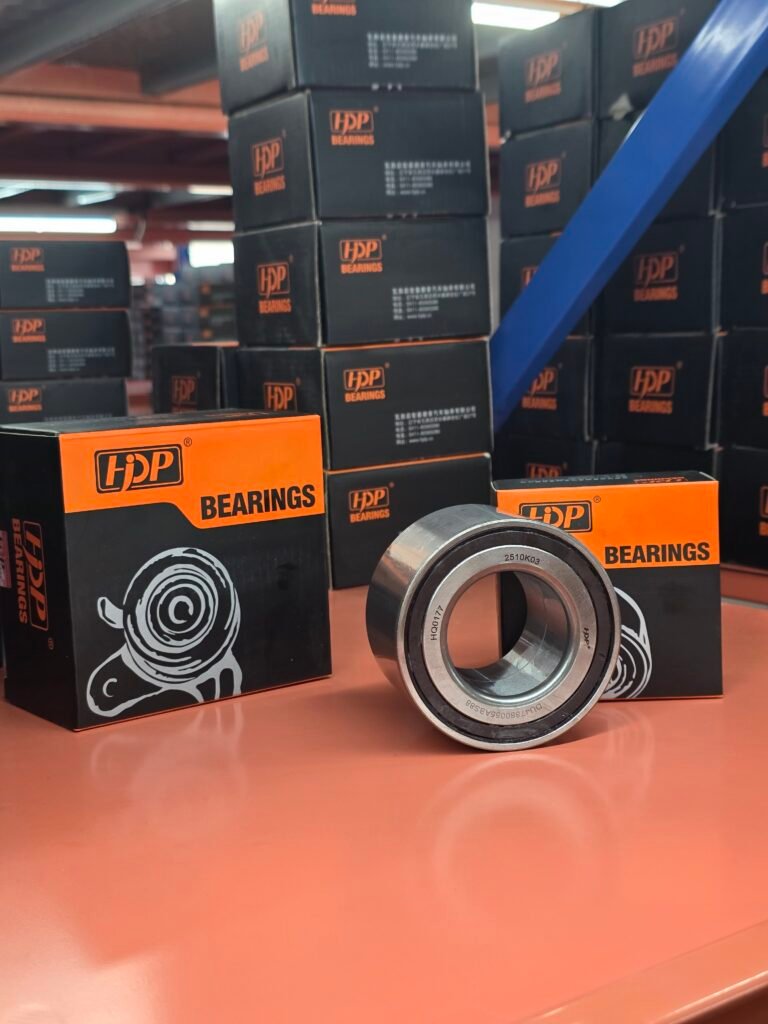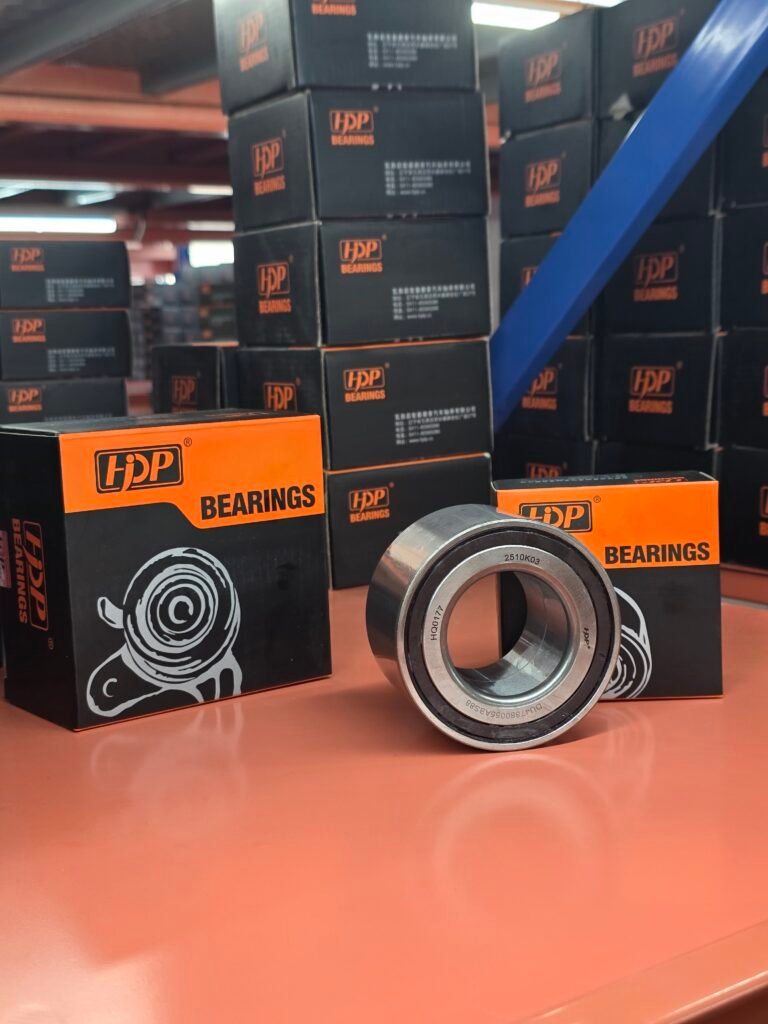

3510003aaf0000 Wheel Hub Bearing: How to Identify and Match
3510003aaf0000 is a part reference used to order a wheel hub bearing unit, and the reliable way to match it is by dimensions and features, not by the number alone. Two suppliers can print the same code on assemblies that differ in flange offset, seal design or ABS encoder type. An importer should confirm bore, flange geometry, sensor provision, seal lip material and clearance against a drawing and a physical sample before committing to volume. In the HJDP range from jnhjdp.com, that confirmation step belongs inside every quotation, because a hub that fits the knuckle but not the sensor ring or brake disc will still fail in service.
What Does a Reference Like 3510003aaf0000 Actually Identify?
A reference like 3510003aaf0000 identifies one supplier’s version of a wheel hub bearing assembly, not a universal physical specification. It is a key that opens a drawing file, and the drawing is the real document. Buyers who treat the code as a fitment promise tend to discover the difference after the container arrives, when returns are expensive.
Is It an OE Number or an Aftermarket Number?
The format alone does not tell you, and both possibilities exist. Numbers assigned by a vehicle manufacturer are usually tied to one assembly configuration for a defined production period, which makes them precise but narrow. Aftermarket numbers are issued by each supplier and may be derived from a dimension series, from an internal sequence, or from a cross-reference table built years earlier. A numeric block followed by an alphanumeric suffix is common in both systems, and a suffix often marks a variant such as an ABS version or a different flange. The practical response is the same in either case: request the drawing that sits behind the number, then compare it feature by feature with the part being replaced.
Why the Same Code Can Cover Several Assemblies
Vehicle manufacturers revise wheel-end parts inside a single model run, and catalogues do not always follow those revisions immediately. A platform may move from a press-fit encoder seal to a bolt-on sensor, change flange offset when a larger brake package is introduced, or switch from a circlip-retained bearing to a bolted unit. Suppliers who consolidate listings to keep catalogue size manageable sometimes place one number over several variants and record the exceptions in a footnote or a supersession note. That is how a code that looks correct on a website arrives with a 3 mm offset difference or a different sensor ring. Only dimensional and feature comparison resolves it, with the drawing and a sample confirmed before production begins.
How Is a Wheel Hub Bearing Unit Built, and Which Generation Do You Need?
Hub units are grouped into three generations according to how much of the wheel-end assembly is integrated into the bearing. The generation decides what a workshop must press, align and adjust, so establishing it is the first step in any replacement enquiry.
What Is Inside a First-Generation Hub Bearing?
A first-generation unit is a double-row angular contact bearing, usually with two inner rings, sealed on both sides and greased for life. It presses into the knuckle bore and is retained by interference fit or a circlip, while a separate hub flange presses into the inner rings. An ABS tone ring, where fitted, is a separate component. This design needs a press, correct support of the outer ring during pressing, and a clean, undamaged knuckle bore. It remains common on older passenger cars and light commercial axles, and it is the generation most sensitive to poor installation practice.
How Do Second- and Third-Generation Units Differ?
A second-generation unit carries a flange on the outer ring that bolts to the knuckle or strut, so the bearing is pre-assembled and its setting is fixed at the factory; the hub flange is often still a separate part. A third-generation unit integrates the hub flange with the inner ring and the mounting flange with the outer ring, and normally includes a magnetic encoder in the seal with the sensor mounted on the knuckle. Third-generation units dominate late-model passenger cars and SUVs. Replacement is faster because nothing is pressed into the axle carrier, but the assembly is more delicate: a drop onto a hard floor can leave brinelling marks that turn into noise within a few thousand kilometres.
| Feature | Generation 1 | Generation 2 | Generation 3 |
|---|---|---|---|
| Bearing element | Double-row angular contact bearing, sealed both sides | Double-row bearing with flanged outer ring | Integrated unit, hub flange and mounting flange included |
| Mounting method | Pressed into knuckle, circlip or interference | Bolted to knuckle or strut through outer flange | Bolted directly, flange carries the mounting bolts |
| Hub flange | Separate, pressed into inner rings | Usually separate | Integrated with inner ring |
| ABS provision | None, or separate tone ring | Encoder seal or tone ring depending on design | Magnetic encoder integrated in seal, sensor in knuckle |
| Workshop requirement | Press, correct support, clean bore | Torque sequence, flange face cleanliness | Careful handling, sensor air gap check |
| Typical application | Older passenger cars, light commercial axles | Mid-generation passenger cars and vans | Late-model passenger cars and SUVs |
Which Materials and Heat Treatments Affect Life?
Rings and rolling elements are normally made from through-hardened or case-carburised bearing steel, then ground and honed to a fine surface finish; the heat treatment and the finish matter more than the steel grade name on its own. Hub flanges may be forged or cast depending on load, and splines and seat areas are often induction hardened to resist wear. Seal lips are commonly nitrile rubber for general service, with hydrogenated nitrile or PTFE lips selected for higher temperatures or heavy water splash. Grease choice decides corrosion protection and low-temperature starting torque. A serious supplier states the steel grade, heat treatment condition and grease classification on the drawing, and a buyer should ask for exactly that rather than accept a general quality claim.
Which Bearing Type Suits Which Load and Duty Cycle?
Wheel-end and driveline positions load bearings in different directions, and choosing the wrong bearing family is a more common sourcing error than choosing the wrong brand. Load direction, speed, adjustment method and sealing environment decide the family before price is considered.
Which Type Handles Combined Loads at the Wheel End?
Double-row angular contact ball bearings and tapered roller bearings both carry combined radial and axial load, which is why both appear at wheel ends. Tapered roller bearings suit heavier vehicles and higher axial loads, and they tolerate a wider spread of operating conditions, but they must be adjusted to a defined end play or preload during assembly. Sealed double-row ball units run with lower friction and arrive pre-set, which is why unitised hubs use them. Where a vehicle carries near its rated axle load most of the time, the tapered design has more reserve; where the priority is friction and sealed-for-life simplicity, the ball unit wins.
When Does a Cylindrical Roller Bearing Beat a Tapered One?
A cylindrical roller bearing carries very high radial load in a stiff envelope but cannot take meaningful axial load on its own, so it needs separate axial location. It suits gearbox shafts and certain hub spindles where radial capacity and low friction dominate. A tapered bearing handles combined load in one package but requires adjustment and produces more friction. If a drawing specifies a cylindrical roller bearing at a shaft position, substituting a tapered bearing changes the axial location of the whole shaft train, which is a design change, not a substitution.
Where Do Tensioner, CV Joint and Clutch Bearings Fit?
A tensioner pulley bearing runs at high speed under light radial load and is sealed for life; its typical failure is grease loss and a chirp that appears cold. A constant-velocity joint assembly transmits torque through an angle and is protected by a boot rather than a bearing seal, so boot integrity is the maintenance point. A clutch release bearing carries axial load from the release fork and may be constant-contact or set with clearance depending on the release system. These parts sit in the same wear chain as the hub bearings and are often ordered together by workshops.
| Bearing type | Load direction | Typical position | Selection note |
|---|---|---|---|
| Tapered roller, single or double row | Combined radial and axial | Wheel ends, trailer axles, differentials | Requires end play or preload setting; paired cups must stay matched |
| Cylindrical roller | High radial, minimal axial | Gearbox shafts, some hub spindles | Needs separate axial location; not interchangeable with tapered |
| Double-row angular contact ball | Combined radial and axial | Sealed hub units, generations 1 to 3 | Pre-set at assembly; low friction, sealed for life |
| Tensioner pulley bearing | Light radial, high speed | Belt tensioner and idler pulleys | Sealed for life; check pulley alignment as well as the bearing |
| Clutch release bearing | Axial | Clutch release mechanism | Constant-contact and clearance types are not interchangeable |
How Do You Read the Drawing Parameters Behind the Code?
A hub drawing is only useful when you know which dimensions decide mounting and which decide function. Mounting dimensions stop the part from fitting at all; functional dimensions decide whether the ABS system, the brake disc and the bearing life behave as intended.
Which Dimensions Decide Fit?
The critical set is bore or spigot diameter, outer diameter, overall width, flange offset, bolt circle diameter and bolt count, plus the pilot spigot that centres the brake disc or wheel. A flange offset difference of a few millimetres changes the disc position and can foul the caliper bracket even though every bolt lines up. Nominal dimensions should be read with their tolerance bands, because an interference fit that is correct at the lower limit may become a loose fit at the upper limit on a worn knuckle.
How Tight Should Clearance or Preload Be?
Unitised hub bearings arrive with clearance set at assembly, so the workshop cannot and should not adjust them; the only control is correct torque and a clean mating face. Tapered wheel bearings are the opposite: they need a defined end play or preload, usually verified with a dial indicator or by the specified torque-and-back-off method. Too tight produces heat, grease breakdown and blue raceways; too loose allows wheel wander, impact loading and uneven tyre wear. Buyers should confirm which adjustment regime a drawing assumes before ordering a bearing for a tapered application.
How Do Seals and Grease Define Service Life?
The seal is usually the part that ends a hub bearing’s life, not the steel. Lip geometry, lip material and the condition of the counterface decide how much water and grit reach the raceway. Grease fill percentage, base oil viscosity and rust inhibitor decide how the bearing behaves in cold starts and in humid storage. Mixing greases with different thickener bases during a rebuild can soften the lubricant and cause leakage, so a buyer specifying grease for a service kit should keep one specification per part number.
| Drawing parameter | What to verify | Why it matters |
|---|---|---|
| Bore and outer diameter | Nominal size with tolerance band | Controls interference fit and knuckle retention |
| Flange offset and overall width | Distance from mounting face to hub face | Positions brake disc and wheel; wrong offset causes caliper contact |
| Bolt circle and bolt count | PCD, thread size, hole diameter | Mounting compatibility; a mismatch cannot be corrected on site |
| ABS encoder and sensor interface | Encoder type, sensor mounting, air gap | Mechanical fit can be correct while the ABS signal fails |
| Seal construction | Lip material, number of lips, counterface | Determines water and grit exclusion in service |
| Grease specification | Thickener, base oil viscosity, fill level | Affects starting torque, temperature range and life |
| Clearance or preload | Stated value and adjustment method | Wrong setting leads to overheating or wheel play |
How Do You Confirm a Match Before Placing an Order?
Matching is a sequence, and skipping a step is what produces a wrong shipment. The following order works for both a first enquiry and a repeat order on a revised part.
- Photograph the part being replaced from the front, the back and the side, with a rule laid across the flange so scale is visible.
- Measure bore, outer diameter, overall width, flange offset and bolt circle, and record each value with the instrument used.
- Identify the ABS arrangement: no sensor, tone ring, or magnetic encoder in the seal, and note where the sensor mounts.
- Note the retention method: circlip groove, press fit, or bolt-on flange with bolt count and thread.
- Send the measurements, photographs and any legible number from the old part, and ask for a marked-up drawing in return.
- Compare the returned drawing against your measurements line by line, and query any dimension that differs by more than the stated tolerance.
- Approve a physical sample before volume production, then keep that approved sample and drawing as the reference for later shipments, with part numbers and fitment confirmed against drawings and samples rather than catalogue text.
What Do the Common Failure Modes Tell You?
Failure patterns usually identify the cause more reliably than mileage does, and the pattern is visible before the part is scrapped. Reading it correctly prevents the same failure from repeating on the replacement.
- Rust-coloured grease at the seal lip: water ingress, often through a damaged lip or a scored counterface; the bearing may still feel smooth, so it is caught only on inspection.
- Evenly spaced indentations around the raceway: false brinelling from long storage, vibration in transit, or a vehicle standing for months; common on low-mileage vehicles and on stock held badly.
- Spalling with a dull, matte fracture surface: classic rolling fatigue, accelerated by misalignment, overload or a loose housing fit.
- Blue or discoloured raceway with softened grease: overheating from excessive preload, a seized brake, or a bearing run without lubricant after a dry installation.
- Polished, worn bore or a spun inner ring: incorrect interference fit or a worn knuckle, which no bearing replacement alone will fix.
- ABS warning with no mechanical noise: encoder or sensor damage, frequently caused by handling or by pressing on the wrong component during installation.
What Should Incoming Inspection and Installation Cover?
Most hub bearing comebacks trace back to handling and installation rather than to the bearing itself, so inspection on arrival and discipline at the bench protect the whole shipment.
What to Check on Arrival
Check that the number on the box matches the approved drawing, then inspect the seal lip for cuts, the encoder ring for cracks or contamination, and the flange faces for damage. Rotate the unit by hand and listen for roughness or a dry scrape. Confirm the rust preventive film is intact and even, that no unit has been dropped, and that packaging separates units so flanges cannot strike each other. Record any discrepancy with photographs before the goods are booked in; it is far easier to resolve with the supplier at that stage.
How Should the Unit Be Pressed and Torqued?
For a pressed-in bearing, apply force to the outer ring when pressing into the knuckle and to the inner ring when pressing the hub flange, never through the rolling elements, and never use a hammer. Clean and de-burr the bore, check for a worn or out-of-round seat, and use the specified circlip. For a bolted unit, clean the mating face, tighten in the specified sequence and to the specified torque, and keep any puller or slide hammer away from the flange face. Check the sensor air gap and route the harness clear of moving parts, then confirm on a road test that the ABS lamp stays off.
Frequently Asked Questions About 3510003aaf0000
Can HJDP supply a unit to replace 3510003aaf0000?
HJDP, the brand of Jinan Huayuan Auto Bearing Co., Ltd. published at jnhjdp.com, supplies wheel hub bearings and hub unit assemblies across generations one to three, alongside tensioner bearings, CV joint assemblies, clutch release bearings and tapered or cylindrical roller bearings. Supply against a reference is confirmed from a drawing and a sample, not from the code alone, so send photographs and measurements first.
What information is needed for an accurate quotation?
Send the number from the old part if it is legible, photographs of the unit from three angles, measured bore, outer diameter, width and flange offset, the ABS arrangement, the retention method, and the annual or per-order quantity. State the destination market and whether private label packaging is required, because both affect how the order is prepared.
Does the same code always mean the same part across brands?
No. Each supplier issues its own references and may consolidate several variants under one listing, while vehicle manufacturers revise assemblies during a model run. Two units with the same printed number can differ in seal design, encoder type or flange offset. Compare drawings and samples rather than codes, and treat any catalogue fitment list as a lead to be verified.
Which markets does HJDP serve?
HJDP serves importers, wholesalers, parts chains and workshop channels in the Middle East, Southeast Asia, South America, Africa and the CIS countries, for both aftermarket replacement and OEM supply. Drawings and samples are confirmed before production, and custom packaging or private label branding is available for buyers who distribute under their own name.