
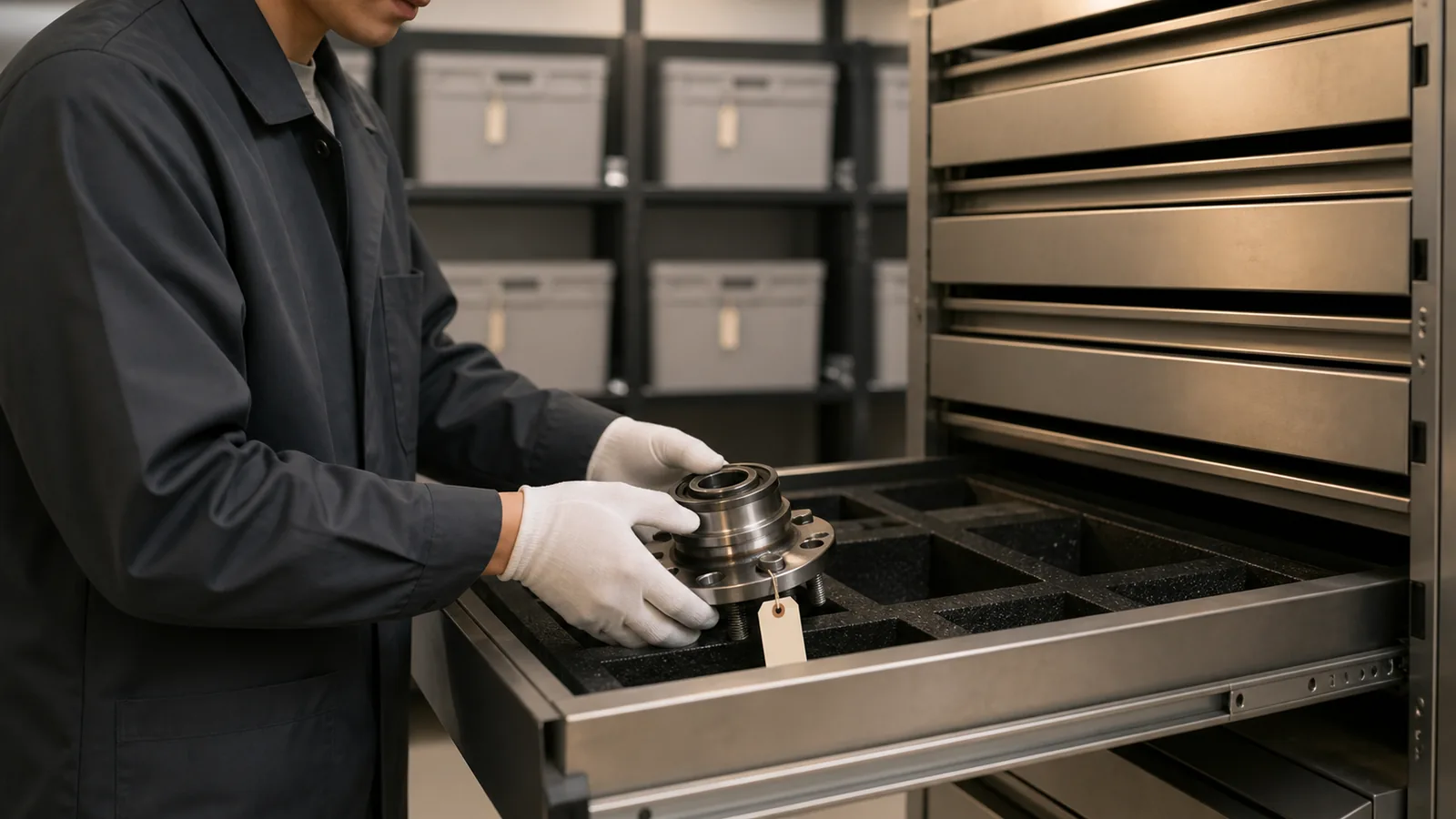
Wheel Hub Retained Sample and Master Sample Control
A retained sample preserves evidence from a defined lot; a master sample represents an approved comparison state for a defined purpose. Neither object should become an undocumented substitute for a drawing or current product approval.
How should buyers control wheel hub retained and master samples?
Define why each sample exists, which product, revision, site, process, lot and approval record it represents, and which characteristics may be compared. Assign a unique sample ID, seal or tamper control where appropriate, storage conditions, access owner, review interval and disposition rule. Preserve condition changes and destructive use. A master sample must have explicit approval scope and expiry or review triggers; a retained sample must remain linked to the represented lot. When sample and current specification conflict, hold the decision and resolve the controlling baseline rather than copying the sample.
Separate retained and master-sample purposes
State whether the object preserves history or supports an approved comparison. The value of this control in wheel hub retained and master sample control is that one sample can be reused as universal approval evidence. A fast answer is useful only when another reviewer can see how it was reached and where its limits begin. Speed without an evidence trail simply moves the delay to receiving, returns or customer service.
Use sample request, PPAP or customer record, lot, drawing, comparison characteristic and decision owner as the intake baseline. Next, write a purpose statement and list uses that remain prohibited. Make each transformation visible: converted units, normalized numbers, translated wording and calculated totals belong in separate fields from source values. This design exposes errors early and prevents a spreadsheet formula from being mistaken for a supplier commitment.
Decision rule and evidence owner
The approved record should retain type, scope, authority, effective date and expiry trigger. Link it to the exact SKU, RFQ line, purchase order or lot that it controls. If one attribute changes, reviewers can then locate the affected outputs without replacing unrelated descriptions or repeating the entire investigation.
For example, a retained complaint unit is used to approve cosmetic appearance. Stop release where sample purpose or approval authority is undefined. Capture the reason, the evidence requested and the next review point. A clear hold code is operationally better than an informal warning that warehouse or sales staff may never see.
Build sample genealogy
Link the physical object to product, revision, source and represented population. The value of this control in wheel hub retained and master sample control is that labels can survive while their database relationship changes. A fast answer is useful only when another reviewer can see how it was reached and where its limits begin. Speed without an evidence trail simply moves the delay to receiving, returns or customer service.
Use supplier model, buyer SKU, OE reference, drawing, site, process, lot, manufacture and receipt records as the intake baseline. Next, apply a stable ID and reconcile markings without replacing source values. Make each transformation visible: converted units, normalized numbers, translated wording and calculated totals belong in separate fields from source values. This design exposes errors early and prevents a spreadsheet formula from being mistaken for a supplier commitment.
A workable release condition
The approved record should preserve photos, custody, seals and relationship evidence. Link it to the exact SKU, RFQ line, purchase order or lot that it controls. If one attribute changes, reviewers can then locate the affected outputs without replacing unrelated descriptions or repeating the entire investigation.
For example, two revisions share one external casting mark. Stop release where the object cannot be tied to the claimed baseline. Capture the reason, the evidence requested and the next review point. A clear hold code is operationally better than an informal warning that warehouse or sales staff may never see.
Protect sample condition and access
Keep corrosion, handling, component loss and unauthorized use visible. The value of this control in wheel hub retained and master sample control is that a changed sample can create false comparison findings. A fast answer is useful only when another reviewer can see how it was reached and where its limits begin. Speed without an evidence trail simply moves the delay to receiving, returns or customer service.
Use packaging, corrosion protection, location, access list, environmental needs and inspection log as the intake baseline. Next, define handling and return steps appropriate to the object’s intended use. Make each transformation visible: converted units, normalized numbers, translated wording and calculated totals belong in separate fields from source values. This design exposes errors early and prevents a spreadsheet formula from being mistaken for a supplier commitment.
How to document the exception
The approved record should record checkout, condition, photographs and any missing component. Link it to the exact SKU, RFQ line, purchase order or lot that it controls. If one attribute changes, reviewers can then locate the affected outputs without replacing unrelated descriptions or repeating the entire investigation.
For example, a sample leaves the cabinet for a sales display and returns scratched. Stop release where current condition is not suitable or documented. Capture the reason, the evidence requested and the next review point. A clear hold code is operationally better than an informal warning that warehouse or sales staff may never see.
Control comparison methods
Specify which characteristics and method the sample can support. The value of this control in wheel hub retained and master sample control is that visual similarity can silently replace measured or specification-based acceptance. A fast answer is useful only when another reviewer can see how it was reached and where its limits begin. Speed without an evidence trail simply moves the delay to receiving, returns or customer service.
Use approved characteristic list, viewing conditions, fixtures, photographs, drawing and method as the intake baseline. Next, compare only authorized fields and route measurements through controlled equipment. Make each transformation visible: converted units, normalized numbers, translated wording and calculated totals belong in separate fields from source values. This design exposes errors early and prevents a spreadsheet formula from being mistaken for a supplier commitment.
A case that exposes the hidden risk
The approved record should retain comparator, date, result, limitation and conflicting evidence. Link it to the exact SKU, RFQ line, purchase order or lot that it controls. If one attribute changes, reviewers can then locate the affected outputs without replacing unrelated descriptions or repeating the entire investigation.
For example, connector color matches but the keyed interface differs. Stop release where comparison exceeds the sample’s approved purpose. Capture the reason, the evidence requested and the next review point. A clear hold code is operationally better than an informal warning that warehouse or sales staff may never see.
Reapprove, replace or dispose deliberately
Respond to product changes, degradation, expiry and program closure. The value of this control in wheel hub retained and master sample control is that obsolete samples can remain influential after drawings or processes change. A fast answer is useful only when another reviewer can see how it was reached and where its limits begin. Speed without an evidence trail simply moves the delay to receiving, returns or customer service.
Use change notice, new approval, condition review, affected records, customer instruction and disposal authority as the intake baseline. Next, quarantine the old reference until transition decisions are documented. Make each transformation visible: converted units, normalized numbers, translated wording and calculated totals belong in separate fields from source values. This design exposes errors early and prevents a spreadsheet formula from being mistaken for a supplier commitment.
What a second reviewer should see
The approved record should preserve supersession, replacement sample and disposition evidence. Link it to the exact SKU, RFQ line, purchase order or lot that it controls. If one attribute changes, reviewers can then locate the affected outputs without replacing unrelated descriptions or repeating the entire investigation.
For example, a new sensor revision enters production while the old master stays active. Stop release where active and superseded reference states are ambiguous. Capture the reason, the evidence requested and the next review point. A clear hold code is operationally better than an informal warning that warehouse or sales staff may never see.
Retained and master-sample register
Use this buyer-side register to keep document presence, technical review and release authority as separate states.
| Control | Evidence to retain | Hold trigger |
|---|---|---|
| Separate retained and master-sample purposes | sample request, PPAP or customer record, lot, drawing, comparison characteristic and decision owner | sample purpose or approval authority is undefined |
| Build sample genealogy | supplier model, buyer SKU, OE reference, drawing, site, process, lot, manufacture and receipt records | the object cannot be tied to the claimed baseline |
| Protect sample condition and access | packaging, corrosion protection, location, access list, environmental needs and inspection log | current condition is not suitable or documented |
| Control comparison methods | approved characteristic list, viewing conditions, fixtures, photographs, drawing and method | comparison exceeds the sample's approved purpose |
| Reapprove, replace or dispose deliberately | change notice, new approval, condition review, affected records, customer instruction and disposal authority | active and superseded reference states are ambiguous |
Treat physical samples as controlled evidence
AIAG's PPAP overview and Timken's public supplier material show that sample and approval evidence belong to defined product, revision and customer contexts.
A physical reference can support inspection or investigation only within its documented purpose and condition; it does not replace the controlling drawing or specification.
The buyer's contract and quality system determine sample quantity, storage duration and approval authority. No universal period or sample count is proposed here.
Claim boundary: No JNHJDP master sample, retained-sample duration, customer approval or product conformity is asserted.
Additional review scenarios for wheel hub retained and master sample control
Review scenario 1 for wheel hub retained and master sample control: Start from sample request, PPAP or customer record, lot, drawing, comparison characteristic and decision owner. The reviewer should write a purpose statement and list uses that remain prohibited. An independent checker then tests the conclusion against the stated decision boundary and confirms that the record will retain type, scope, authority, effective date and expiry trigger. If sample purpose or approval authority is undefined, keep the affected line on hold, name the missing evidence and prevent the provisional interpretation from entering a quote, catalog, purchase order or customer promise. The case can move again when the evidence owner closes that exact field; a general assurance, familiar photograph or previous order is not a substitute for the missing source.
Review scenario 2 for wheel hub retained and master sample control: Start from supplier model, buyer SKU, OE reference, drawing, site, process, lot, manufacture and receipt records. The reviewer should apply a stable ID and reconcile markings without replacing source values. An independent checker then tests the conclusion against the stated decision boundary and confirms that the record will preserve photos, custody, seals and relationship evidence. If the object cannot be tied to the claimed baseline, keep the affected line on hold, name the missing evidence and prevent the provisional interpretation from entering a quote, catalog, purchase order or customer promise. The case can move again when the evidence owner closes that exact field; a general assurance, familiar photograph or previous order is not a substitute for the missing source.
Review scenario 3 for wheel hub retained and master sample control: Start from packaging, corrosion protection, location, access list, environmental needs and inspection log. The reviewer should define handling and return steps appropriate to the object's intended use. An independent checker then tests the conclusion against the stated decision boundary and confirms that the record will record checkout, condition, photographs and any missing component. If current condition is not suitable or documented, keep the affected line on hold, name the missing evidence and prevent the provisional interpretation from entering a quote, catalog, purchase order or customer promise. The case can move again when the evidence owner closes that exact field; a general assurance, familiar photograph or previous order is not a substitute for the missing source.
Review scenario 4 for wheel hub retained and master sample control: Start from approved characteristic list, viewing conditions, fixtures, photographs, drawing and method. The reviewer should compare only authorized fields and route measurements through controlled equipment. An independent checker then tests the conclusion against the stated decision boundary and confirms that the record will retain comparator, date, result, limitation and conflicting evidence. If comparison exceeds the sample's approved purpose, keep the affected line on hold, name the missing evidence and prevent the provisional interpretation from entering a quote, catalog, purchase order or customer promise. The case can move again when the evidence owner closes that exact field; a general assurance, familiar photograph or previous order is not a substitute for the missing source.
Review scenario 5 for wheel hub retained and master sample control: Start from change notice, new approval, condition review, affected records, customer instruction and disposal authority. The reviewer should quarantine the old reference until transition decisions are documented. An independent checker then tests the conclusion against the stated decision boundary and confirms that the record will preserve supersession, replacement sample and disposition evidence. If active and superseded reference states are ambiguous, keep the affected line on hold, name the missing evidence and prevent the provisional interpretation from entering a quote, catalog, purchase order or customer promise. The case can move again when the evidence owner closes that exact field; a general assurance, familiar photograph or previous order is not a substitute for the missing source.
Related wheel hub buyer resources
- Wheel Hub Assembly catalog
- Wheel Hub Bearing catalog
- wheel bearing versus wheel hub assembly guide
- ABS encoder identification guide
- wheel hub OE number and RFQ guide
- fitment verification workflow
- sample approval workflow
- kit contents and BOM verification
- supplier evaluation evidence guide
- export packaging checklist
- MOQ and lead-time planning guide
- incoming inspection checklist
- About Jinan Huayuan Auto Bearing
Sources, dates and claim boundaries
- AIAG Production Part Approval Process overview — official PPAP scope: demonstrating that design-record and specification requirements can be met during an actual production run; the customer defines the applicable submission
- Timken Supplier Requirements Manual — public requirements covering revision control, identification, lot traceability, shipment records and supplier evidence boundaries
- Timken Purchased Product for Prototype procedure — official example distinguishing prototype evidence and production PPAP; it applies to Timken transactions, not automatically to JNHJDP orders
- AIAG automotive quality manuals — official scope descriptions for PPAP, control plans, error proofing and other automotive quality references
Technical review: Jinan Huayuan Auto Bearing editorial review for source fidelity, procurement-data consistency and unsupported-claim removal. This review does not replace an OE catalog, vehicle service procedure, legal or customs advice, a customer-approved drawing, or mutually agreed commercial and inspection terms.
Corrections: Send the page URL and supporting evidence through the contact page. Material corrections are reviewed, linked records are rechecked and the updated date is changed when warranted.