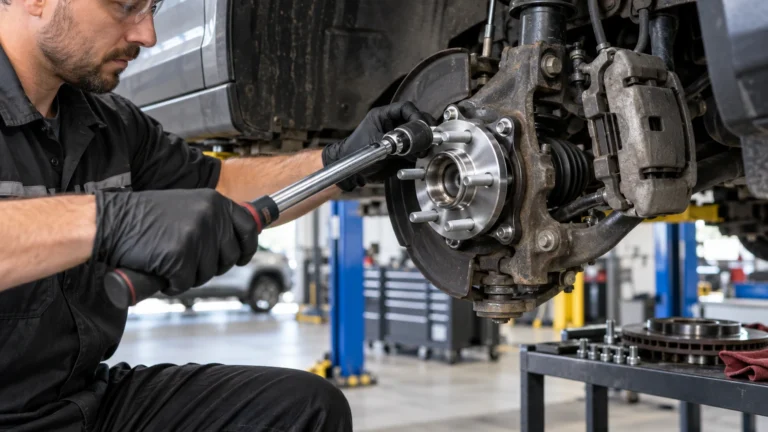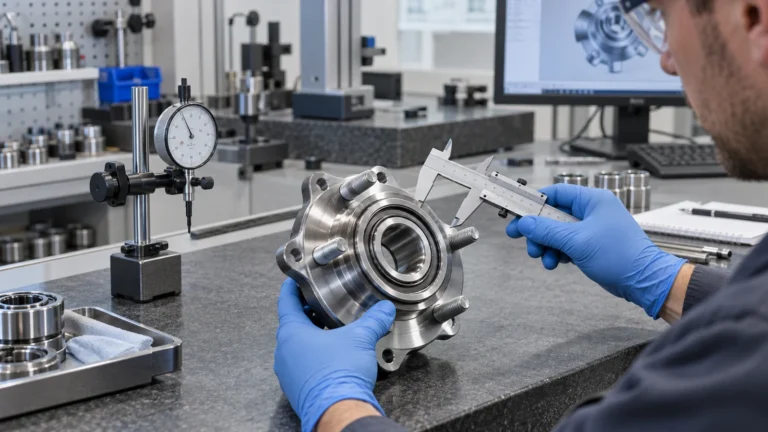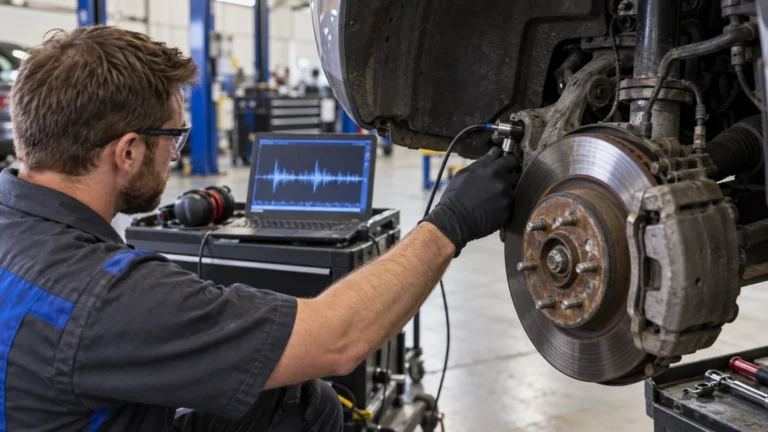
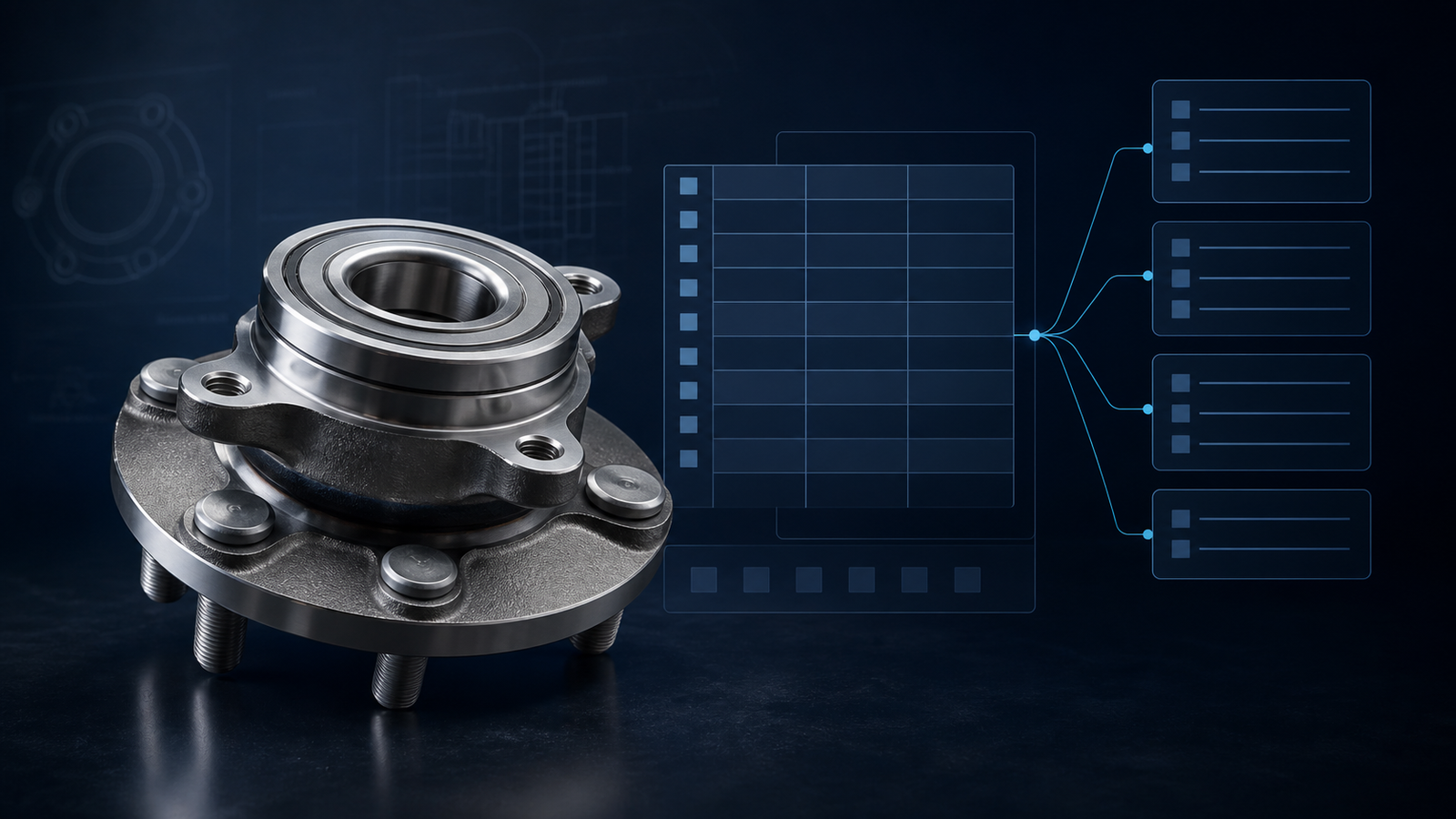
How to Build a Reliable Wheel Hub Bearing OE Cross-Reference and Fitment File
# How to Build a Reliable Wheel Hub Bearing OE Cross-Reference and Fitment File
A reliable wheel hub bearing cross-reference does more than place two part numbers on the same row. It connects a specific product configuration to a verified OE reference, vehicle application, market, production range, axle and drivetrain, dimensions, mounting interfaces, and ABS/sensor arrangement, while preserving the source, confidence level, revision, and approval status. A number-only match is not sufficient for purchase-order release.
This discipline is essential for wheel-end products because small differences can determine whether a part mounts, rotates, communicates with the ABS system, or fits a particular production period. The goal is not to collect the largest possible interchange list. The goal is to maintain a controlled file in which every released relationship is explainable and auditable.
Cross-Reference, Fitment, and Product Data Are Different
These three data layers should be connected but not confused.
Cross-Reference Data
States that one identifier corresponds to, replaces, supersedes, or is commercially comparable with another identifier. It must preserve the relationship type and source.
Fitment Data
States that a product applies to a defined vehicle or equipment configuration. Year, make, and model alone may be insufficient; market, body, chassis, engine, transmission, drivetrain, axle, production date, and qualifiers can matter.
Product Data
Describes the physical and commercial item: dimensions, bearing generation, rolling elements, flanges, studs, spline, ABS encoder, sensor, cable, hardware, packaging, and other attributes.
A trustworthy catalog links all three. A reference without fitment may map the wrong application. Fitment without product attributes makes validation difficult. Product attributes without a source and revision can drift over time.
Why OE Number Alone Is Not Enough
An OE number is usually the strongest starting point, but several situations create risk:
- The number has been superseded.
- The same vehicle name uses different parts by market or production date.
- A catalog omits drivetrain or axle qualifiers.
- One aftermarket item consolidates several OE references, but only under specific conditions.
- A reference is copied from an unverified marketplace listing.
- A supplier number points to a kit whose contents differ from another brand’s kit.
- The bearing dimensions match but the ABS encoder, sensor, flange, or spline differs.
- A typographical error creates a valid-looking but incorrect number.
Therefore, treat the OE number as a primary key candidate, not as the entire validation record.
A Practical Data Model for Wheel Hub Products
The following groups can be implemented in a spreadsheet, PIM, ERP, catalog database, or ACES/PIES workflow.
1. Record Identity
- Internal record ID
- Buyer part number
- Supplier part number
- Brand
- Product family
- Product type: Gen 1 bearing, Gen 2 unit, Gen 3 assembly, or kit
- Record owner
- Creation date and last-review date
- Status: draft, under review, approved, suspended, obsolete
2. Reference Numbers
- Primary OE number
- Additional OE numbers
- Superseded-from number
- Superseded-to number
- Aftermarket interchange
- Reference relationship: exact, conditional, supersession, informational, or rejected
- Source name, URL/document, date, and page/section where applicable
- Source confidence level
Never store all numbers as an undifferentiated comma-separated string if the system can support structured rows. Each relationship needs its own status and evidence.
3. Vehicle Application
- Make
- Model
- Platform/chassis
- Model year or production-date range
- Sales market/region
- Body style where relevant
- Engine qualifier where relevant
- Transmission qualifier where relevant
- Drivetrain: FWD, RWD, AWD, 4WD
- Front/rear axle
- Left/right restriction
- Driven/non-driven wheel
- Notes and exclusion qualifiers
For North American aftermarket exchange, the Auto Care Association describes ACES as the industry standard for managing and communicating fitment data through standardized, codified vehicle and qualifier information. ACES is a communication framework; it does not automatically research fitment for the supplier. The data owner must still create, obtain, and validate the application data.
4. Bearing and Mounting Attributes
- Rolling element: ball or roller
- Generation/architecture
- Bore, outside diameter, and width
- Flange diameter
- Bolt-circle diameter
- Wheel-stud count and thread
- Pilot diameter
- Spline count and critical dimensions
- Knuckle-side mounting pattern
- Flange offset or overall height
- Seal and encoder side
5. ABS and Sensor Attributes
- ABS function present
- Magnetic encoder or toothed target
- Encoder side/orientation
- Sensor included
- Connector and pin configuration
- Cable length and clip/routing features
- Approved functional-test method
6. Commercial Package
- Bearing only, assembly, or kit
- Included nut, ring, seal, bolts, sensor, cable, or other hardware
- Inner-pack configuration
- Label and barcode
- Country-of-origin statement where required
- Private-label artwork revision
- Carton dimensions and mass
7. Evidence and Approval
- Supplier drawing revision
- Inspection report revision
- Reference sample ID
- Vehicle/fixture validation status
- PPAP or sample-approval status where required
- Engineering reviewer and review date
- Catalog reviewer and review date
- Open issues
- Change-notification status
Source Hierarchy: Stronger Evidence First
Not every source deserves the same weight. A useful hierarchy is:
Tier A: Direct, Controlled Evidence
- Vehicle manufacturer parts catalog or current service information
- Approved engineering drawing
- Buyer-owned validated application file
- Physical sample with documented measurements and traceability
- Approved PPAP/sample record
Tier B: Established Industry and Manufacturer Sources
- Reputable bearing or automotive component manufacturer catalog
- Licensed industry reference database
- Established distributor catalog with controlled data governance
- Supplier catalog supported by drawing and application evidence
Tier C: Leads Requiring Verification
- Marketplace listings
- Unattributed interchange tables
- Search snippets
- Forum posts
- Images without traceable part identity
- AI-generated summaries without source records
Tier C information can identify a question. It should not independently release an interchange.
Confidence Levels for Every Relationship
Use explicit confidence statuses.
| Level | Meaning | Release action |
|---|---|---|
| Verified | Supported by controlled source plus product/application validation | May be released after normal approval |
| Supported | Multiple reputable sources agree; one validation item remains | Conditional review; do not imply full verification |
| Candidate | A plausible reference exists but evidence is incomplete | Research only; no active fitment |
| Conflict | Sources disagree or product attributes do not match | Block release and investigate |
| Rejected | Evidence shows the relationship is incorrect | Retain rejection reason to prevent re-entry |
Deleting rejected relationships can allow the same error to return later. Preserve the number, reason, reviewer, and date in a controlled exclusion table.
Step-by-Step Cross-Reference Workflow
Step 1: Normalize the Input
Preserve the original number, then create a normalized search form. Control spaces, hyphens, prefixes, suffixes, leading zeros, and case without erasing meaningful formatting.
Record where the input came from: customer inquiry, sample label, OE catalog, supplier sheet, historical order, or another source.
Step 2: Establish Product Identity
Determine whether the item is a bearing, flanged unit, complete assembly, or kit. Record the wheel-end generation or physical architecture where known. Photograph and measure the sample if available.
Step 3: Research the OE Relationship
Look for the number in controlled OE or established industry sources. Record each source separately. If a supersession exists, store the direction and conditions rather than treating all numbers as timeless equivalents.
Step 4: Build the Vehicle Application
Capture market, platform, production range, drivetrain, axle, and qualifiers. Avoid publishing a broad make/model line when the source specifies a narrower configuration.
Step 5: Compare Critical Product Attributes
Compare bearing dimensions, flange, bolt pattern, pilot, spline, offset, encoder, sensor, connector, and hardware. Create a mismatch list. One critical mismatch is enough to block the release.
Step 6: Validate the Commercial Configuration
Confirm whether the cross-reference describes a bearing, an assembly, or a kit. Match the included hardware and sensor. A technically correct bearing inside an incomplete commercial kit can still create returns.
Step 7: Approve a Sample or Fixture Check
When program risk requires it, inspect a traceable sample and validate it against an approved vehicle or fixture. Record the application and evidence, not only “sample OK.”
Step 8: Publish With a Confidence Status
Release only approved relationships. Keep candidate and conflict records out of the customer-facing catalog or clearly marked for internal research.
Step 9: Monitor Changes
Track OE supersessions, application corrections, supplier changes, customer claims, and returned-part evidence. Catalog work is an ongoing control process.
Managing Supersessions Correctly
A supersession is not simply another synonym. It can mean:
- A new number replaces an old number for all applications.
- A new number replaces an old number only after a production date.
- The service package changed while the core bearing remained related.
- Hardware or sensor inclusion changed.
- Multiple old numbers consolidate into one service kit.
- A regional number maps differently in another market.
Store effective dates, direction, application conditions, package changes, and the source. If the reason is unknown, mark it as under review.
Fitment Qualifiers That Often Cause Returns
Wheel hub products frequently require more than year/make/model.
Watch for:
- Front-wheel drive vs all-wheel drive
- Driven vs non-driven axle
- Front vs rear axle
- Left/right specific sensor routing
- Production date split within a model year
- Different wheel-stud count or bolt pattern
- Different brake package
- Different ABS system or connector
- Regional platform differences under the same model name
- Engine/transmission combinations that change the axle or wheel end
Do not hide qualifiers in a long note if the catalog system supports structured fields. Structured data is easier to validate, exchange, search, and update.
Using ACES and PIES Without Misunderstanding Them
For companies serving the Americas, ACES supports machine-readable vehicle fitment exchange, while PIES supports product information exchange. These standards help trading partners communicate in a common structure.
They do not prove that a proposed wheel hub bearing fits a vehicle. The data publisher remains responsible for research, validation, and correction. The Auto Care Association explicitly notes that ACES and its supporting vehicle database do not tell a company what its product fits; the company needs its own application data.
The correct workflow is:
- Research and validate the relationship.
- Structure the vehicle and qualifier data.
- Structure the product and attribute data.
- Exchange the approved information through the appropriate standard.
- Reconcile receiver errors and update the source record.
Quality Checks Before Catalog Publication
Run automated and human checks.
Automated Checks
- Required fields not blank
- Valid date ranges
- No reversed production periods
- OE number format rules
- Duplicate buyer number detection
- Conflicting fitment under the same SKU
- Sensor-required application missing sensor data
- Stud count inconsistent with bolt-pattern field
- Candidate/conflict status excluded from publication
- Source older than the review threshold
Human Checks
- Application plausibility
- Supersession conditions
- Product image and drawing agreement
- Dimensional match
- Encoder/sensor configuration
- Kit contents
- Translation and qualifier clarity
- Customer-facing title and notes
The checker should be independent from the person who created the record when the risk or customer program warrants it.
Change Control and Correction Workflow
When a correction is found:
- Stop new release or shipment if the risk justifies containment.
- Identify every affected SKU, batch, customer file, channel, and published page.
- Preserve the old record and change reason.
- Correct the source-of-truth record.
- Re-export ACES/PIES or partner files as applicable.
- Update website, ERP, labels, and sales documents.
- Notify affected trading partners according to the agreement.
- Verify that downstream systems received the change.
- Review whether orders, inventory, or claims require action.
A corrected spreadsheet that never reaches the distributor’s live catalog is not a completed correction.
RFQ and Data-Exchange Checklist
When asking a supplier to match wheel hub products, send:
- Original OE and aftermarket references
- Vehicle applications with market and qualifiers
- Current product photos and markings
- Critical dimensions or approved drawing
- Bearing generation and rolling-element type, if known
- Flange, bolt pattern, pilot, spline, and offset data
- ABS encoder/sensor details
- Required kit contents
- Buyer numbering and barcode rules
- Desired output template, such as spreadsheet, PIM import, ACES, or PIES
- Source and confidence fields
- Sample/PPAP requirement
- Change-notification and correction expectations
Ask the supplier to return unknowns as blank or “not verified,” not as assumed values.
Frequently Asked Questions
Is a cross-reference the same as confirmed fitment?
No. A cross-reference relates identifiers. Confirmed fitment relates a product to a defined vehicle configuration and should be supported by product attributes and evidence.
Can one wheel hub bearing replace several OE numbers?
Sometimes, but only when the application, interfaces, sensor configuration, and commercial package support the consolidation. Record conditions and supersessions.
Should marketplace listings be used as sources?
They can reveal candidate references, but they should not independently release a fitment. Verify through stronger sources and product evidence.
Does ACES provide fitment research?
No. ACES standardizes the communication of fitment data. The publisher must research, create, obtain, and validate the data.
How often should a cross-reference file be reviewed?
Review frequency should reflect change volume, claim risk, customer agreements, and source updates. High-volume or high-return SKUs deserve more frequent review.
What should happen to rejected references?
Retain them in an exclusion table with the reason, reviewer, evidence, and date so the same error is not reintroduced.
Conclusion
A useful wheel hub bearing cross-reference is a controlled relationship, not a list of numbers. Connect the identifier to vehicle fitment, product architecture, dimensions, ABS/sensor data, commercial kit contents, evidence, confidence, approval, and revision history.
The safest catalog is not the one with the most rows. It is the one whose released rows can survive a technical question, customer claim, supplier change, and downstream data update.
JNHJDP buyers can review wheel hub bearing products and wheel hub assemblies. To request matching, send the OE list, vehicle qualifiers, target market, dimensions, sensor configuration, and desired data template through the contact page.
Technical References
- Auto Care Association, Aftermarket Catalog Exchange Standard (ACES): https://www.autocare.org/aces
- Auto Care Association, ACES/PIES Frequently Asked Questions: https://www.autocare.org/about-us/frequently-asked-questions
- Auto Care Association, Product Information Exchange Standard (PIES): https://www.autocare.org/pies/
- NTN, Hub Bearings catalog: https://www.ntnglobal.com/en/products/catalog/pdf/4601E.pdf
Publication gate: JNHJDP catalog, engineering, and quality personnel must review the proposed data fields, workflow, terminology, and internal links before publication.