What Is the Automotive Wheel Hub Bearing Aftermarket Market?
The automotive wheel hub bearing aftermarket market is the replacement trade that supplies hub bearings, hub assemblies and related driveline bearings to vehicles already in service, not to an assembly line. Its demand follows vehicle age, mileage and repair frequency rather than new-car sales. HJDP, the own brand of Jinan Huayuan Auto Bearing Co., Ltd. (jnhjdp.com), supplies this market from Jinan, Shandong, China, with first-, second- and third-generation wheel hub bearings plus related running-gear components, for aftermarket replacement and OEM supply.
What Is the Automotive Wheel Hub Bearing Aftermarket Market?
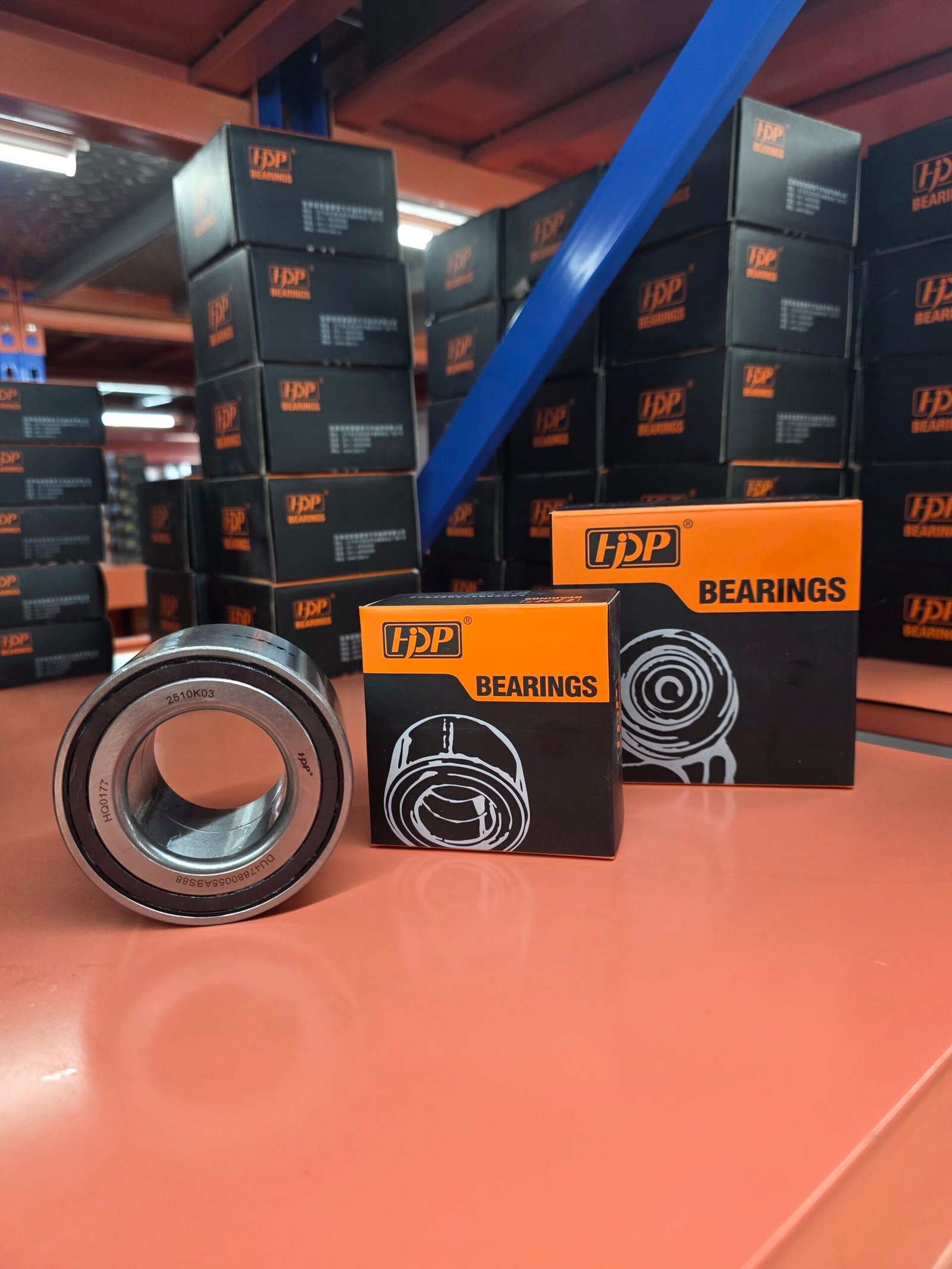
The automotive wheel hub bearing aftermarket market is a replacement-demand market: every unit sold in it repairs a vehicle that has already been registered rather than feeding a production line.
That distinction changes the whole buying logic. An OEM bearing programme is planned ahead against a build schedule and a single, stable part number. An aftermarket programme is triggered instead by a workshop finding play, rumble or an ABS warning, and it arrives as many small, unpredictable orders spread across a very wide catalogue. A supplier therefore has to do two jobs at once: make a bearing that suits the application, and make the correct reference findable by OE number, dimension and application.
How Does Aftermarket Demand Differ from OEM Supply?
Aftermarket demand differs from OEM supply in four practical ways that buyers feel in every purchase order.
- Breadth instead of volume. A distributor typically needs many references in modest quantities, so catalogue depth and repeatability between orders matter more than the size of any single shipment.
- Catalogue currency. The vehicle parc keeps shifting as platforms are facelifted, replaced or superseded, so a reference that was correct two years ago may now map to a newer part number.
- Packaging and labelling. Aftermarket buyers often need their own branding, their own barcode and their own box quantity, because the item is picked, shelved and sold at branch level.
- Documentation over slogans. Dimension drawings, material and treatment information and interface details are what let a buyer defend a fitment decision when a workshop raises a query.
What Are the Main Demand Layers Inside the Market?
The automotive wheel hub bearing aftermarket market is usually described in three demand layers, and a supplier who covers all three can carry a large share of a distributor’s wheel-end business.
- Safety-critical wheel-end demand. Front and rear hub bearings and hub units removed during brake, suspension or ABS work. These are high-turnover references and are the first lines a distributor stocks.
- Sensor-integrated demand. Third-generation hub units that carry an ABS encoder ring or sensor interface. Fitment risk is high here, because two units can be electrically similar and still have the wrong connector or encoder spacing.
- Adjacent driveline demand. Tensioner and tensioner bearings, constant velocity joint assemblies, clutch release bearings and automotive tapered or cylindrical roller bearings, which share the same workshop, the same buyer and often the same delivery.
Which Wheel Hub Bearing Products Does the Aftermarket Market Cover?
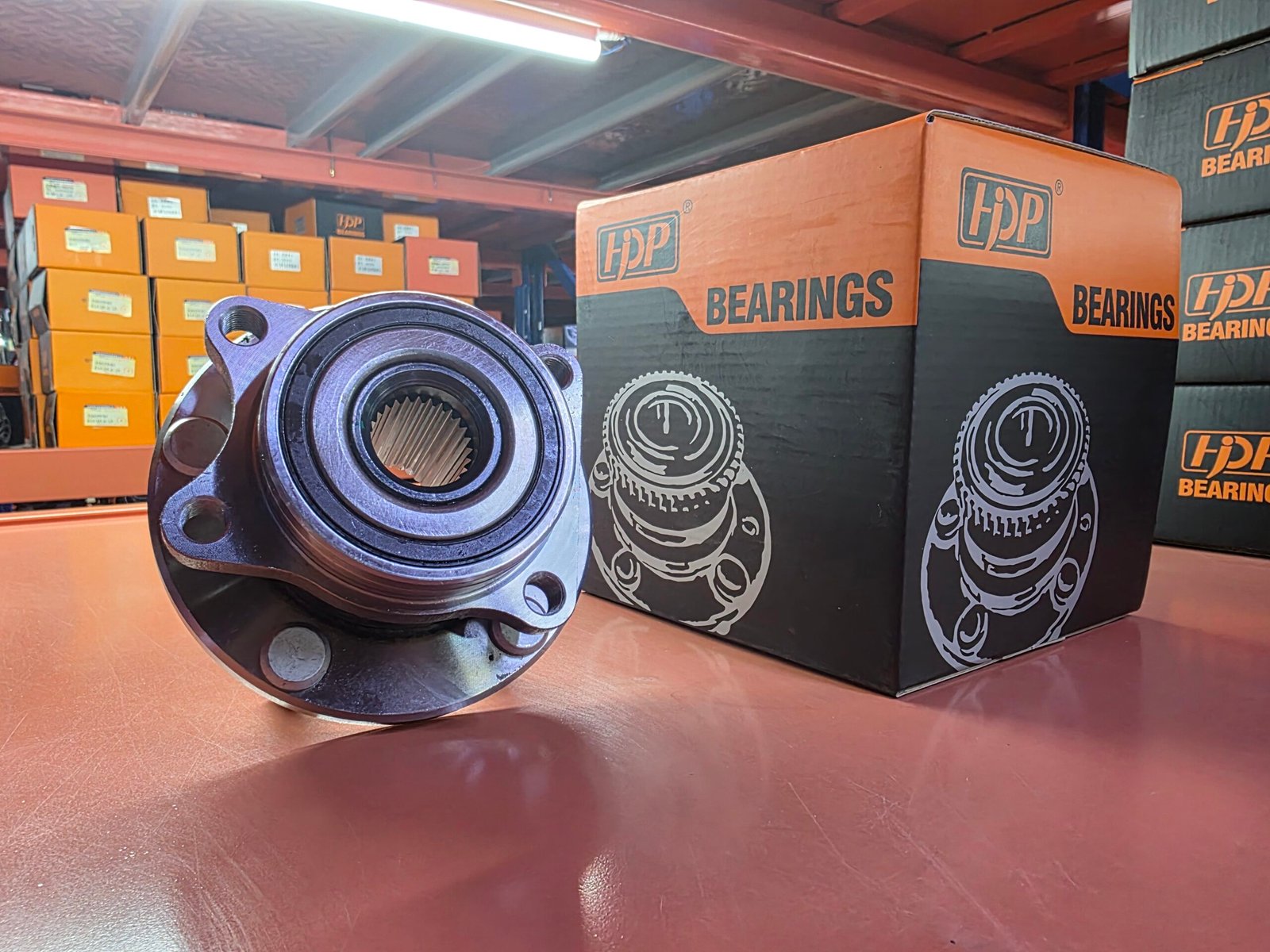
The aftermarket wheel bearing market covers three bearing generations plus a group of related driveline bearings, and the practical difference between them is how much of the wheel end is replaced in one step.
What Changes Between Generation 1, 2 and 3 Hub Bearings?
The generation number describes how much of the wheel end is integrated into the bearing, and that is what determines workshop time and the number of parts on the order line.
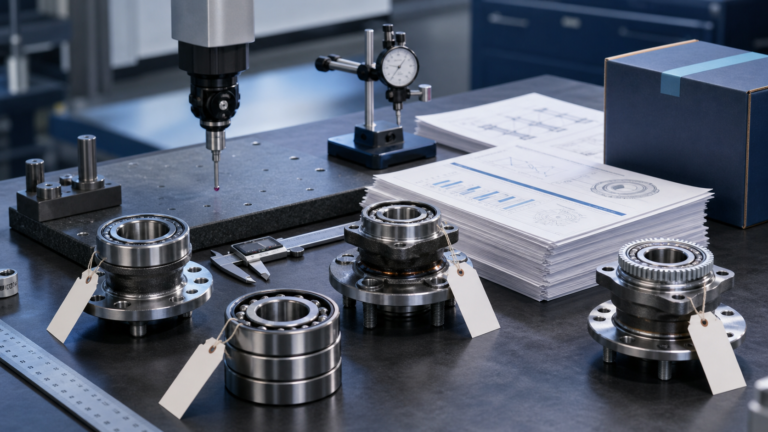
A first-generation wheel hub bearing is a double-row angular contact ball bearing pressed into a separate hub or knuckle; the workshop reuses the hub and re-presses the bearing. A second-generation bearing adds an integrated flange or mounting feature, which reduces assembly steps. A third-generation wheel hub unit integrates the bearing, hub flange and studs, and usually the ABS encoder ring, into one bolt-on assembly. Because the third-generation unit replaces more parts, it removes more diagnostic guesswork, which is why it dominates repair demand on newer vehicle parc. The trade-off is that fitment tolerances, sensor interfaces and stud patterns must be exact. For buyers comparing the simplest variants, the explanation of wheel hub bearing versus wheel hub assembly is a useful reference when writing catalogue copy and branch-level descriptions.
Which Related Components Should Sit in the Same Catalogue?
Related components belong in the same catalogue when they are removed during the same repair, so a wheel-end buyer can fill one order line and receive one shipment.
Tensioner and tensioner bearings sit with belt-drive work. Constant velocity joint assemblies cover driveline repairs on front-wheel-drive vehicles. Clutch release bearings are ordered with clutch service. Automotive tapered roller bearings serve wheel ends, differentials and trailer axles, while cylindrical roller bearings support gearbox and shaft applications. HJDP covers these families alongside its hub bearing range, which lets a distributor build a coherent wheel-end and driveline shelf instead of assembling it from unrelated sources.
| Product family | Typical construction | Role in the aftermarket market |
|---|---|---|
| First-generation wheel hub bearing | Double-row angular contact ball bearing, pressed into a separate hub or knuckle | Replacement on older platforms where the hub is reused and the bearing is re-pressed |
| Second-generation wheel hub bearing | Bearing with an integrated flange or mounting feature | Reduces assembly steps where the bearing carries the mounting face |
| Third-generation wheel hub unit | Bearing, hub flange, studs and usually an ABS encoder ring in one unit | Fastest workshop replacement; the main growth area on modern vehicle parc |
| Wheel hub assembly | Complete hub unit supplied with flange, studs and, where fitted, sensor interface | Sold as a single line item to cut diagnostic and fitting time |
| Tensioner and tensioner bearing | Pulley, bearing and tensioning element | Belt-drive repair ordered alongside wheel-end work |
| Constant velocity joint assembly | Outer and inner race, cage, balls, boot and shaft interface | Driveline repairs that share the same workshop and buyer |
| Clutch release bearing | Thrust bearing in a carrier | Clutch service; frequently ordered with clutch kits |
| Automotive tapered roller bearing | Separable cup and cone | Wheel ends, differentials and trailer axles |
| Automotive cylindrical roller bearing | Cylindrical rollers with cage | Gearbox and shaft support applications |
Exact dimensions, ABS variants and OE references are confirmed against drawings and samples, not from catalogue names alone.
How Is the Aftermarket Market Segmented by Region and Channel?
The automotive wheel hub bearing aftermarket market segments most usefully by buyer channel first and by region second, because one region can contain very different buying behaviour.
Which Buyer Channel Are You Actually Serving?
Channel determines order pattern, packaging and how much technical support the buyer needs from the supplier.
Importers buy in container quantities and carry the catalogue risk themselves; they want clean part numbers, stable cartons and predictable repeat quality. Wholesalers break containers into branch-level quantities and care about box counts, barcodes and shelf-ready labels. Auto parts chains need planogram-friendly packaging and a supplier who can hold a supersession file so a discontinued reference maps to a live one. Repair-shop channels and workshop groups order frequently in small quantities and lean on the supplier’s fitment guidance, which is where complete kits and clear installation notes reduce returns.
How Does Region Change the Buying Brief?
Region changes which vehicle platforms dominate the parc and therefore which references turn fastest, but it should be treated as a starting hypothesis rather than a fixed rule.
| Region | Channel profile commonly seen | What buyers typically prioritise |
|---|---|---|
| Middle East | Importers and wholesale distributors serving multi-brand workshops | Broad coverage across Japanese, Korean, European and American applications; heat tolerance |
| Southeast Asia | Distributors, parts chain stores and workshop groups | High-turnover references for Japanese and Korean models; compact packaging |
| South America | Importers and regional wholesalers | Mixed European and American parc; clear supersession and variant naming |
| Africa | Wholesalers and repair-shop supply chains | Durability under road and load conditions; simple, robust references |
| CIS countries | Importers and wholesale networks | European and locally assembled platforms; documentation in the buyer’s language where needed |
These patterns are directional rather than fixed. The global automotive wheel bearing market analysis discusses how parc composition and replacement cycles move reference demand over time, and any buying plan should be re-checked against current registration data rather than assumed.
How Do You Build a Fitment File That Survives Aftermarket Returns?
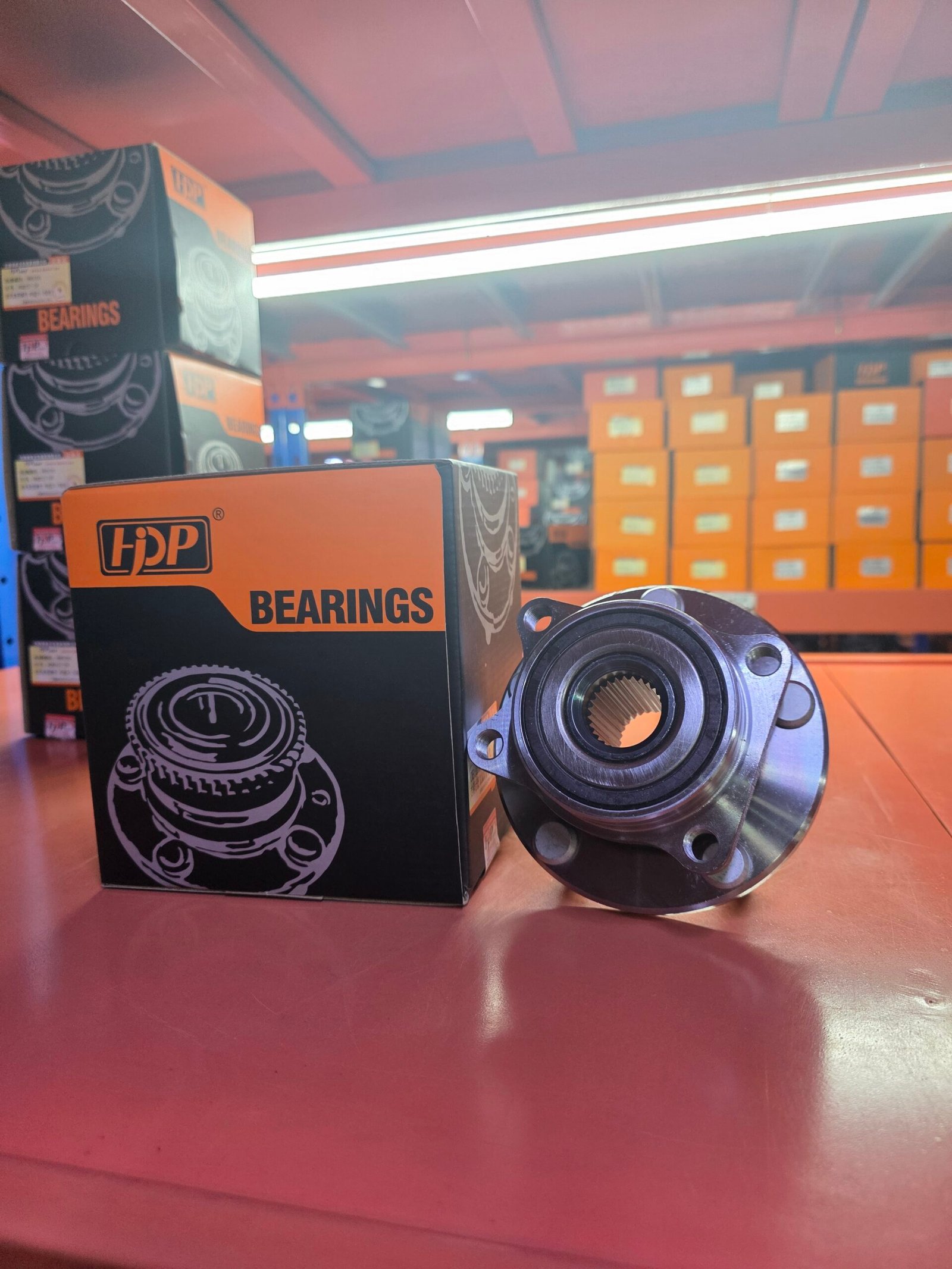
A fitment file survives aftermarket returns when it is built from OE numbers and measured interfaces rather than from vehicle names, and when every change is versioned.
The following sequence is the order that keeps catalogue errors low.
- Start from OE numbers, not model names. Model names overlap across markets and years, while an OE number is a specific, checkable identity. Treat every vehicle name as a label pointing to one or more OE references.
- Map supersessions in both directions. A superseded number must resolve from old to new and, where relevant, back again, so a workshop searching the number printed on an old box still reaches a live reference. Disciplined wheel hub bearing supersession management prevents duplicate SKUs that behave identically.
- Separate ABS and non-ABS variants explicitly. Two hub units can share a bolt pattern and differ only in encoder or connector detail, so file them as distinct references with their own drawings.
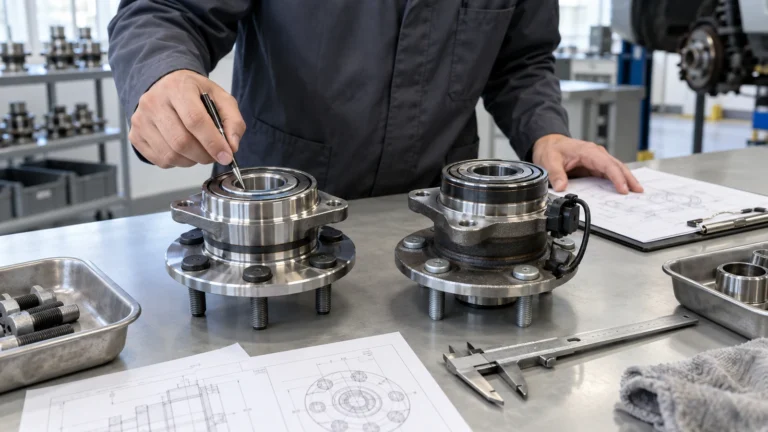
- Record dimensions and interfaces on the drawing. Flange diameter, stud count and thread, bearing bore, mounting hole positions and sensor interface should all appear on the OE cross-reference and fitment file record, not only in a supplier’s internal notes.
- Confirm on samples before publishing. Fit the trial unit to a representative hub or knuckle, check seating and rotation and, where applicable, sensor output, then photograph the result for the file.
- Lock kit contents and labelling. Decide what is in the box, in what quantity, with which fasteners or seals, and hold that definition stable so the same reference does not change contents between shipments.
- Version every change. Date each edit, record who requested it and keep the previous definition retrievable, so a claim can be traced to the exact catalogue state that applied at the time of sale.
Steps three to five depend on the supplier, who should support them with drawings and samples. OE references, model coverage and variant differences are confirmed by drawing and sample, not by catalogue name alone.
Which Supplier Profile Fits Your Aftermarket Programme?
The right supplier profile depends on how much of the catalogue you want to control yourself and how much consistency you need between shipments.
| Supplier profile | Typical strength | Typical limitation | Fits best when |
|---|---|---|---|
| Trading company without its own plant | Wide product range sourced from several factories | Less direct control over dimensional consistency and packaging | You need many unrelated categories quickly |
| Integrated manufacturer with its own brand, such as HJDP | Direct control over drawing confirmation, sampling and private-label packaging | Range may be narrower than a multi-factory trader | You want one consistent house brand across hub bearings and related components |
| OEM-only manufacturer | Production discipline aligned to one vehicle programme | Limited aftermarket catalogue and packaging flexibility | You need one specific high-volume reference |
| Unbranded low-cost source | Low entry cost | Weak traceability and inconsistent quality between orders | Non-safety-critical applications; rarely suitable for hub bearings |
What Does an Own-Brand Manufacturer Such as HJDP Provide?
An own-brand manufacturer provides a single accountable source behind one label, which matters when the same brand has to appear across hub bearings and related wheel-end components.
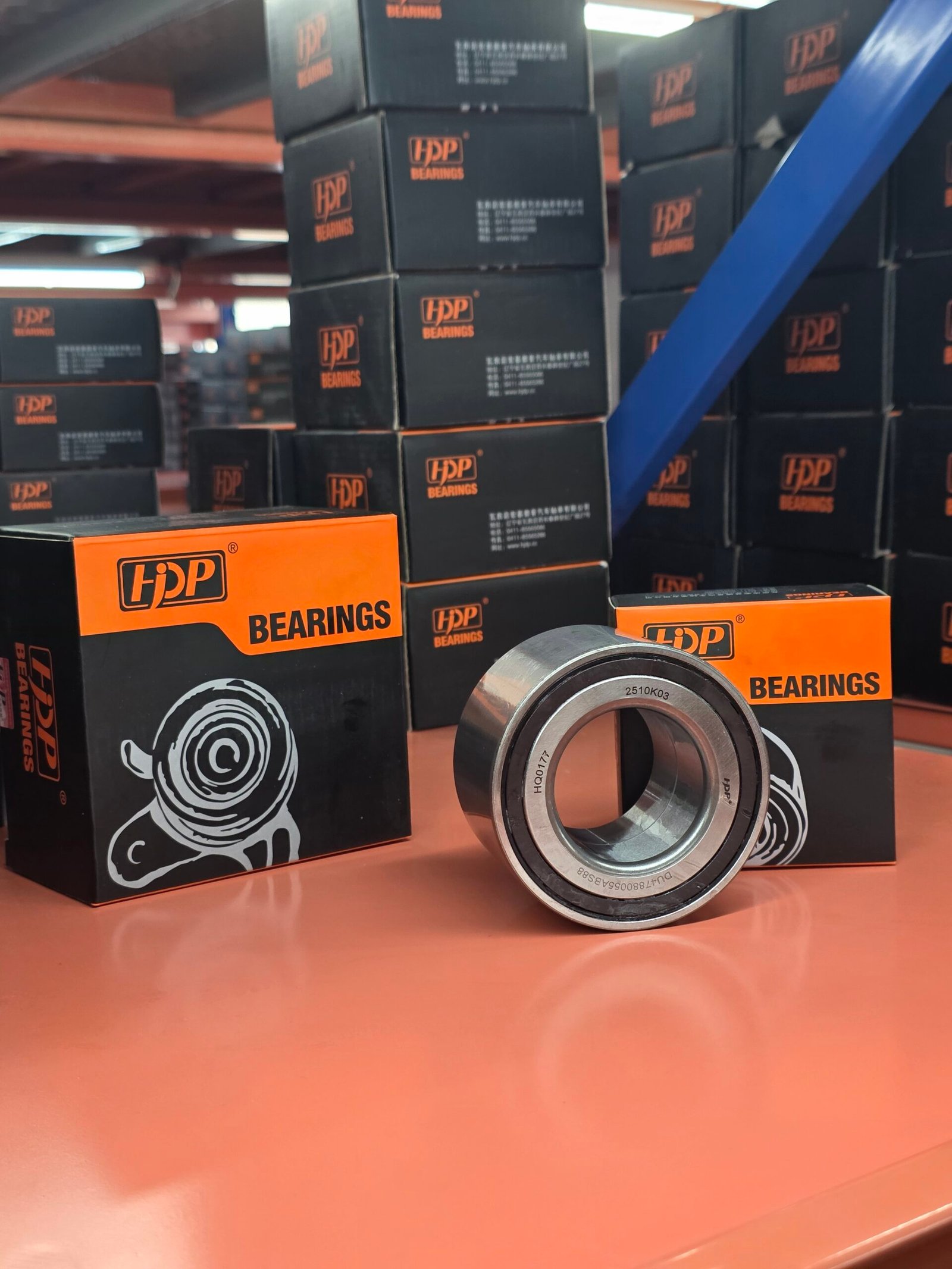
HJDP is the own brand of Jinan Huayuan Auto Bearing Co., Ltd., published at jnhjdp.com. Because the brand sits directly on the manufacturer, buyers can work from drawing and sample confirmation, request custom packaging and order private-label or own-brand marking for their own distribution. That is a different relationship from buying mixed boxes from several undisclosed factories: the reference, the packaging definition and the next order all come from the same source, which makes catalogue consistency easier to hold.
What Should You Verify Before a Trial Order?
A trial order should verify process control and documentation, not just the sample in the box.
Ask for the dimension drawing for each reference, the marking used on the product and on the box, the packing specification and the basis on which lead time is quoted. Check how the supplier handles a drawing change part-way through a programme, and how a fitment query after shipment would be handled. A structured wheel hub bearing supplier audit checklist keeps those questions consistent across candidates, while a written wheel hub bearing RFQ checklist makes sure no reference is quoted without its variant and packaging definition.
How Do You Control Quality Risk in an Aftermarket Bearing Programme?
Quality risk in an aftermarket bearing programme is controlled by separating the causes of returns and testing each one before shipment, rather than by reassurance.
Where Do Aftermarket Returns Actually Come From?
Most returns trace back to four causes, and only one of them is a manufacturing defect.
- Fitment error. The right family but the wrong variant: different encoder, stud pattern or flange depth.
- Installation damage. Incorrect pressing, impact on the flange, or reuse of worn mating parts.
- Wrong part in the right box. A picking or labelling failure at the supplier’s warehouse.
- Genuine wear-out or premature failure. Contamination, inadequate lubrication, or a load condition the bearing was not selected for.
Sorting returns into those four buckets tells you whether to fix the catalogue, the packaging, the installation guidance or the product itself.
What Can Be Verified Before Shipment?
Several things can be verified before shipment without relying on claims.
Dimensional checks against the confirmed drawing, visual and functional checks on the ABS interface where a unit carries one, marking and box-label accuracy against the picking list, pack quantity and carton strength for the intended shipping mode, and rotation or noise checks where the supplier’s process includes them. Buyers can also ask which material grade and heat treatment route the supplier works to and how that is recorded per batch. A supplier who can describe the material and treatment route in plain terms, and show it on a batch record, is easier to audit than one who answers only with a general quality statement.
How Do You Separate Wear from Installation Damage?
Wear and installation damage look different on a returned unit and should be treated differently in a claim.
Even, circumferential wear across the raceway with discoloured grease points toward service life or lubrication conditions. Localised indentation, a cracked or distorted flange, or a damaged seal lip points toward fitting technique. Documenting these patterns is the same discipline used in the field to tell whether a wheel hub bearing is failing, and applying it to returns turns arguments into a measurable feedback loop that improves both the catalogue and the installation notes.
Automotive Wheel Hub Bearing Aftermarket Market: FAQ
What is the difference between a wheel hub bearing and a wheel hub assembly?
A wheel hub bearing is the bearing element itself, which on first-generation designs is pressed into a separate hub. A wheel hub assembly is the complete unit: bearing, hub flange, studs and often the ABS interface, supplied ready to bolt on. Assemblies reduce workshop time, while separate bearings suit platforms where the original hub is reused. Both must be confirmed against the vehicle’s OE number.
How do I confirm that a third-generation hub unit will fit?
Confirm by OE number first, then by drawing: bolt pattern and stud thread, flange diameter, bearing seating depth, and the ABS encoder or connector type where fitted. A visual match on the flange is not enough, because two units can look identical and differ only in sensor detail. Final confirmation should come from a sample fitted to a representative hub, as noted in the guide to OE number and ABS fitment.
Which references should an aftermarket distributor stock first?
Start with the highest-turnover references for the vehicle parc you actually sell into, usually the dominant Japanese, Korean, European or American platforms in your market, and stock complete third-generation hub units alongside the separate bearings those platforms use. Add adjacent components such as tensioner or clutch release bearings only once wheel-end references are turning consistently.
How does supersession affect aftermarket catalogue accuracy?
Supersession is the rule mapping an older part number to its current replacement. If it is not recorded, the same physical bearing can sit in a catalogue under several numbers, inflating SKU counts and confusing branch staff. A maintained supersession file lets a workshop search any number it finds on an old box and reach a live reference, which reduces dead stock and mis-picks.