
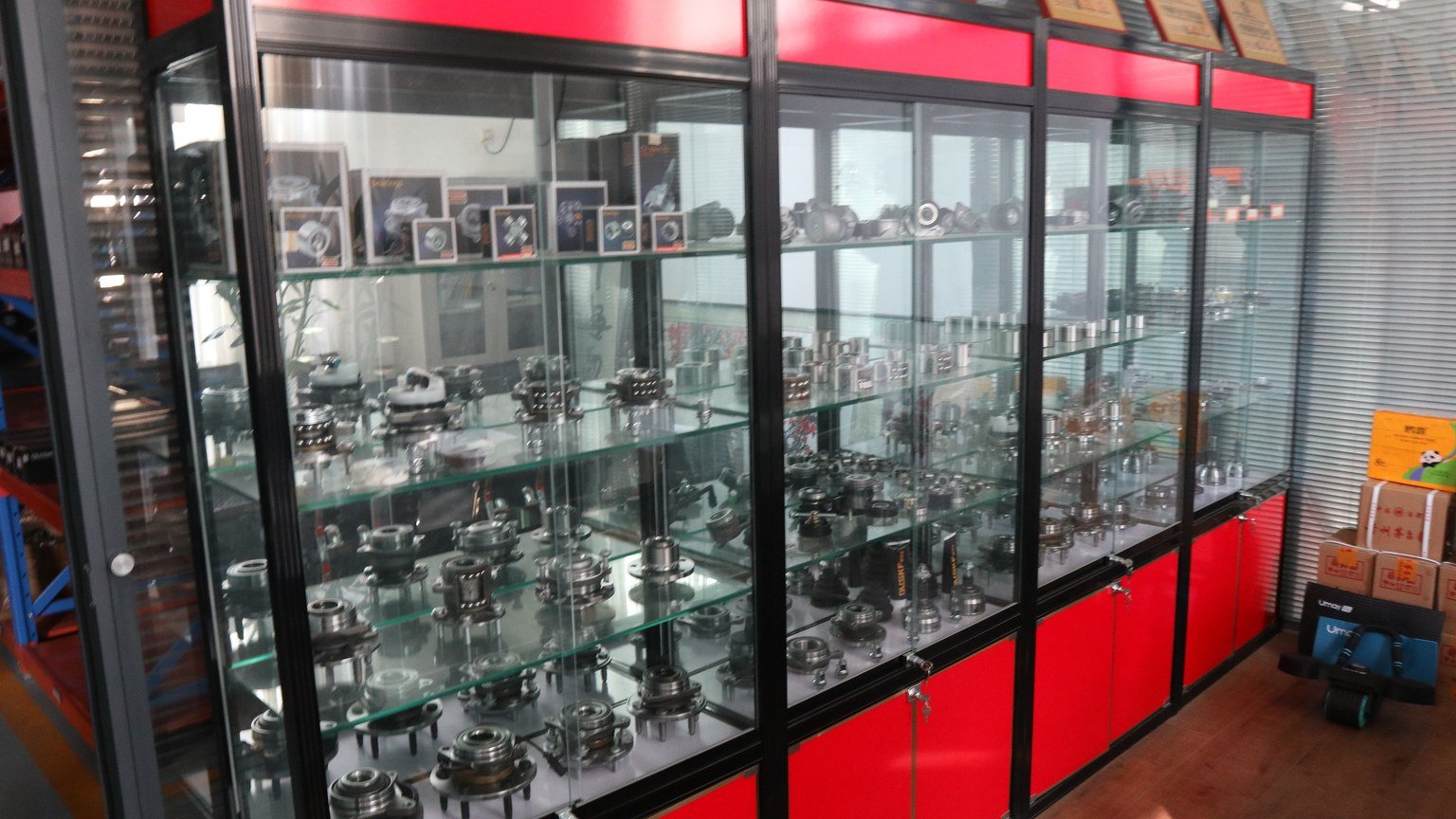
TU0907 Bearing Code: How to Identify and Match the Right Part
TU0907 is a reference code, not a dimension code. It identifies a part inside one catalog or drawing system; it does not encode bore, outside diameter or width, and it cannot be cross-referenced by number alone. A reliable match comes from three things in order: the application, the dimensioned drawing, and a physical sample compared against that drawing. HJDP, the own brand of Jinan Huayuan Auto Bearing Co., Ltd. published at jnhjdp.com, supplies wheel hub bearings and driveline bearings confirmed by exactly that routine, for importers, distributors and workshop channels who need a part to fit on the first attempt.
What Is a TU0907 Code, and What Can It Tell You?
A TU0907 code identifies one part inside one numbering system; it is not a dimensional description of the bearing. Two suppliers can print the same string on two physically different parts that differ in seal type, internal clearance or flange geometry. Bearing trade codes fall into two broad classes, and knowing which class you are holding decides how much work the identification will take.
Self-describing dimension codes follow a published standard. The characters sit in fixed positions, so a trained reader recovers bore, outside diameter, width and bearing family directly from the number. Reference codes are assigned by a vehicle manufacturer, an aftermarket catalog or a factory drawing office. They are labels rather than specifications, and they resolve only inside the list that issued them.
Why a short code cannot describe a bearing on its own
A reference code carries no units, no load rating and no tolerance class. Everything a buyer actually needs to know — clamping height, flange offset, bolt circle, seal lip material, grease fill, encoder type — sits outside the string, in the drawing or in the catalog legend. That is why copying a code between suppliers without a drawing is the most common source of wrong-part deliveries in aftermarket wheel-end business. The string survives the translation; the geometry behind it does not.
Where codes of this shape usually come from
Short alphanumeric codes come from three origins: a vehicle manufacturer’s parts numbering, an aftermarket catalog issued by a bearing maker or distributor, and a factory drawing number that a customer has adopted as an order code. All three can coexist for one physical part, and a single code can also cover a kit rather than a bare bearing — a hub unit with its sensor, a tensioner with pulley and arm, or a constant-velocity joint supplied with boot and grease. Before any measurement, establish what the code is attached to. The application is the first filter; the number is the second.
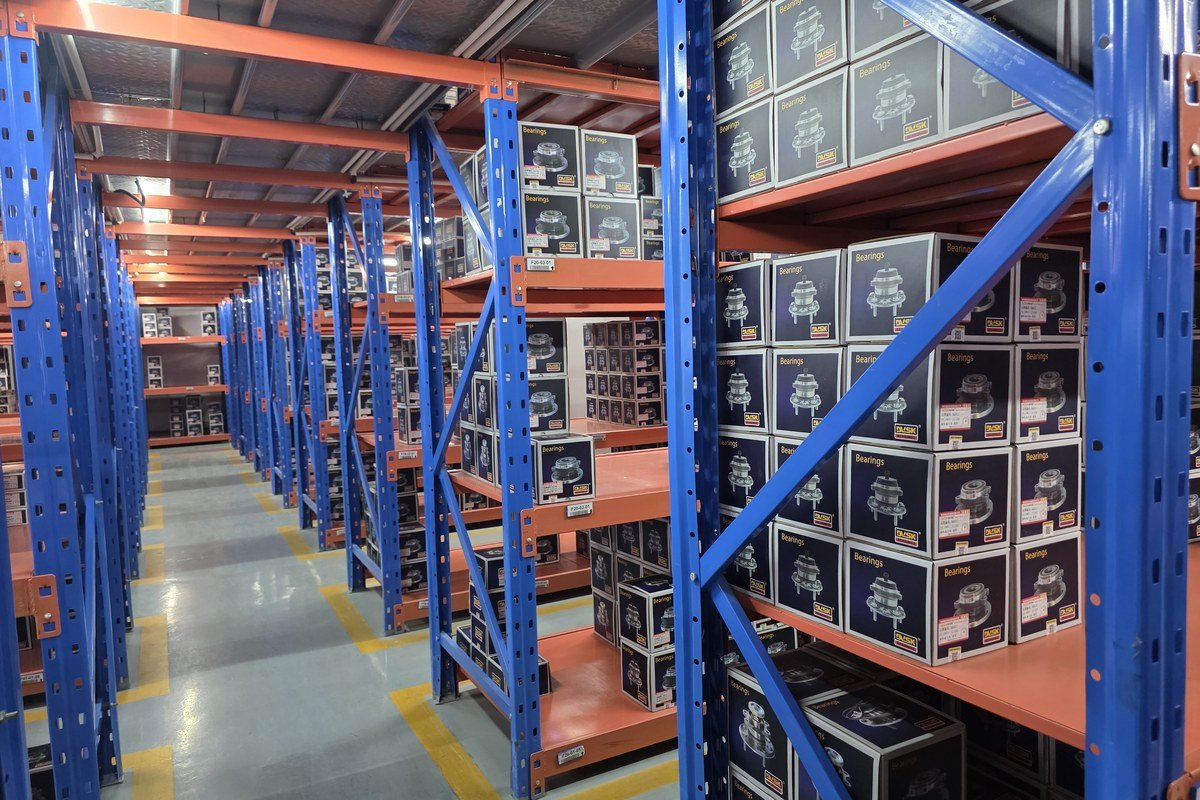
HJDP wheel hub bearing range is organised by generation and by mounting type for exactly this reason: buyers search by code, but the warehouse has to stock by geometry.
How Do Bearing Designations Work Across the Main Numbering Systems?
Bearing designations fall into five practical families, and each one demands different evidence before you can order. The table below maps what the characters encode against what is still missing.
| Designation family | What the characters encode | What you still need |
|---|---|---|
| ISO 15 metric dimension series (for example 6205, 32208) | Bearing type, dimension series, bore diameter, and boundary dimensions in millimetres | Suffix list for seals, cage, clearance and tolerance class |
| Inch tapered cone and cup pair (for example 09067/09195) | The cone and the cup as two separately numbered halves of one matched set | Both halves confirmed; a cone alone is not a bearing |
| Vehicle manufacturer part number | Application-specific identity, including axle position and brake variant | Current supersession and axle or VIN data |
| Aftermarket hub and driveline catalog code | Application grouping, often with a short dimension hint and an application suffix | Catalog issue date plus the supplier drawing for that code |
| Factory drawing number | Internal identity tied to one revision of one drawing | The revision letter or date, not just the number |
What the digits in a standard code actually encode
In the metric system, the last two digits of a four- or five-digit code give the bore: 05 means a 25 mm bore, and the rule holds for bore codes from 04 upward. The digit before them identifies the dimension series, which sets the outside diameter and width for that bore, and the leading digit identifies the bearing type — 6 for a single-row deep groove ball bearing, 3 for a double-row tapered roller bearing, 2 for a cylindrical roller bearing. A 32208 is therefore a tapered roller bearing in the 22 series with a 40 mm bore. Suffixes then carry the application detail: contact seals, shielded closures, glass-fibre cage, and clearance class.
What a code never tells you
No designation carries internal preload, grease quantity or grease base oil, seal lip material, running tolerance class or the presence of a magnetic encoder. Those are drawing properties. In aftermarket practice, suffixes are frequently dropped when a code is copied from a box label into a purchase order, and the dropped suffix is usually the one that decides whether an ABS light stays off. Treat any code without its suffix and revision as incomplete.
Which Bearing Family Does a Code Like This Usually Point To?
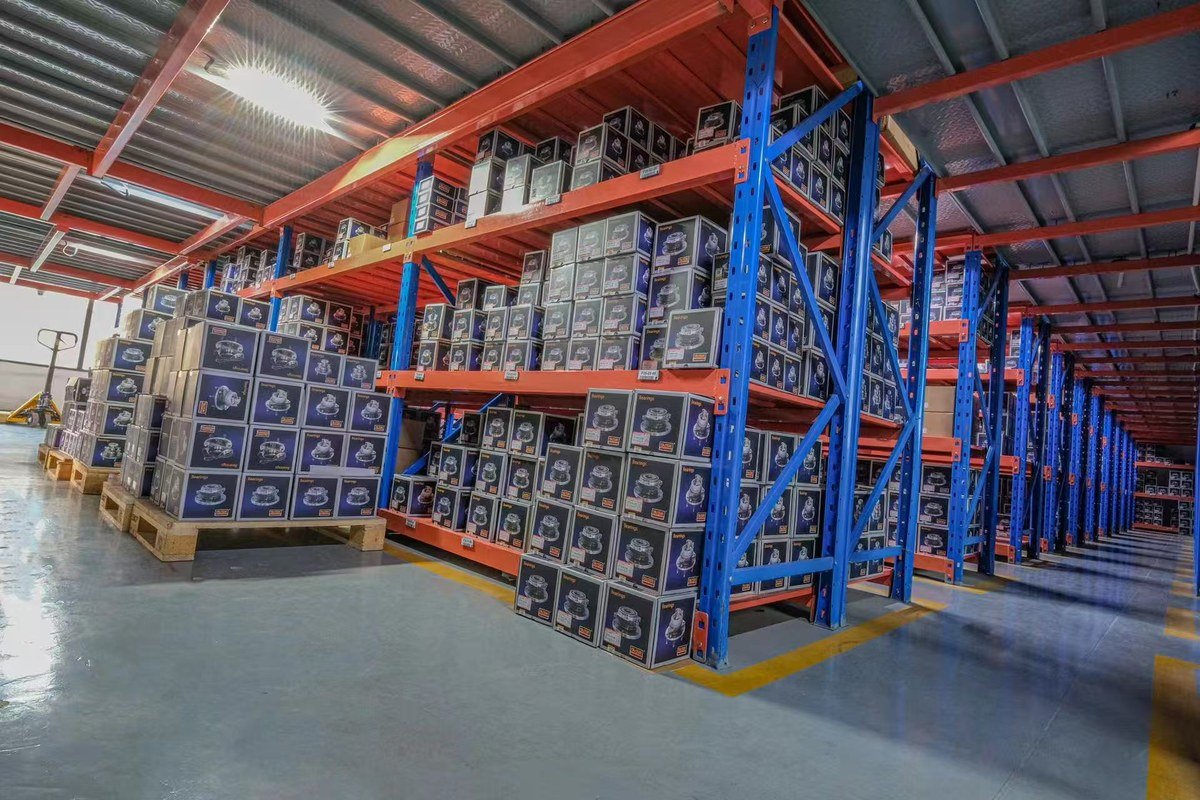
A short code usually points to a wheel-end or driveline assembly rather than a bare bearing, because those are the parts that carry application-specific geometry. The four families below cover most of what HJDP supplies, and each fails and is replaced differently.
Wheel hub bearing units: generation 1, 2 and 3
Hub bearing units are double-row angular contact bearings, usually with a 45-degree class contact angle, that carry radial wheel load together with cornering moment and axial thrust. The generation number describes how much of the surrounding structure is built into the bearing.
| Generation | What is integrated | How it mounts | Replacement consequence |
|---|---|---|---|
| Generation 1 | Double-row angular contact bearing only; separate hub flange and knuckle bore | Pressed into the knuckle or hub; axial position set by the axle nut | Press tooling and correct clamp load are critical; reusing a stretched nut is not acceptable |
| Generation 2 | Bearing plus outer flange; the flange bolts to the knuckle or strut | Bolted from the inboard side; wheel hub still a separate part | Faster fitment, but bolt torque and mating-face cleanliness decide service life |
| Generation 3 | Bearing, outer flange and inner wheel flange, plus seal and magnetic encoder | Bolted to the knuckle as a sealed, non-serviceable unit | Replaced as a complete assembly; encoder and sensor air gap must be checked |
On the bench, a Generation 3 unit has a wheel mounting face with studs or threads on the rotating inner ring; a Generation 2 unit does not. That single observation prevents most generation mix-ups.
Tapered roller versus cylindrical roller: which load decides
Tapered roller bearings carry combined radial and axial load; cylindrical roller bearings carry very high radial load with almost no axial capacity. Tapered bearings use cone and cup geometry with true rolling contact along the roller length, and they are mounted in opposed pairs so that preload or end play can be set at assembly. Cylindrical bearings use line contact between roller and raceway, give higher radial stiffness in a smaller envelope, and appear in gearbox shafts, differentials and heavy axle applications where axial location is handled by a separate thrust element. Choose by load direction first, then by stiffness and speed.
Tensioner, constant-velocity joint and clutch release bearings
A tensioner bearing is a sealed, grease-for-life deep groove or double-row ball bearing pressed into a pulley; it runs at high speed under light load, and its failure signature is a chirp or whine that tracks engine speed rather than road speed. A constant-velocity joint transmits torque through a fixed ball joint or a plunging tripod joint, with six balls running in a cage between inner and outer races; the boot and its grease are part of the assembly, and a split boot destroys the joint long before the steel wears out. A clutch release bearing is a thrust-loaded angular contact bearing that only works while the clutch pedal is depressed, so its duty cycle is short and its sealing, not its load rating, usually decides life. Matching HJDP tensioner and idler bearings and constant-velocity joint assemblies to a vehicle application follows the same drawing-first rule as hub units.
How Do You Confirm a TU0907 Match Using a Drawing and a Sample?
Confirm a match by narrowing from document to physical part in a fixed order; code-only matching is not a confirmation. The sequence below is the one that removes the guesswork.
- Establish the application: vehicle make, model, axle position, brake variant, or the machine and shaft position for industrial use.
- Request the dimensioned drawing with its revision letter or date, and check that the revision matches the code you were quoted.
- Measure the interface dimensions on the old part: bore, outside diameter, overall width or clamping height, flange diameter and flange thickness.
- Record the mounting pattern: bolt hole count, thread size, pitch circle diameter, pilot diameter and stud length.
- Identify sealing and sensing: lip seal or cassette seal, seal lip material, and whether a magnetic encoder is present and of the active or passive type.
- Confirm the internal specification: clearance or preload class, cage material, grease type and fill, and running tolerance class.
- Compare a physical sample against the drawing and against the removed part side by side, including marking position and mass.
- Trial-fit on a matching knuckle or shaft, then put the confirmed cross-reference in writing on both sides.
Which drawing values matter most
The values that decide fit are the ones a code never shows: pitch circle diameter, flange offset measured from the mounting face, pilot diameter that centres the wheel, flange thickness that sets brake disc position, and, for driveline parts, spline count and spline major diameter. A single millimetre of offset error changes brake caliper alignment, and a pitch circle difference of two millimetres makes a hub unusable. Final acceptance is by drawing and sample confirmation, including the OE reference where one is quoted.
Which Load, Speed and Sealing Conditions Change the Specification?
Three specification levers change with duty: internal clearance, tolerance class and sealing. A part that is correct in dimensions can still be wrong for the application if any of them is mis-set.
Precision grade and internal clearance
Tolerance classes follow ISO 492, with P0, P6, P5 and P4 covering progressively tighter bore, width and runout limits; P0 and P6 cover most aftermarket wheel-end demand, while P5 appears where higher speed or lower vibration is required. Clearance classes run from C2 through CN, C3 and C4, with C3 being the common choice for hubs running hot. Hub units are pre-set at assembly and cannot be adjusted in service, but tapered wheel bearings and opposed pairs must be set on installation: too little clearance generates heat and seizure, too much produces axial play, wheel wobble and uneven tyre wear.
Sealing and lubrication choices
Sealing decides service life in dusty, wet or coastal markets far more than steel grade does. Nitrile lip seals suit general use; PTFE lips resist higher temperature and dry running; cassette seals add a secondary labyrinth that keeps water and grit away from the primary lip, and they are the usual choice for axle ends in wet climates. Where ABS is fitted, the encoder is moulded into the seal or the inner ring and must not be damaged during handling. Grease must be compatible with the seal material and the operating temperature, and different thickener types should never be mixed during re-greasing.
What Do Failure Patterns Tell You About the Root Cause?

Read the wear pattern, not the noise; the location and colour of damage identifies the cause more reliably than the sound it makes. A bearing that howls is already at the end of a chain that started with contamination, clamp load or lubrication.
| Symptom on teardown | Most likely cause | What to check next |
|---|---|---|
| Grease escaping past the seal lip | Overheating, over-filling, or a damaged lip at installation | Operating temperature, seal seat finish, installation tooling |
| Spalling concentrated in one raceway zone | Water or grit ingress, or false brinelling from vibration in storage and transport | Seal integrity, storage conditions, vehicle standing time |
| Blue or straw-coloured ring surfaces | Overheating from excessive preload or brake heat | Setting procedure, axle nut torque, brake drag |
| Axial play and rumble soon after fitment | Insufficient clamp load or a reused, stretched axle nut | Torque procedure and nut specification |
| Broken cage, skidded rollers | Inadequate preload or impact during installation | Press adapters, hammer use, setting values |
| ABS warning after hub replacement | Encoder damaged, contaminated, or air gap out of range | Encoder face, sensor seating, harness routing |
What Should Incoming Inspection Cover Before You Stock It?
Incoming inspection should confirm four things in order: that the delivery matches the order, that dimensions match the drawing, that the sealing and sensing features are intact, and that preservation will survive your warehouse. A short, repeatable check catches the expensive mistakes.
- Verify carton count, labelling and code against the purchase order, including the revision you approved.
- Measure a sample from each lot: bore, outside diameter, width or clamping height, flange diameter and pitch circle diameter.
- Rotate by hand and listen; a healthy unit turns smoothly with light, even drag and no axial rock.
- Inspect seal lips, boots, studs and threads for nicks, and confirm rust preventive is present and dry, not tacky.
- Check the encoder where fitted: visual condition, and a sensor signal test on the vehicle if the channel allows.
- Retain one sealed sample per lot with its packing list, so a later claim can be compared against what actually arrived.
The same discipline applies to tapered roller bearings for automotive use and to clutch release bearings, where seal and sleeve condition are easier to judge on arrival than after a comeback.
Frequently Asked Questions
Can I cross a TU0907 code to another brand by number alone?
No. A short reference code is meaningful only inside the catalog or drawing system that issued it, so a number-to-number cross-reference is a hypothesis, not a confirmation. Ask for the dimensioned drawing, compare the critical interface values, and check a sample before ordering volume. Where two suppliers genuinely share a part, the drawing will prove it within minutes.
Is TU0907 a wheel hub bearing or a tensioner bearing?
The code shape does not answer that. Short alphanumeric references are used across hub units, tensioner pulleys, constant-velocity joints and clutch release bearings alike. The application identifies the family: wheel-end position, accessory drive, or clutch. Once the family is known, HJDP can match the part from a drawing and a sample rather than from the code alone.
What information do I need before requesting a match?
Send the application data — vehicle or machine, axle or shaft position, and any OE reference — together with the code you have, a photo of the old part from three angles, and key measurements such as bore, outside diameter, width, flange diameter and bolt circle. With those, a drawing can be issued for review before any sample is cut.
How do I tell a Generation 2 from a Generation 3 hub unit on the bench?
Look at the rotating side. A Generation 3 unit has the wheel mounting face on the inner ring, with studs or threaded holes for the wheel, and it bolts to the knuckle as one sealed assembly. A Generation 2 unit has a flange that bolts to the knuckle but still accepts a separate wheel hub on its inner ring.