CV Joints Alternative to NTN: How Buyers Match by Drawing
What Is a CV Joint and What Does an Alternative to NTN Really Mean?
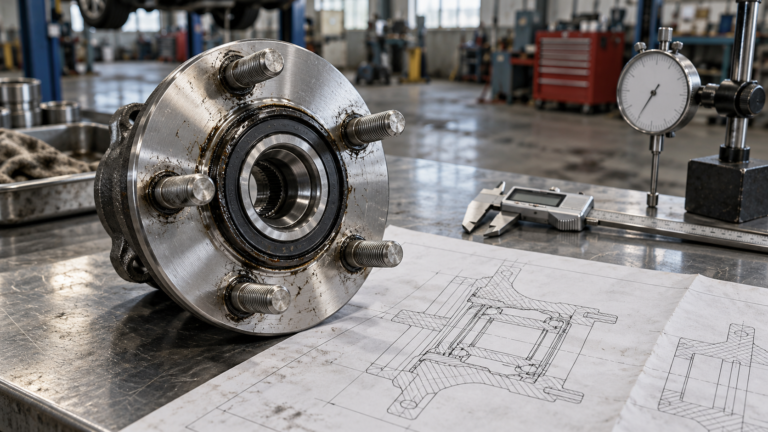
A CV joint alternative to NTN is a constant velocity joint that matches the original part on drawing dimensions, spline form, cage geometry and boot interface, whatever brand is printed on the box. Branded and aftermarket joints are both built to an Original Equipment (OE) reference, so the comparison that matters is dimensional, not promotional. Buyers should work from three documents: the OE or supplier number, a dimensional drawing, and an approved sample. HJDP, the brand published at jnhjdp.com by Jinan Huayuan Auto Bearing Co., Ltd., supplies outer and inner CV joints and joint assemblies on that basis: fitment confirmed against drawing and sample.
How Does a Constant Velocity Joint Keep Output Speed Constant?
A CV joint keeps output speed constant because its balls run in curved tracks that hold each ball in the bisecting plane of the joint angle. In a Rzeppa-type fixed joint, six balls sit in matching grooves in an inner race and an outer race and are held equally spaced by a cage. At any shaft angle the cage forces each ball to stay halfway between the two race axes, so torque is transmitted at a constant radius and the driven shaft turns at the same speed as the driving shaft at every point in the revolution. A Cardan (cross-and-bearing) universal joint cannot do this; it speeds up and slows down twice per revolution, which is why propeller shafts pair and phase two joints while driveshafts use CV joints. Retention details on those cross-and-bearing joints are a separate service question, covered in outside lock versus inside lock universal joints.
Why Do Buyers Look for a CV Joint Alternative Instead of a Brand?
Most buyers look for alternatives because of coverage, kit content and control of their own label, not because the joint concept differs. A CV joint is a mature component: the designs are old, the interfaces are defined by the vehicle manufacturer, and the differences between suppliers sit in steel quality, heat treatment, cage fit, boot grade and inspection discipline. Practical reasons to qualify a second source include availability on older or low-volume platforms, kit content that matches how the local market sells (joint only, joint with boot and grease, complete shaft), private-label packaging, and spreading supply risk across two factories. In every case the brand changes and the drawing should not.
Which CV Joint Designs Are Used on Passenger Cars and Light Commercial Vehicles?

Nearly every passenger car driveshaft carries a fixed ball joint at the wheel end and a plunging joint at the gearbox end. The wheel-side joint articulates through steering angle and suspension travel without changing length; the gearbox-side joint absorbs length change as the suspension rises and falls. Other layouts exist, including fixed joints at both ends of some independent rear axles and tripod joints at both ends of some light commercial shafts, so position and design must be confirmed per application rather than assumed from the vehicle class.
| Joint design | Typical position | Movement | Internal structure | What a replacement must match |
|---|---|---|---|---|
| Rzeppa fixed ball joint | Wheel side | Articulates, does not plunge | Inner race, cage, six balls, outer race (bell) | Spline, bell diameter, boot groove, tone ring |
| Tripod (tripode) joint | Gearbox side on most front-wheel drive | Plunges, limited articulation | Three rollers on needle bearings running in a tulip housing | Roller diameter, tulip bore, shaft spline, boot seat |
| Double offset joint | Gearbox side on some older and larger cars | Plunges, higher angle than a tripod | Balls in offset curved tracks with a cage | Track form, housing length, cage fit |
| Cross groove joint | Gearbox side on performance and four-wheel drive shafts | Plunges, high angle, low friction | Angled straight tracks, balls, cage | Track hand and angle, housing flange |
What Does an Outer Fixed Joint Have to Do?
The outer joint carries steering angle, suspension travel and braking torque at the same time. It is a fixed design, so the shaft length is set by the inner joint and the outer joint only has to articulate. Because it sits behind the wheel it also carries the wheel-end seal and often the Anti-lock Braking System (ABS) tone ring, and its bell diameter and boot groove are the dimensions that most often differ between superficially similar parts. A replacement with the correct spline but the wrong bell or boot seat will fit the shaft and still leak grease or foul the suspension.
What Does an Inner Plunging Joint Have to Do?
The inner joint absorbs length change while transmitting torque through the small angles created by engine movement and suspension travel. Tripod joints dominate front-wheel-drive applications: three rollers on needle bearings run inside a tulip-shaped housing, allowing plunge with limited articulation. Double-offset and cross-groove ball joints are used where higher angles or lower friction are required. Roller and needle-bearing condition is the usual wear point on tripod joints, and the difference between the two families is set out in inner versus outer CV joints.
How Do You Match a CV Joint Alternative to the Part Already on the Vehicle?

Matching runs from the reference outward: identify the number, measure the interfaces, then approve a sample before production. A joint that looks identical on the bench can differ by one millimetre in circlip groove position or by one tooth on the tone ring, and either difference is enough to stop an installation. The sequence below keeps that rework out of the process.
- Collect the reference data. Read the OE number, the supplier number cast or laser-marked on the housing, and the vehicle data including engine, transmission, year and whether ABS is fitted. Photograph the markings before cleaning the part.
- Obtain or reconstruct a drawing. If no drawing exists, measure the interfaces listed in the table below and put them on one sheet with a sketch; that sheet becomes the specification.
- Confirm design and position. Fix the joint family (fixed or plunging), the position (wheel side or gearbox side), and the articulation and plunge range required.
- Define kit content. Decide what the box contains: joint only, joint with boot, grease, clips and axle nut, or a complete shaft. Kit content is part of the specification, not an afterthought.
- Approve a sample. Fit the sample to a real shaft or a fixture, check articulation through the full range, check boot seating and clip engagement, and record the result.
- Freeze the specification. Convert the approved sample into a controlled drawing plus a packaging and labelling instruction, so later batches are compared against a document rather than against memory.
Which Dimensions Decide Whether the Joint Fits?
| Parameter | Why it decides fit | How to verify |
|---|---|---|
| Spline count and form (involute or straight-sided) | Transmits torque and centres the joint on the shaft | Count teeth; check major and minor diameter and pressure angle |
| Circlip groove position and width | Fixes axial location on the shaft | Measure groove position from the shaft end with a depth gauge |
| Bell or housing outside diameter | Must clear the suspension and hub carrier | Caliper across the bell at the widest point |
| Boot seat diameter and groove | Controls sealing and clamp load | Measure seat diameter and groove width |
| Tone ring presence and tooth count | Sets the sensor signal and air gap | Count teeth; check ring diameter and runout |
| Flange bolt circle and pilot | Centres bolt-on joints and carries torque | Measure pitch circle diameter and pilot diameter |
| Axle nut thread and torque face | Retains the joint in the hub | Check thread size, pitch and face condition |
What If Only a Sample or a Photograph Is Available?
A physical sample is a usable specification; a photograph is not. From a sample you can count spline teeth, measure the bell, check the circlip groove and confirm the boot seat with calipers, using a pin or wire method where spline dimensions cannot be reached directly. From a photograph you can only narrow the joint family and its position. Where numbers come from a cross-reference list or a used part, treat them as a starting point: final confirmation rests on the drawing and the approved sample. A cross-reference is a lead, not a release document. The same discipline applies when sourcing CV joints by OE number, where the number narrows the search and the drawing closes it.
Which Material, Heat Treatment and Tolerance Choices Affect Joint Life?
Joint life is decided by steel cleanliness, case depth, track finish and cage fit rather than by the shape of the part. A CV joint carries high contact stress in a small envelope while articulating, so the race tracks must be hard enough to resist indentation and tough enough at the core to survive shock loads from kerbs, potholes and hard starts.
How Are Races and Balls Hardened?
Races and housings are normally case-hardened: a hard, wear-resistant surface over a softer, tougher core. Volume production in Chinese driveline supply commonly uses case-hardening alloy steels of the 20CrMnTi family or drawing-specified equivalents, carburised and quenched to a stated effective case depth, then tempered. Two parameters matter to a buyer: surface hardness and case depth relative to wall thickness. A shallow case wears through and spalls; an excessive case makes the part brittle. Balls are bought to a grade that controls diameter tolerance and sphericity, and cage fit is set so the balls are guided without pinch.
Why Does Track Finish Matter More Than a Precision Class?
CV joints are not sold to a bearing precision class such as an ISO or ABEC grade, so the controlling values are the tolerances on the drawing. What matters is track profile and surface finish, because the balls roll and slide along the tracks under load; grinding marks, chatter or a mismatched profile concentrate stress and start pitting. Buyers get further by asking which characteristics are inspected, at what frequency and against which drawing revision than by asking for a class name that does not apply to the product.
How Do Sealing, Boot Grade and Grease Decide Service Life?
The boot and its grease are part of the joint, not accessories: most joint failures begin with a split boot. A CV boot has to survive ozone, road salt, grit and continuous flexing at temperature, and the grease has to stay in the tracks under centrifugal force. Clamp type and clamp position decide whether the seal holds; a boot that is correct in material but clamped in the wrong groove will throw grease at speed. Serviceable and sealed joints follow different maintenance logic, and the trade-off on the propshaft side is described in greaseable versus maintenance-free universal joints.
How Do CV Joints Fail, and What Do Their Symptoms Indicate?
Most CV joint failures are wear or contamination failures, and the symptom usually points to which end of the shaft is involved. Noise that changes with steering angle points to the outer joint; vibration that appears under acceleration and fades when coasting points to the inner joint; grease on the inside of the wheel arch points to the boot. None of these confirms a diagnosis alone, so symptoms are read together with a teardown inspection.
| Symptom | Most likely location and cause | What to check at teardown |
|---|---|---|
| Rhythmic clicking on turns under power | Outer joint with worn or pitted ball tracks | Track pitting, ball wear, battered cage windows |
| Vibration under acceleration, gone when coasting | Inner tripod joint with worn rollers or needle bearings | Roller flat spots, tulip track wear, excessive plunge free play |
| Grease spray inside the wheel arch | Boot split or clamp released | Boot cracks at the flex folds, clamp groove, grease condition |
| Clunk when drive is taken up | Spline wear, loose axle nut or worn circlip | Spline backlash, groove wear, nut torque face |
| ABS warning after shaft work | Tone ring damaged or displaced | Ring runout, tooth damage, sensor air gap |
Why Does a Split Boot Usually End the Joint?
A split boot does not just leak grease; it lets abrasive grit and water into the ball tracks. Once contaminants enter, the finely finished tracks are lapped away by the balls and the joint starts to click within a short distance. A boot replaced early, with the correct grease and clamps, usually saves the joint; a boot replaced after the noise has started does not, because the damage is already in the track profile.
What Should a Teardown Inspection Show?
A healthy joint shows a polished, even contact band in each track and no pitting. Grease should still be present and free of metallic paste, the cage windows should not be battered, and plunge should feel smooth with light free play. Spalling, brinelling marks from impact or standing loads, blue discoloration from heat and grit embedded in the grease are all grounds for rejection, and they are also the evidence worth photographing for a supplier discussion.
Which Other Running-Gear Parts Are Usually Bought With the Joint?
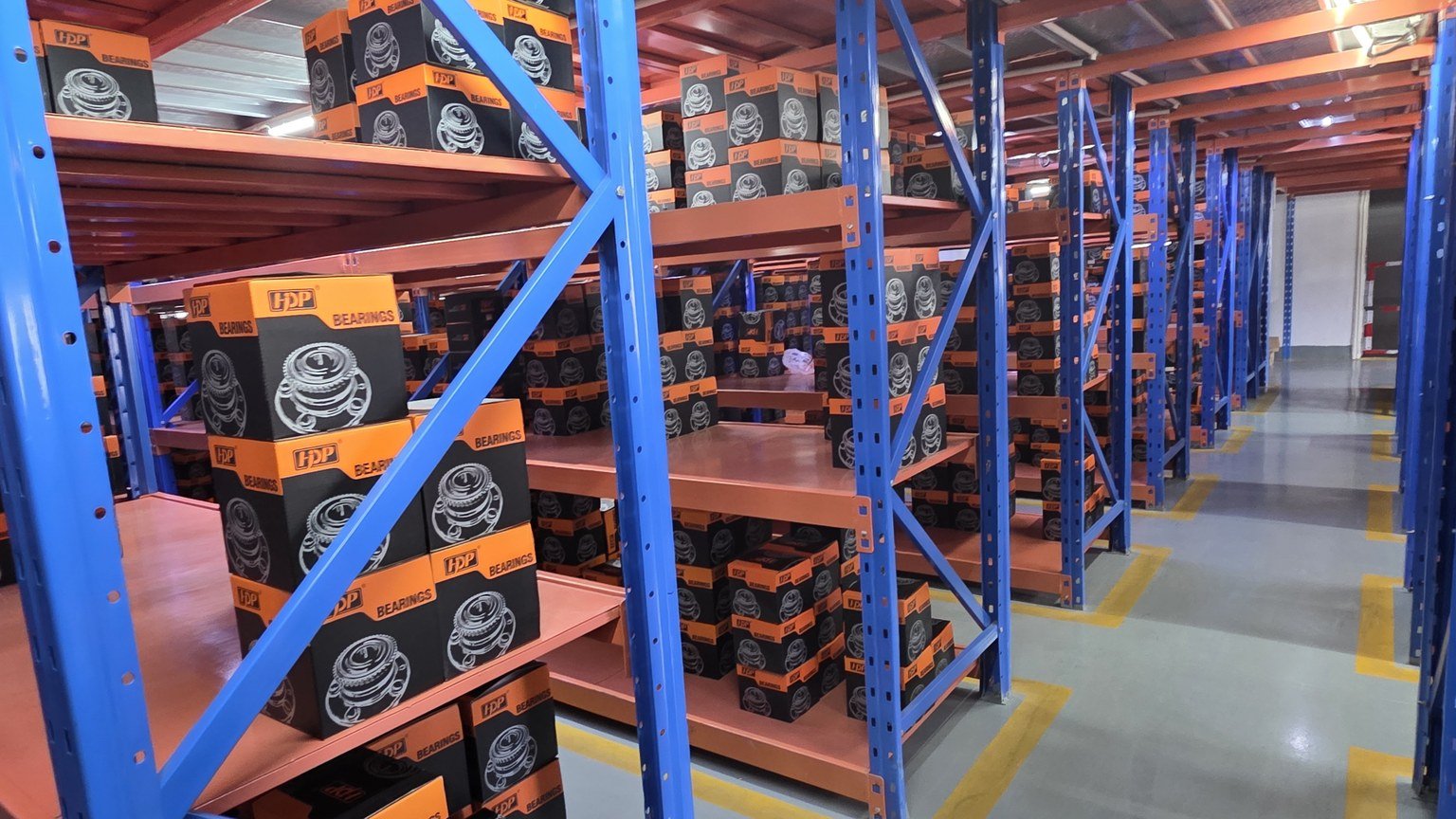
CV joints are rarely a stand-alone purchase for a distributor: they move with wheel hub bearings, tensioner bearings and clutch release bearings on the same order. The reason is the repair rather than the catalogue. A shaft comes out of a hub, and the bearing, nut, seal and sometimes the hub unit are replaced in the same job. HJDP covers that group as one brand: wheel hub bearings in first, second and third generation units, hub unit assemblies, tensioner and idler bearings, clutch release bearings, and automotive tapered and cylindrical roller bearings.
How Do First, Second and Third Generation Hub Units Differ?
The generations describe how much of the wheel-end assembly is integrated into the bearing. A first generation hub bearing is a double-row angular contact bearing with separate inner and outer rings and no flange. A second generation unit adds a flange to the outer ring, so the bearing bolts to the knuckle and the brake disc mounts to the hub. A third generation unit integrates the flange and mounting face into a sealed unit, usually with the ABS sensor interface built in. The generation decides the tooling, the torque procedure and whether the hub is pressed or bolted, so it must be identified against the drawing for the specific application.
Where Do Tensioner and Clutch Release Bearings Fit In?
Tensioner and clutch release bearings are accessory-duty bearings: lower load than a hub unit, but sensitive to misalignment and lubrication. A tensioner bearing runs continuously at engine speed under belt load, so seal drag and grease life dominate its service life; a clutch release bearing is loaded only when the pedal is pressed, so face wear and guide-tube fit dominate. Both are commonly replaced during the same visit that involves the driveshaft or gearbox, which is why distributors group them with CV joints and hub bearings.
How Should an Importer Inspect a CV Joint Shipment on Arrival?
Incoming inspection should be a short, repeatable check against the approved sample, not a general impression of the carton. The points below catch the errors that actually reach the market: a wrong variant in the right box, a missing or wrong-grade boot, and surface damage from poor packing.
- Compare one joint from each batch with the approved sample: spline, bell diameter, circlip groove, boot seat and tone ring.
- Check articulation by hand through the full range: smooth, no notch, no gritty feel, correct free play.
- Confirm the boot is seated in its groove and the clamps are engaged and of the specified type.
- Confirm grease quantity and type against the specification.
- Inspect for handling damage: dents on the bell, rust on splines, boots deformed by compression in transit.
- Verify labels, part numbers and packaging against the private-label instruction if the goods carry your brand.
Items that fail a dimensional check should be quarantined and raised with the supplier with photographs and measurements rather than descriptions.
Frequently Asked Questions About CV Joint Alternatives
Are aftermarket CV joints as durable as branded ones?
Durability depends on the specification a supplier works to, not on the brand on the box. Two joints with identical dimensions can differ in steel cleanliness, case depth, track finish, boot grade and grease. The practical test for a buyer is documentation: a controlled drawing, stated inspection characteristics, and a sample you have fitted and inspected. Any performance claim should be confirmed against drawing and sample, because catalogue wording does not describe metallurgy.
Can I fit a CV joint listed for a different model year?
Only when the drawing matches. Vehicle manufacturers change shaft lengths, bell diameters and ABS interfaces within a generation, and a joint that fits the spline may still foul the suspension or lose its boot seat. A cross-reference list is a starting point for identification; fitment should be confirmed against the drawing for the exact application, and where possible against a physical sample, before a batch is ordered.
What information do I need to request a CV joint alternative?
Send the OE or supplier number, the vehicle data including transmission and ABS, one clear photograph of the markings, and the interfaces you can measure: spline count and form, bell diameter, circlip groove position, boot seat, tone ring tooth count and flange dimensions. A sample shortens the process considerably. With those inputs a supplier can work from a drawing instead of guessing from a description.
Should both joints on a shaft be replaced together?
Not automatically. Replace the joint that has failed and inspect the other: a joint with an intact boot, clean grease and smooth articulation through its range usually stays. If the boot on the second joint is already cracked, or the shaft has covered high mileage in abrasive conditions, replacing both in one labour operation is often the cheaper decision for the repairer.
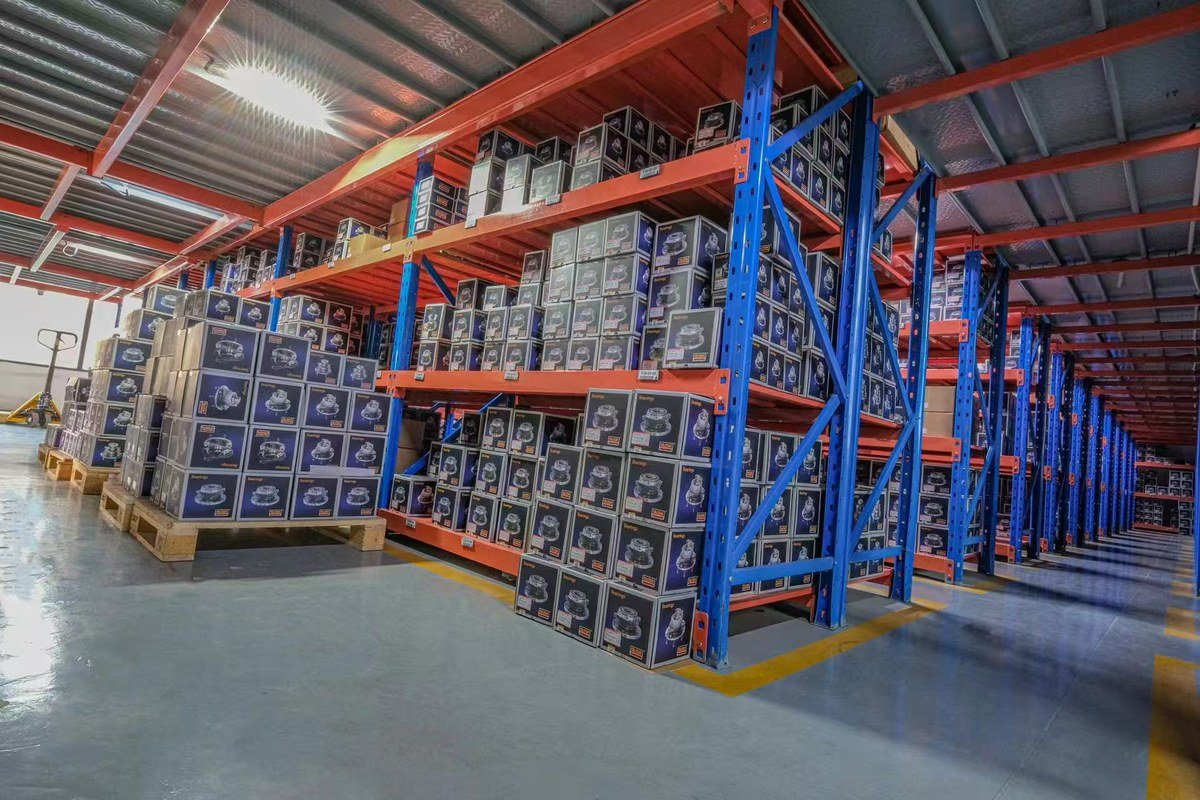
HJDP is the brand published at jnhjdp.com by Jinan Huayuan Auto Bearing Co., Ltd., Jinan, Shandong, China, covering CV joints and joint assemblies alongside wheel hub bearings, tensioner and clutch release bearings, and automotive tapered and cylindrical roller bearings. For any alternative to a branded joint the release basis is the same: drawing and sample confirmation, then packaging and private-label instructions agreed in writing before production.