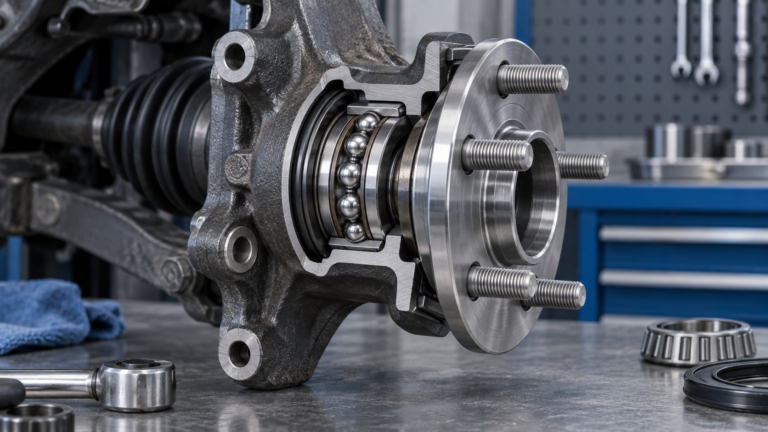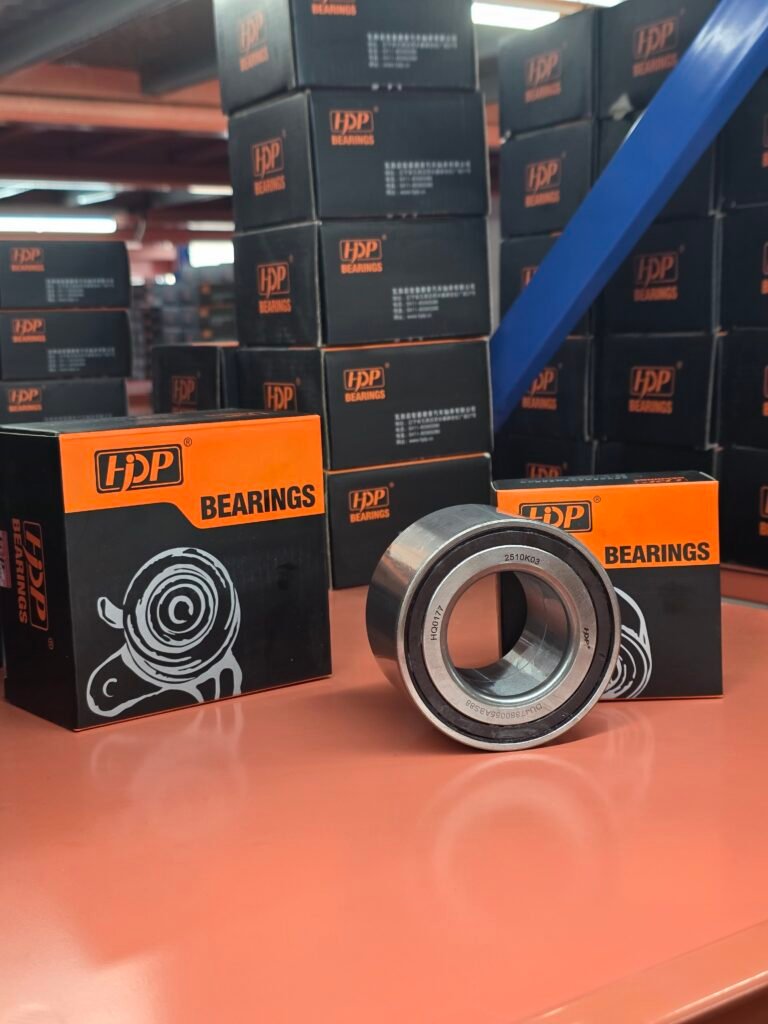

Front vs Rear, Driven vs Non-Driven Wheel Hub RFQ Identification
Front or rear position and driven or non-driven architecture are separate fields. A distributor that combines them into one shorthand description can quote the wrong spline, mounting geometry or sensing configuration even when the product photographs appear similar.
How should buyers classify front, rear, driven and non-driven hubs?
Record axle position, side and drive function independently. Front does not always mean driven, rear does not always mean non-driven, and a visible center opening does not by itself prove the power-transfer path. Confirm vehicle drive layout, the exact axle, spline or spindle interface, mounting geometry and ABS configuration from application-level evidence. Use physical features to classify a candidate family, then keep fitment unconfirmed until the OE or manufacturer catalog resolves the application boundary.
Keep position, side and drive as separate fields
Build the RFQ with independent front/rear, left/right and driven/non-driven values. In a front, rear, driven and non-driven hub identification workflow, the practical risk is vehicle layouts and handed sensor routes break shortcuts that treat those fields as synonyms. Treat the task as a release gate with a named owner, an evidence date and a defined output. The output may be approved, rejected or held; all three are useful when the reason is visible.
The starting packet contains year, make, model, market, drivetrain, axle, side, VIN or chassis boundary and source. Reviewers should preserve what the customer, warehouse or supplier actually sent before they reject inherited values and require the source behind each position statement. Separating received data from interpreted data prevents a later correction from rewriting history and allows two plausible candidates to stay separate while evidence is gathered.
Decision rule and evidence owner
A durable entry will show confirmed, candidate and unknown status for each application field. It should be readable outside an email thread and portable into the product master, purchase order or claim system. The record is not extra administration: it is the mechanism that keeps sales copy, receiving checks and supplier communication attached to the same configuration.
Example: a front-wheel-drive vehicle has driven front hubs and non-driven rear hubs, while an AWD variant changes the rear field. Pause when the request names only the vehicle family and omits the drive configuration. A pause is cheaper than releasing inventory with a convenient assumption. State which evidence would close the issue, who must provide it and which downstream records are blocked until that evidence is accepted.
Read the center interface without overclaiming
Use a spline, bore or spindle form to identify an architecture candidate. In a front, rear, driven and non-driven hub identification workflow, the practical risk is a machined center feature can exist for reasons that do not establish the exact application. Treat the task as a release gate with a named owner, an evidence date and a defined output. The output may be approved, rejected or held; all three are useful when the reason is visible.
The starting packet contains inboard and outboard views, center interface measurements and official wheel-end architecture references. Reviewers should preserve what the customer, warehouse or supplier actually sent before they compare the physical construction with driven and non-driven diagrams, then return to the application catalog. Separating received data from interpreted data prevents a later correction from rewriting history and allows two plausible candidates to stay separate while evidence is gathered.
A workable release condition
A durable entry will cite which feature suggested the family and which source confirmed the application. It should be readable outside an email thread and portable into the product master, purchase order or claim system. The record is not extra administration: it is the mechanism that keeps sales copy, receiving checks and supplier communication attached to the same configuration.
Example: a hub has a female spline but the requested vehicle line includes different drivetrains and axle positions. Pause when the architecture clue is being used as a substitute for the missing drivetrain source. A pause is cheaper than releasing inventory with a convenient assumption. State which evidence would close the issue, who must provide it and which downstream records are blocked until that evidence is accepted.
Compare wheel and knuckle mounting geometry
Check both sides of the assembly and record the seating relationships. In a front, rear, driven and non-driven hub identification workflow, the practical risk is matching wheel studs cannot compensate for a different knuckle flange, offset or brake interface. Treat the task as a release gate with a named owner, an evidence date and a defined output. The output may be approved, rejected or held; all three are useful when the reason is visible.
The starting packet contains studs, pilots, mounting-hole pattern, flange form, offsets, brake-side features and controlled drawings. Reviewers should preserve what the customer, warehouse or supplier actually sent before they map every mating feature to the proposed item rather than comparing one overall diameter. Separating received data from interpreted data prevents a later correction from rewriting history and allows two plausible candidates to stay separate while evidence is gathered.
How to document the exception
A durable entry will attach perpendicular photographs and identify the datum for dimensional evidence. It should be readable outside an email thread and portable into the product master, purchase order or claim system. The record is not extra administration: it is the mechanism that keeps sales copy, receiving checks and supplier communication attached to the same configuration.
Example: two rear candidates share five studs but differ in bolt orientation and sensor-lead bracket. Pause when the correct mounting source or drawing revision is absent. A pause is cheaper than releasing inventory with a convenient assumption. State which evidence would close the issue, who must provide it and which downstream records are blocked until that evidence is accepted.
Treat sensing configuration as another application boundary
Confirm encoder, sensor, connector and routing after the mechanical family is identified. In a front, rear, driven and non-driven hub identification workflow, the practical risk is a mechanically plausible unit may still create a catalog error or return when sensing details differ. Treat the task as a release gate with a named owner, an evidence date and a defined output. The output may be approved, rejected or held; all three are useful when the reason is visible.
The starting packet contains catalog notes, encoder side, integral or external sensor, pin count, connector key and cable route. Reviewers should preserve what the customer, warehouse or supplier actually sent before they separate observed hardware from supported electrical and vehicle relationships. Separating received data from interpreted data prevents a later correction from rewriting history and allows two plausible candidates to stay separate while evidence is gathered.
A case that exposes the hidden risk
A durable entry will link sensing evidence to the exact candidate and not to a representative family image. It should be readable outside an email thread and portable into the product master, purchase order or claim system. The record is not extra administration: it is the mechanism that keeps sales copy, receiving checks and supplier communication attached to the same configuration.
Example: the driven candidate matches the spline but its connector key and bracket face the opposite direction. Pause when the sensing relationship is described only as with ABS. A pause is cheaper than releasing inventory with a convenient assumption. State which evidence would close the issue, who must provide it and which downstream records are blocked until that evidence is accepted.
Write catalog text that preserves the four-field model
Keep axle, side, drive and sensing values visible in product data. In a front, rear, driven and non-driven hub identification workflow, the practical risk is a compressed title can erase the qualifier that prevents a wrong order. Treat the task as a release gate with a named owner, an evidence date and a defined output. The output may be approved, rejected or held; all three are useful when the reason is visible.
The starting packet contains approved application record, product master, image set and any market or chassis qualifiers. Reviewers should preserve what the customer, warehouse or supplier actually sent before they generate titles and filters from controlled fields while retaining qualifiers in the application record. Separating received data from interpreted data prevents a later correction from rewriting history and allows two plausible candidates to stay separate while evidence is gathered.
What a second reviewer should see
A durable entry will version the relationship and show the evidence date rather than widening coverage for search visibility. It should be readable outside an email thread and portable into the product master, purchase order or claim system. The record is not extra administration: it is the mechanism that keeps sales copy, receiving checks and supplier communication attached to the same configuration.
Example: a marketplace character limit drops non-driven and leaves only rear hub assembly. Pause when the receiving channel cannot carry the qualifier required for safe identification. A pause is cheaper than releasing inventory with a convenient assumption. State which evidence would close the issue, who must provide it and which downstream records are blocked until that evidence is accepted.
Return an RFQ clarification instead of guessing
Ask a short, field-specific question whenever architecture and application evidence disagree. In a front, rear, driven and non-driven hub identification workflow, the practical risk is buyers can usually obtain drive, axle or VIN evidence faster than they can resolve a wrong shipment. Treat the task as a release gate with a named owner, an evidence date and a defined output. The output may be approved, rejected or held; all three are useful when the reason is visible.
The starting packet contains the original OE number, vehicle information, sample views and the exact conflicting fields. Reviewers should preserve what the customer, warehouse or supplier actually sent before they state the candidate, show the conflict and request the smallest evidence set that can close it. Separating received data from interpreted data prevents a later correction from rewriting history and allows two plausible candidates to stay separate while evidence is gathered.
Handling the unresolved branch
A durable entry will retain the buyer’s reply and update only the affected line. It should be readable outside an email thread and portable into the product master, purchase order or claim system. The record is not extra administration: it is the mechanism that keeps sales copy, receiving checks and supplier communication attached to the same configuration.
Example: the number lookup points to front driven but the sample has a stationary-spindle form. Pause when the team cannot establish whether the number, sample or vehicle description controls. A pause is cheaper than releasing inventory with a convenient assumption. State which evidence would close the issue, who must provide it and which downstream records are blocked until that evidence is accepted.
Four-field wheel hub classification matrix
Use the matrix as an RFQ intake control, not as a universal fitment chart.
| Dimension | Valid values | Evidence |
|---|---|---|
| Axle | Front / rear / unknown | Application catalog or vehicle record |
| Side | Left / right / non-handed / unknown | Catalog qualifier and routing |
| Drive | Driven / non-driven / unresolved | Drivetrain plus center interface |
| Center | Spline / bore / spindle-related form | Part view, drawing and application |
| Sensing | Encoder, integral lead, separate sensor, unknown | Exact variant evidence |
| Approval | Candidate / quote-confirmed / customer-approved | Named source and revision |
Govern the classification after a new drivetrain variant appears
Recheck records when a catalog adds an AWD, hybrid, performance or regional variant. Do not assume the existing front/rear statement covers the new drivetrain. Create a separate application relationship when the center interface, mounting, sensing or kit scope changes.
Returns and installer feedback should identify which of the four fields was wrong or missing. Feed that evidence to the catalog owner, not only to the warranty team. A corrected qualifier must reach the product master, website, sales sheet and future RFQ template together.
Keep architecture diagrams as educational aids and mark their limits. They help staff ask better questions, but the controlling approval still comes from the exact application and product evidence. This distinction makes the guide useful without turning a generic diagram into a fitment promise.
Claim boundary: The guide classifies evidence fields; it does not publish vehicle fitment, torque values or an interchange list.
Additional review scenarios for front, rear, driven and non-driven hub identification
Review scenario 1 for front, rear, driven and non-driven hub identification: Start from year, make, model, market, drivetrain, axle, side, VIN or chassis boundary and source. The reviewer should reject inherited values and require the source behind each position statement. An independent checker then tests the conclusion against the stated decision boundary and confirms that the record will show confirmed, candidate and unknown status for each application field. If the request names only the vehicle family and omits the drive configuration, keep the affected line on hold, name the missing evidence and prevent the provisional interpretation from entering a quote, catalog, purchase order or customer promise. The case can move again when the evidence owner closes that exact field; a general assurance, familiar photograph or previous order is not a substitute for the missing source.
Review scenario 2 for front, rear, driven and non-driven hub identification: Start from inboard and outboard views, center interface measurements and official wheel-end architecture references. The reviewer should compare the physical construction with driven and non-driven diagrams, then return to the application catalog. An independent checker then tests the conclusion against the stated decision boundary and confirms that the record will cite which feature suggested the family and which source confirmed the application. If the architecture clue is being used as a substitute for the missing drivetrain source, keep the affected line on hold, name the missing evidence and prevent the provisional interpretation from entering a quote, catalog, purchase order or customer promise. The case can move again when the evidence owner closes that exact field; a general assurance, familiar photograph or previous order is not a substitute for the missing source.
Related wheel hub buyer resources
- Wheel Hub Assembly catalog
- Wheel Hub Bearing catalog
- wheel bearing versus wheel hub assembly guide
- ABS encoder identification guide
- wheel hub OE number and RFQ guide
- fitment verification workflow
- sample approval workflow
- kit contents and BOM verification
- supplier evaluation evidence guide
- export packaging checklist
- MOQ and lead-time planning guide
- incoming inspection checklist
- About Jinan Huayuan Auto Bearing
Sources, dates and claim boundaries
- SKF wheel-end solutions — front/rear and driven/non-driven wheel-end architecture
- NTN/BCA wheel hub assemblies — hub generations, driven-wheel spline context and application-catalog boundaries
- NTN Hub Bearings technical catalog — hub-unit architecture, selection fields and ABS configurations
- SKF wheel hub bearings and kits — hub generations, included kit items and application-specific installation resources
Technical review: Jinan Huayuan Auto Bearing editorial review for source fidelity, procurement-data consistency and unsupported-claim removal. This review does not replace an OE catalog, vehicle service procedure, legal or customs advice, a customer-approved drawing, or mutually agreed commercial and inspection terms.
Corrections: Send the page URL and supporting evidence through the contact page. Material corrections are reviewed, linked records are rechecked and the updated date is changed when warranted.