How to Vet a WhatsApp Wheel Hub Distributor | HJDP Guide
A “WhatsApp wheel hub distributor” search is a channel question, not a bearing question: the buyer already knows they need wheel hubs, and wants a distributor they can question quickly through a messaging app. The practical answer is that chat is strong on speed, photographs and voice notes, and weak on anything that needs a revision history. Use it to qualify a supplier, then move specifications, drawings, samples and packaging proofs into written documents. HJDP, the own brand of Jinan Huayuan Auto Bearing Co., Ltd. at jnhjdp.com, is a China-based supplier of automotive wheel hub bearings and related running-gear parts for aftermarket replacement and OEM programmes.
What does “WhatsApp wheel hub distributor” mean in a sourcing context?
In sourcing, the phrase describes a wheel hub distributor whose first point of contact is a messaging app rather than a trade platform, an email thread or a trade fair. The pattern is routine in the Middle East, Southeast Asia, South America, Africa and the CIS, where importers, wholesalers, parts chains and repair-shop buyers run purchasing over chat: a catalogue arrives as a PDF, a fitment question is answered with a photograph of the old part, and price, packing and quantity are negotiated in short messages.
The term covers three different situations, and confusing them causes most of the friction around it:
- A channel-first distributor — a supplier that expects enquiries as part numbers and photographs rather than as formal documents.
- An after-sales channel — chat used only after an order exists, for claim photos, shortage reports and replacement discussion.
- Buyer behaviour — the searcher is the buyer, trying to work out which distributors in a market are reachable this way and how to judge them.
What the phrase does not mean is a product category, a brand or a distribution agreement. There is no certification behind it, no register of messenger-based distributors, and no way to rank a supplier by the speed of a reply: a fast answer proves availability, not capability. The structural weakness of chat is that it carries no revision control — “same as last time” is not a specification, and a photograph without a part number is not a record.
The first thing an enquiry usually has to settle is naming, because hub bearing, hub unit, hub assembly and hub carrier are used loosely on both sides of the conversation. A short explanation of wheel hub versus wheel hub assembly is worth sharing before part numbers are discussed.
What should a first WhatsApp enquiry to a wheel hub distributor contain?
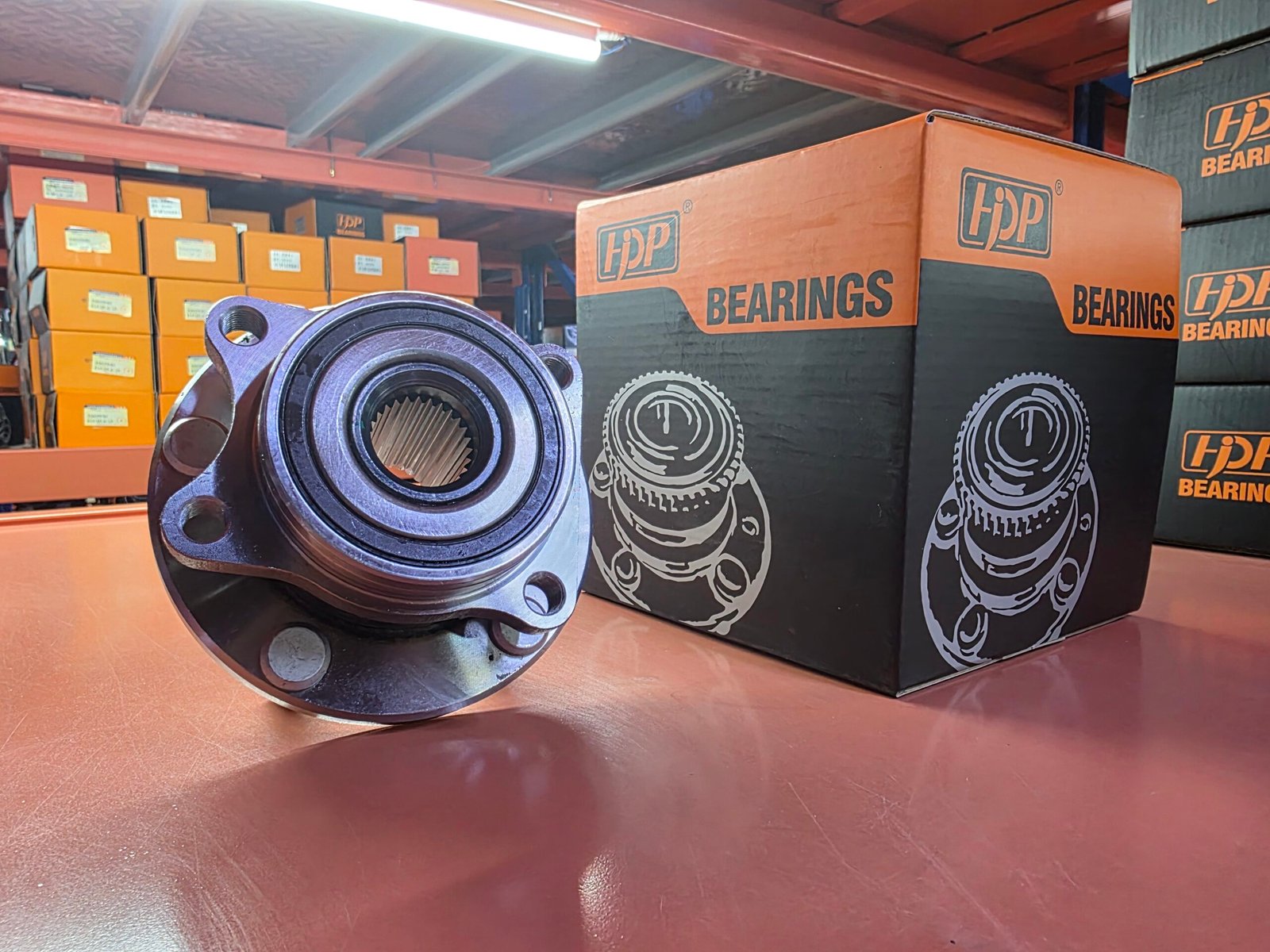
A first enquiry should be one short message with five blocks — part identity, part type, quantity, packaging and destination — because a distributor cannot quote accurately from a description alone. A structured opening also removes the two most common causes of a wrong quotation: an unconfirmed OE reference and an unclear bearing generation.
- Identify the part. Give the vehicle make, model and year or the axle position, the OE number if you have it, and the number cast or etched into the old part. Attach one photo of the whole part and one of any markings.
- Name the type in one line. Say whether you need a first, second or third generation hub bearing, a complete hub unit assembly, a tensioner or idler pulley bearing, a CV joint or CV axle assembly, a clutch release bearing, or a tapered or cylindrical roller bearing for automotive use.
- Give quantities and order pattern. List quantities by SKU and state whether this is a trial order or a repeat programme; the two are quoted, packed and scheduled differently even when the part is identical.
- Describe packaging and branding. Neutral cartons, printed cartons in your own design, or your own brand on the part and the box. State the label language your market requires.
- State the destination market and port. Mention the documents your customs broker needs and how the goods will be handled after arrival, because that decides carton strength and pallet layout.
- Say what decision you will make from the reply. A drawing review, a sample order or a stock programme — this tells the distributor which work to do first.
Custom packaging and private-label supply are a normal part of the HJDP offer, so a distributor quoting HJDP-brand wheel hubs from jnhjdp.com should be able to discuss artwork, label language and carton marking as readily as bearing type. If your market collects packaging material or recycling information, ask for it in the same message: the packaging and product data fields distributors are asked to feed back are easier to agree before artwork is approved than afterwards.
What to leave out matters too. Long narrative messages, price-only enquiries with no part data, and questions split across several days all slow the answer down. A buyer who sends one complete message usually gets a usable reply, and that reply is the first evidence of how the supplier works. A fuller list of fields is set out in this wheel hub bearing RFQ checklist.
Which data must be confirmed in writing before an order is placed?
Before an order is placed, specification, packaging and traceability data should exist in writing rather than only inside a chat thread. The table below is the minimum set for a wheel hub or hub unit; every line should trace back to a drawing revision, a document or a retained sample.
| Data field | Why it has to be written | Who supplies it |
|---|---|---|
| OE or interchange reference | Starting point for fitment; a chat message is not proof | Buyer, confirmed by supplier against drawing |
| Drawing number and revision | Shows which geometry is being quoted | Supplier |
| Sample or reference part | The physical part both sides approved | Both |
| Hub generation (1, 2 or 3) | Decides press fitting versus bolt-on and what is integrated | Supplier, approved by buyer |
| ABS sensor and connector type | A wrong plug makes a correct bearing unusable | Supplier from drawing; buyer checks vehicle |
| Seal and shield configuration | Affects water, dust and road-salt behaviour | Supplier |
| Packaging artwork proof | Prevents carton and label rework at destination | Both |
| Carton, label and pallet data | Needed for customs, slotting and handling | Supplier |
| Batch or lot marking | The basis of any later claim | Supplier |
| Inspection record and photo set | Evidence of what actually left the factory | Supplier |
| Claim and return procedure | States what happens when a part fails | Both |
None of these fields is exotic; their format is what matters. A specification that lives in a chat cannot be revised, while a specification that lives in a numbered document can. Where a vehicle application is involved, the only defensible answer is that fitment is subject to drawing and sample confirmation, never a fitment list assembled from memory — the same discipline applies to OE number and ABS fitment checks, where the sensor arrangement often decides whether a hub unit works at all.
Inspection evidence deserves its own line. A photo set of the actual parts before packing, taken under consistent light against a plain background, is more useful than a generic quality statement; a structured approach to visual inspection of wheel hub defects shows how lighting and viewing angle change what a photograph can prove.
How do you verify a wheel hub distributor before paying a deposit?
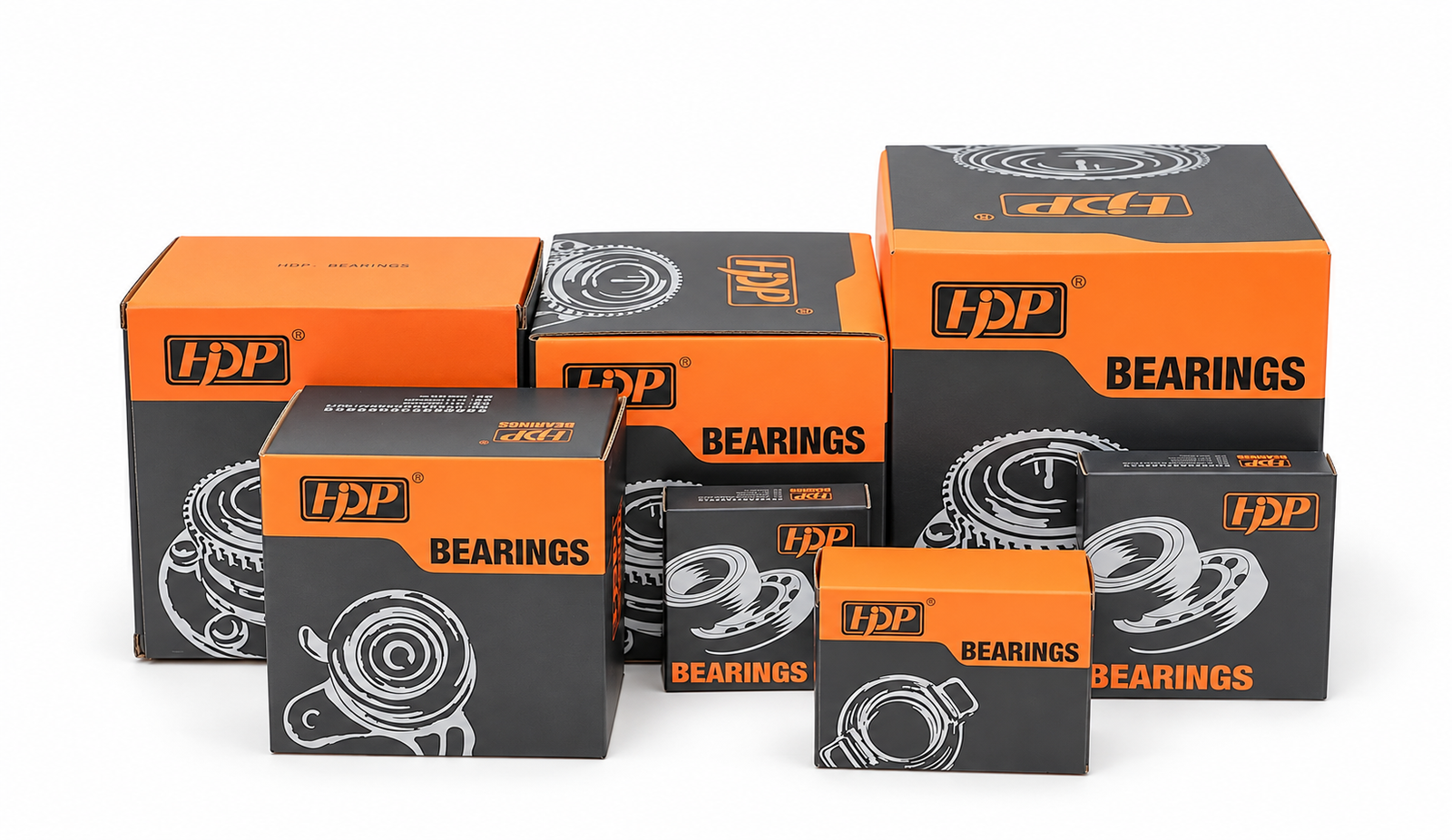
Verification means matching three things — the legal entity, the documents and the physical sample — and confirming that all three point to the same supplier.
Start with the entity behind the chat
Ask for the full legal company name, the country of registration and the brand the company owns. A brand should resolve to a company and to a website that publishes the products: HJDP is the own brand of Jinan Huayuan Auto Bearing Co., Ltd., and the range is published at jnhjdp.com. If the name on the chat, the name on the quotation and the name on the website differ, ask which entity would appear on the invoice and packing list before discussing price.
Ask for documents a supplier can actually produce
A capable distributor can send a drawing with a revision number, a photo set of the sample, packaging proofs and an inspection record for the specific SKU under discussion. Documents that repeat marketing language are not a substitute; what a buyer needs is the geometry, the generation, the sensor type and the marking. A structured way to weigh those answers is described in this guide to evaluating a wheel bearing and hub assembly supplier.
Order a small, awkward sample
Choose the SKU with the most demanding requirements — a generation 3 unit with an integrated ABS sensor, an unusual flange bolt pattern, or a seal that has failed before in your market — rather than the simplest item in the range. The purpose is not the part but the process: how accurately it is packed, how the marking matches the drawing, and how a labelling error is handled. Sample confirmation also locks the reference part that later claims will be compared against.
Judge the process, not the adjectives
Useful answers to specification questions are short and specific: yes, no, or “needs the drawing number”. Treat as risk signals a refusal to put specifications in writing, part numbers that change between messages, entity names that shift between chat and invoice, and pressure to settle before a sample is agreed. None of these proves fraud, but each removes a way for you to check the order later.
Use chat for evidence, not for approvals
Photos of a sample, a packing line or a warehouse bay are useful context. They are not approvals. An approval is a signed drawing, a retained sample with a reference number, or a written specification sheet.
Which distributor type fits your channel — and what does that change?
The channel you sell into decides which data, packaging and service level matter; the bearing range is the same question on both sides. A buyer serving repair shops and a buyer serving an OEM line can order the same HJDP hub unit and still need completely different paperwork, packing and label content.
| Channel type | Order pattern | Data that decides reordering | Risk if it is missing |
|---|---|---|---|
| Importer or stockist | Mixed-SKU shipments, seasonal depth | Carton and pallet data, storage conditions, batch marking | Stock that corrodes or cannot be traced |
| Wholesale distributor | Frequent mixed orders to smaller accounts | Part numbering discipline, label accuracy, fast fitment answers | Returns caused by wrong picks |
| Parts chain with branches | Central buying, many points of sale | Packaging that survives handling, consistent labels | Branch-level catalogue mismatches |
| Repair shop channel | Small quantities, fast turnaround | One-line part identity, press versus bolt-on guidance | Comebacks and repeated labour |
| OEM or assembly programme | Scheduled call-offs, drawing-controlled parts | Approved drawings, batch traceability, line packaging | Line stops and re-approval costs |
HJDP covers both sides of that table. The range is built for aftermarket replacement — first, second and third generation wheel hub bearings, hub unit assemblies, tensioner and idler pulley bearings, CV joints and CV axle assemblies, clutch release bearings, and tapered and cylindrical roller bearings for automotive use — and those same part families can be supplied against OEM requirements with drawing and sample confirmation.
One consequence of channel choice is that the word “quotation” means different things. In a repair-shop channel the sellable unit is often a single box with a label a technician can read at a glance. In a parts chain it is a barcode that must match the catalogue exactly, branch by branch. In an OEM programme it is a drawing revision with a batch record behind it. Ask any distributor to quote in the unit your channel actually sells; the answer shows whether they understand your market or only their own warehouse.
Which hub type should you stock: generation 1, generation 2, generation 3 or a full assembly?
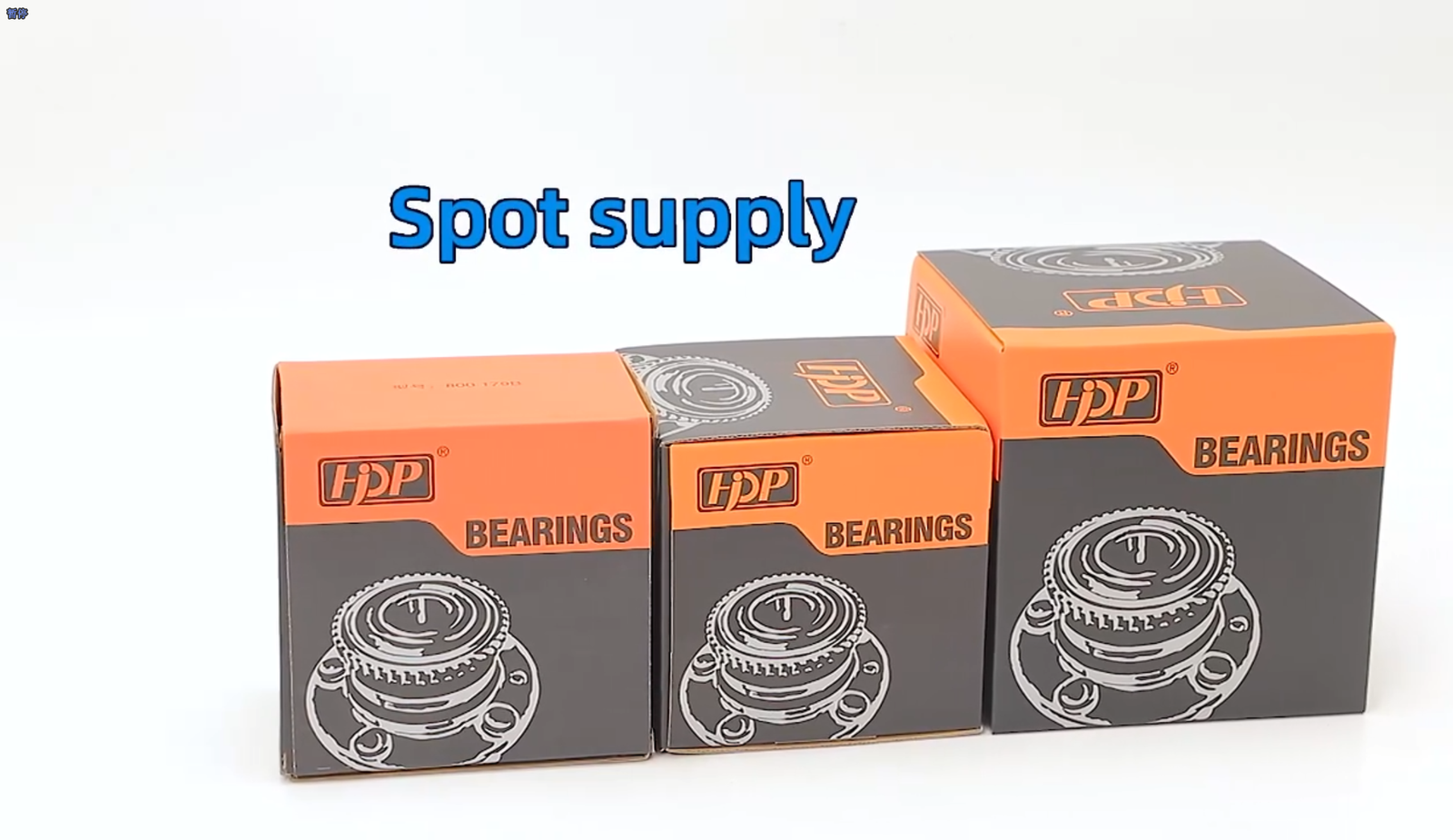
The generation number describes how much of the wheel-end assembly is built into the bearing, and that is what determines fitting labour, ABS content and the value of the stock you are holding. It is also the term most often given incorrectly in a chat enquiry.
| Type | What is integrated | Fitting character | Stocking note |
|---|---|---|---|
| Generation 1 hub bearing | Double-row bearing with a flanged outer ring; the hub flange is a separate part | Pressed into the carrier, needs a press and correct tooling | Lower unit value, more fitting steps, more chances of installation error |
| Generation 2 hub unit | Bearing and hub flange combined in one flanged unit | Pressed or bolted to the carrier, depending on design | Fewer parts per repair, moderate stock depth |
| Generation 3 hub unit | Bearing, flange, wheel bolts, tone ring and often the ABS sensor in one bolt-on unit | Usually bolt-on replacement | Fastest fitting, highest unit value, sensor and connector must match exactly |
| Hub unit assembly | The complete wheel-end unit prepared for the application | Bolt-on | Simplest repair decision, strictest part-number discipline |
Two rules keep generation questions out of the returns channel. First, never infer the generation from a photograph, because the flange, the bolt pattern and the sensor are not always visible from one angle. Second, treat the OE reference as the start of the check and the drawing plus sample as the end of it: for any specific part number, fitment is subject to drawing and sample confirmation. This hub assembly selection guide follows the same sequence of reference, drawing and sample.
Stock balance is the other half of the decision. Buyers who stock hub bearings usually also buy tensioner and idler pulley bearings, CV joints and CV axle assemblies and clutch release bearings, and many buy tapered and cylindrical roller bearings for automotive use. A supplier whose range covers those families under one brand and one specification discipline reduces the number of separate qualification processes a buyer has to run.
How do you keep chat-based sourcing auditable for warranty, returns and reorders?
The answer is to give every SKU one written specification sheet and treat chat as a transport method rather than a record. Six habits make the difference:
- One sheet per SKU. Drawing number, revision, generation, sensor type, sample reference, packaging proof and marking in a single versioned document, updated whenever anything changes.
- Dated photo evidence. Keep photographs with a date and a caption that names the SKU, not “as discussed”.
- A claim procedure agreed before shipment. What evidence a claim needs, who inspects it and how a batch is identified.
- Batch marking on the packing list. Without lot identification, a claim cannot be traced back to a production run or a purchase order.
- Storage discipline on arrival. Bearings arrive with preservation designed for transport, not for a humid warehouse; the principles of wheel hub warehouse storage and corrosion control belong in your receiving instructions.
- A separate part number for private-label versions. The same bearing sold under your own brand needs its own box, label and number so stock, claims and reorders stay separable.
Returns are where chat-based sourcing usually breaks down, because the failure is discussed in messages while the documentation stays empty. A short, fixed list of what must be recorded for every return — see this warranty and return data checklist for wheel hubs — keeps both sides using the same fields and turns a complaint thread into information a supplier can act on.
The test is retrospective. Six months after an order, can you reopen the file and reconstruct what was agreed, and can the warehouse match a returned part to a batch, a purchase order and a specification revision? If not, the conversation was fast and the process was expensive. Speed in chat is a convenience; the specification sheet is the asset.
FAQ: sourcing wheel hubs through a messaging-app channel
Is it safe to buy wheel hub bearings from a distributor found through a messaging app?
It is safe when the chat leads to verifiable documents and a physical sample. Ask for the legal company name, the brand it owns and the website that publishes the products, then request a drawing with a revision number, packaging proofs and an inspection record for the exact SKU. Pay for a small trial order first. Chat proves nothing; documents and samples do.
What is the minimum information for a first enquiry?
Send one message with the OE number or the marking on the old part, one clear photograph, the part type — generation 1, 2 or 3 hub bearing, hub unit, tensioner bearing, CV joint, clutch release bearing, tapered or cylindrical roller bearing — quantity by SKU, packaging and branding requirement, and destination market. Fitment stays subject to drawing and sample confirmation.
How do I decide between a generation 2 and a generation 3 hub unit?
Follow the OE reference and the vehicle’s sensor arrangement, not the visual similarity of the part. A generation 2 unit combines the bearing and hub flange; a generation 3 unit also carries the tone ring, the ABS sensor and usually the wheel bolts. If the sensor or connector differs, the unit cannot be corrected in the workshop, so confirm drawing and sample first.
Can I buy HJDP wheel hub bearings under my own brand?
Yes. HJDP is the own brand of Jinan Huayuan Auto Bearing Co., Ltd., published at jnhjdp.com, and the company offers drawing and sample confirmation, custom packaging and private-label supply for importers, wholesalers, parts chains and repair-shop channels serving markets such as the Middle East, Southeast Asia, South America, Africa and the CIS.