OECAT Universal Joint Cross: What It Is and How to Match It
An OECAT universal joint cross is a drive shaft cross-and-bearing kit that buyers order by its OECAT reference number, most often for Caterpillar-style commercial and off-highway drivelines. For importers and repair-channel buyers, searching OECAT is a matching task rather than a brand-discovery task: you already hold a number, a worn cross on the bench, or an OE reference, and you need the cross that fits the same yokes. HJDP, the own brand of Jinan Huayuan Auto Bearing Co., Ltd. (jnhjdp.com), publishes OECAT-numbered crosses such as the 1142-1149 series. Final fit is confirmed against a drawing and a sample.
What Is an OECAT Universal Joint Cross?
A part-number reference, not a performance grade
An OECAT universal joint cross is best read as a part-number reference inside the aftermarket driveline trade, not as a material class, a performance grade or a country of origin. When a counterman or workshop buyer uses the term, the part meant is normally a cardan-type universal joint cross: a four-trunnion steel cross carrying needle-roller bearing caps that seat in the yokes of a propeller shaft or drive shaft. It transmits torque through a continually changing angle while the shaft rotates, which makes it a wear part with a service life rather than a lifetime component.
What the reference identifies
A reference such as OECAT-1145 points to a combination of features, and a small difference in any one of them stops the parts from interchanging:
- Bearing cap outside diameter – whether the cap enters the yoke bore.
- Cap-to-cap span – the assembled width of the joint, measured across the caps and between the snap-ring grooves.
- Trunnion (journal) diameter – the size that sets the needle-roller complement and the load the cross can carry.
- Retaining method – internal snap rings, external snap rings, bolted retainer plates or a strap arrangement.
- Lubrication route – a fitting in the cross body, a fitting in one cap, or a sealed design that is not re-greaseable.
- Cap seal – single lip, double lip or shielded, which decides how well the joint resists dust, grit and water.
Two crosses can look identical on a bench and still differ by a fraction of a millimetre in cap diameter, or by where the snap-ring groove sits. The reference narrows the search; it does not prove fit.
How the HJDP range covers this reference
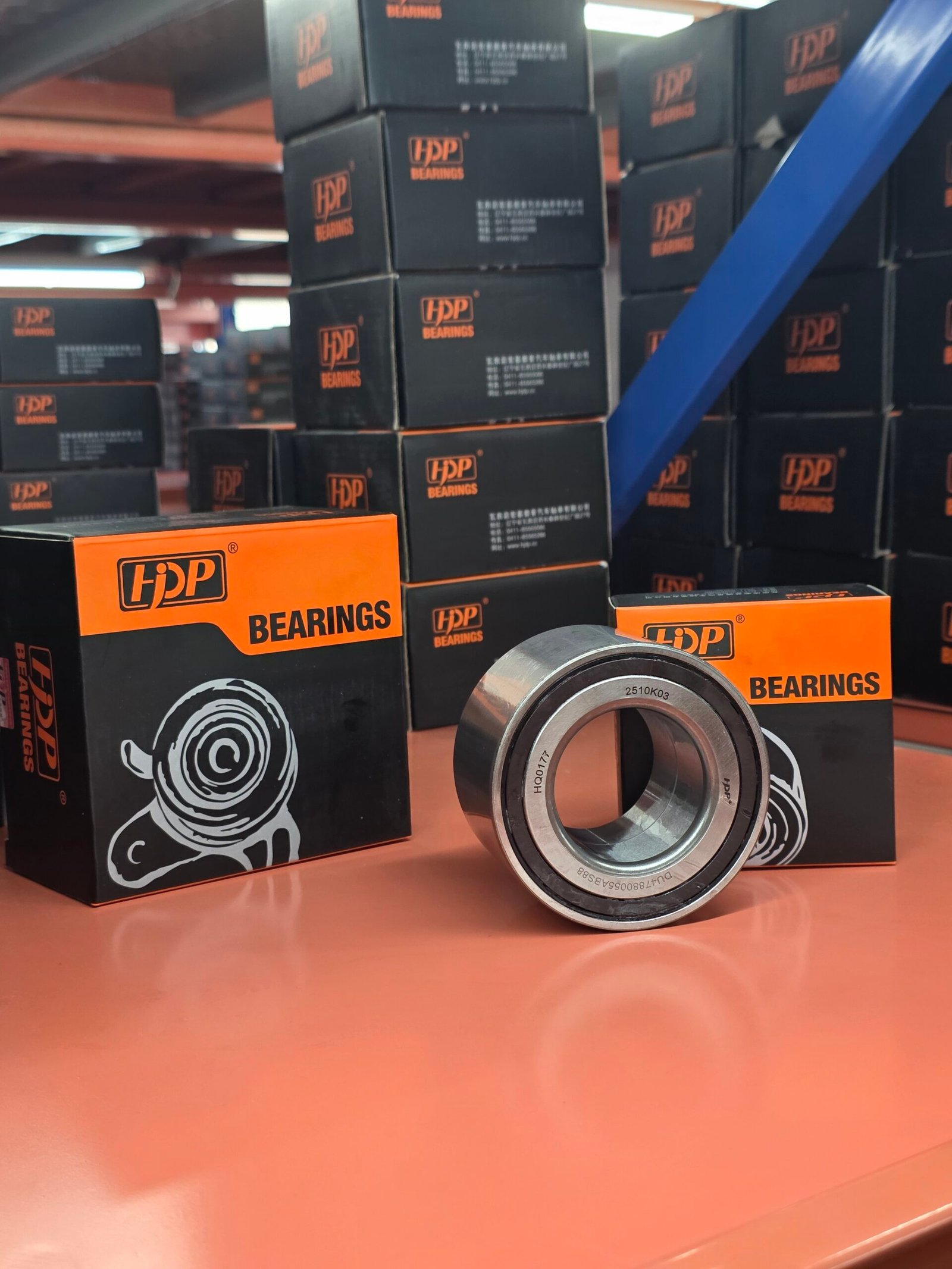
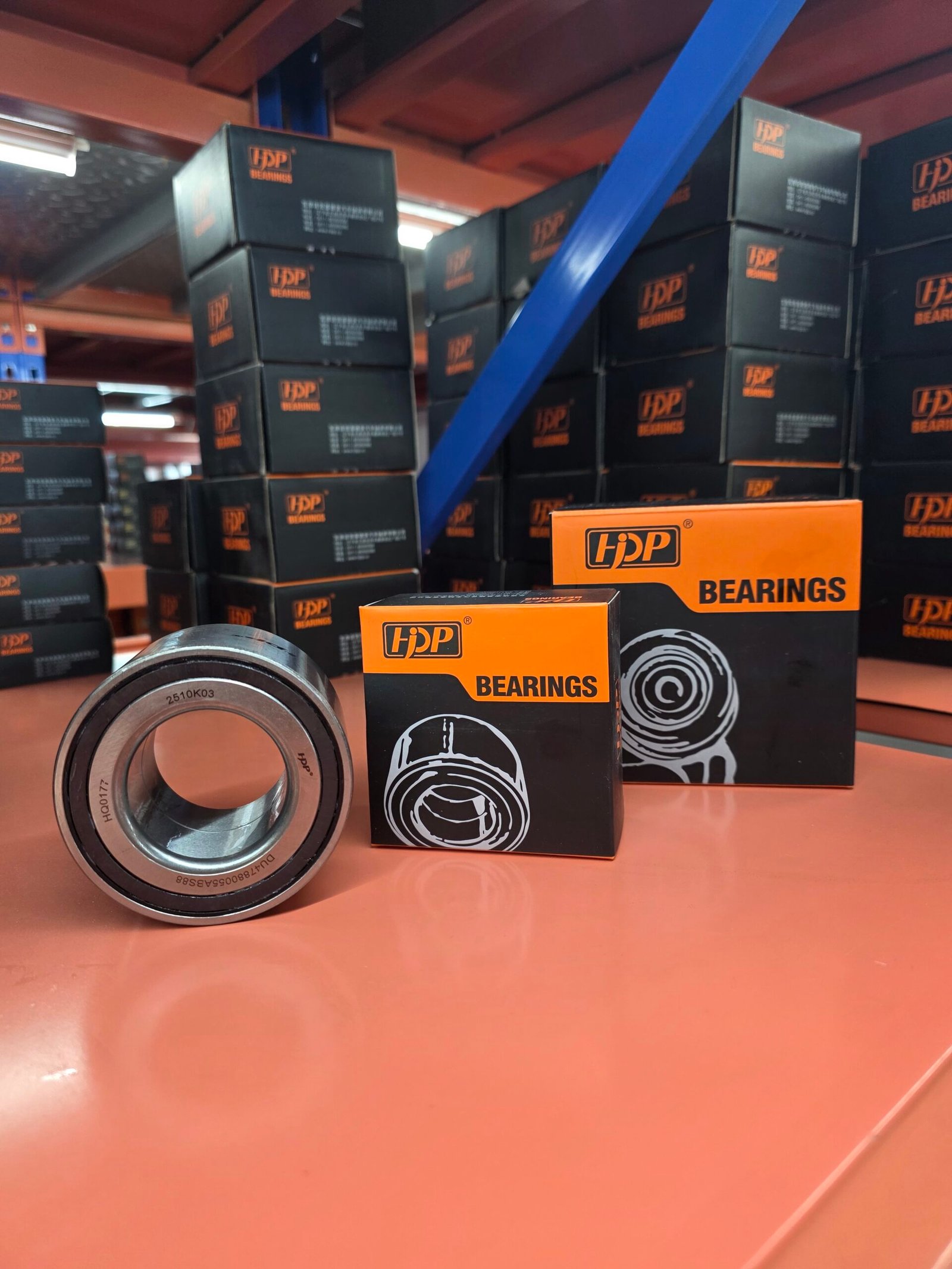
HJDP is the own brand of Jinan Huayuan Auto Bearing Co., Ltd., a bearing and automotive running-gear manufacturer in Jinan, Shandong, China, selling through jnhjdp.com. OECAT-referenced crosses sit within a wider range that includes first, second and third generation wheel hub bearings, hub unit assemblies, tensioner and tensioner bearings, ball-cage and constant-velocity joint assemblies, clutch release bearings, and automotive tapered and cylindrical roller bearings. One published example is the HJDP OECAT-1149 drive shaft universal joint cross. Fit is confirmed from a drawing and a sample, not from the number alone. Caterpillar is a trademark of its respective owner and appears here for fitment identification only.
How Do You Match an OECAT Reference to the Driveline in Front of You?
Measure the joint before you trust the number
Matching begins with measurement. A number taken from a parts book, a worn cross or a customer photograph is a hypothesis; a micrometer and calipers are the test. Work through these checks in order, because the first three eliminate most wrong parts.
| Dimension or feature | What it controls | How to check it | Mismatch that ruins the fit |
|---|---|---|---|
| Bearing cap outside diameter | Whether the cap enters the yoke bore | Micrometer across the cap, not the cross body | A cap that will not seat, or a loose cap that spins in the bore |
| Cap-to-cap span | Assembled width of the joint | Measure across both cap faces with the joint assembled | Joint that will not enter the yoke, or immediate end-play |
| Snap-ring groove position and diameter | Axial location of the cross in the yoke | Measure to the groove face; note internal versus external rings | Cross sitting off-centre, blocked grease path, cap walking out |
| Trunnion diameter and surface | Needle-roller fit and load capacity | Micrometer on an unworn band of the trunnion | Roller skid, early spalling, heat marks |
| Retaining hardware | How the caps are held in the yoke | Identify ring, plate, strap or staked design; measure bolt spacing | Plates that will not align or bolts that bottom out |
| Grease fitting and drillings | Whether the joint can be re-lubricated, and where grease reaches | Check thread, position and whether all four trunnions are drilled | Dry trunnions, grease reaching only one cap |
| Cap seal and shield | Dust and water exclusion | Compare lip profile, cap height and shield | Grit ingress and short life in sand or mud |
Why two similar references are not interchangeable
A cross that matches on cap diameter and cap-to-cap span can still be wrong if the snap-ring groove sits elsewhere, if the joint is drilled for grease where yours is sealed, or if the retaining hardware is a plate rather than a ring. Those differences rarely appear when the part is offered up to the yoke by hand. They appear later, as a cap that walks out of the bore, a ring that will not seat, or a trunnion that runs dry because the grease path does not line up with the fitting.
Cross-reference OE numbers, then confirm with a drawing and sample
OE numbers and aftermarket references are useful shortcuts and weak proof. The same reference can be published against more than one design, and supersessions do not always preserve every dimension. The reliable sequence is short: match the reference to a drawing, compare the drawing with your own measurements, and confirm on a physical sample before a bulk order is placed. Where the reference is unclear, ask for the drawing rather than guessing from a photograph; where no drawing exists for your application, the sample is the only practical confirmation.
Which OECAT Cross Should You Specify for Your Duty Cycle?
Duty profile, not catalogue position, decides the specification
There is no single best cross, because daily duty loads the joint in different ways and the cost of a comeback differs by channel. A joint that lasts on a delivery van can fail quickly on a machine working in sand, while an over-specified joint on a light road application adds cost without addressing the real failure mode. Use the comparison below as a framework for a commercial-duty option such as the OECAT-1146 cross-shaft kit for commercial drivelines, then confirm the final reference against a drawing and a sample.
| Duty profile | Prioritise | Avoid | Confirm before ordering |
|---|---|---|---|
| Light commercial: pickup, van, light truck on road | Exact cap and groove match; sealing that holds factory grease | Over-specified crosses that add cost without addressing the failure mode | Original reference, cap diameter, span |
| Medium truck, bus and coach, mixed urban and highway | Lubrication route where the original design has one; seals that tolerate dust and wash-down | Mixing greaseable and sealed crosses on the same shaft | Fitting position; seal profile |
| Heavy truck and trailer, high torque, long distance | Trunnion size and roller complement; serviceable retaining hardware | Re-used rings and plates; an unbalanced shaft | Retaining method; balance check |
| Off-highway and plant: sand, mud, shock loads | Cap shields and seal design; consistent steel quality | Unprotected fittings; joints assembled with dirty grease | Seal type; serviceable or sealed design |
| Repair channel covering many applications | A reference system counter staff can match quickly | Unlabelled parts with no traceable reference on the box | How the reference is printed on the packaging |
Original-style replacement versus an upgraded specification
When a joint fails early, the first instinct is to specify something stronger. Material changes can help: some crosses in the HJDP OECAT series are published as high-strength alloy steel designs for demanding drivelines, such as the OECAT-1147 high-strength alloy steel cross shaft. Strength is only useful if the interfaces still match, however. A heavier-duty cross with the same cap diameter, span, groove position and retaining method swaps in cleanly; one that needs a different yoke, different rings or a different lubrication routine turns one repair into three.
When the cross is not the only part to replace
A new cross fitted into a worn yoke will not last. Before ordering, the inspection should also cover the yoke bore, snap-ring grooves, the slip yoke and splines, driveshaft tube straightness, balance weights, and the flange bolts. If the failure came from a cap spinning in a damaged bore, replacing only the cross guarantees the same symptom returns.
How Do You Verify an OECAT Cross Before You Place an Order?
Buyers who order driveline parts across borders lose money in two predictable places: parts that do not fit, and parts nobody can identify in the warehouse. Both are avoidable with a short routine repeated for every reference.
- Record the reference exactly as printed. Copy the number from the old part, the parts book or the customer paperwork, including prefix and suffix. Do not quietly correct a number that looks odd; check it first.
- Measure the joint. Cap outside diameter, cap-to-cap span, snap-ring groove position, trunnion diameter and retaining method. Photograph the measurements beside the part so both sides work from the same evidence.
- Write down the application. Vehicle type, position on the driveline such as main shaft, inter-axle or front axle drive, working environment, and how long the previous joint lasted. Service life is diagnostic information.
- Ask for the drawing. A drawing shows groove positions, drillings and cap geometry that a photograph cannot. Compare it with your measurements and list any difference instead of assuming it is tolerance.
- Request a sample before the bulk order. Fit the sample to the yoke on the bench. Caps should seat with hand pressure, rings should seat fully in their grooves, and the joint should articulate freely without binding.
- Confirm lubrication and sealing. Establish whether the joint you are buying is greaseable or sealed, where the fitting sits, and what the cap seal is expected to keep out.
- Agree packaging and marking. For importers, wholesalers and parts chains, confirm carton printing, reference numbering and own-brand or neutral packaging before production starts.
- Order when the drawing, the sample and your measurements agree. If one of the three disagrees, resolve it first; a larger quantity never fixes a fitting problem.
What to put in a first enquiry
A complete enquiry produces a faster and more accurate answer than a photograph alone. Include the reference as printed, your measured dimensions, the application and its position on the driveline, the working environment, the quantity split by reference, and your packaging requirement. If the reference is unknown, send photographs of the joint from several angles with a ruler in frame, plus vehicle details and the life the previous joint achieved. Where no drawing can be matched to the reference, the part has to be confirmed by sample before production.
What Fails on a Universal Joint Cross, and What Does the Failure Tell You?

A failed cross usually carries the evidence of its own cause. Reading that evidence decides whether you replace a part, a shaft or a maintenance routine, and it separates a repair that holds from a repeat job.
| What you see | Likely cause | What to check next |
|---|---|---|
| Rust bleed around a cap | Water or condensation past the seal; long storage or infrequent use | Seal lip and shield condition; greasing routine |
| Knocking on take-off or reversing | End-play from a worn trunnion, or a cap that has moved | Cap-to-cap span against the drawing; ring seating |
| Grease weeping from one cap only | Blocked or partially drilled lubrication path | Fitting thread and drilling route |
| Two opposite trunnions worn, the other two clean | Joint running at one fixed angle; geometry or balance problem | Shaft balance and yoke alignment |
| Vibration above a road speed | Joint that lost balance, or a shaft bent during removal | Shaft straightness, run-out, balance weights |
| Cap seized after the vehicle sat unused | Corrosion from condensation and dried grease | Storage conditions; whether the joint is re-greaseable |
| Blue or straw heat marks on a trunnion | Lubrication starvation or overheating under load | Grease type, interval, operating angle |
Installation errors that look like part failures
Several failures blamed on the cross are created during fitting. Driving caps in with a hammer damages the needle rollers and distorts the cap shell. Re-using a stressed snap ring or retainer plate loses the axial location the joint depends on. Over-greasing a sealed joint forces the seal lip and turns the grease route into a dirt route. Pressing a new cross into a burred or worn yoke guarantees movement where there should be none.
Why the failure pattern matters commercially
For importers and parts chains, a failure pattern is stocking information. One returned cross proves little, but the same symptom appearing across a market points either to a duty profile that was under-specified or to a maintenance practice in that market – both are decisions you can act on by changing the reference you stock or the guidance you give the repair channel.
How Does the HJDP Range Fit Together for Importers and Distributors?
One supplier for bearings and driveline parts
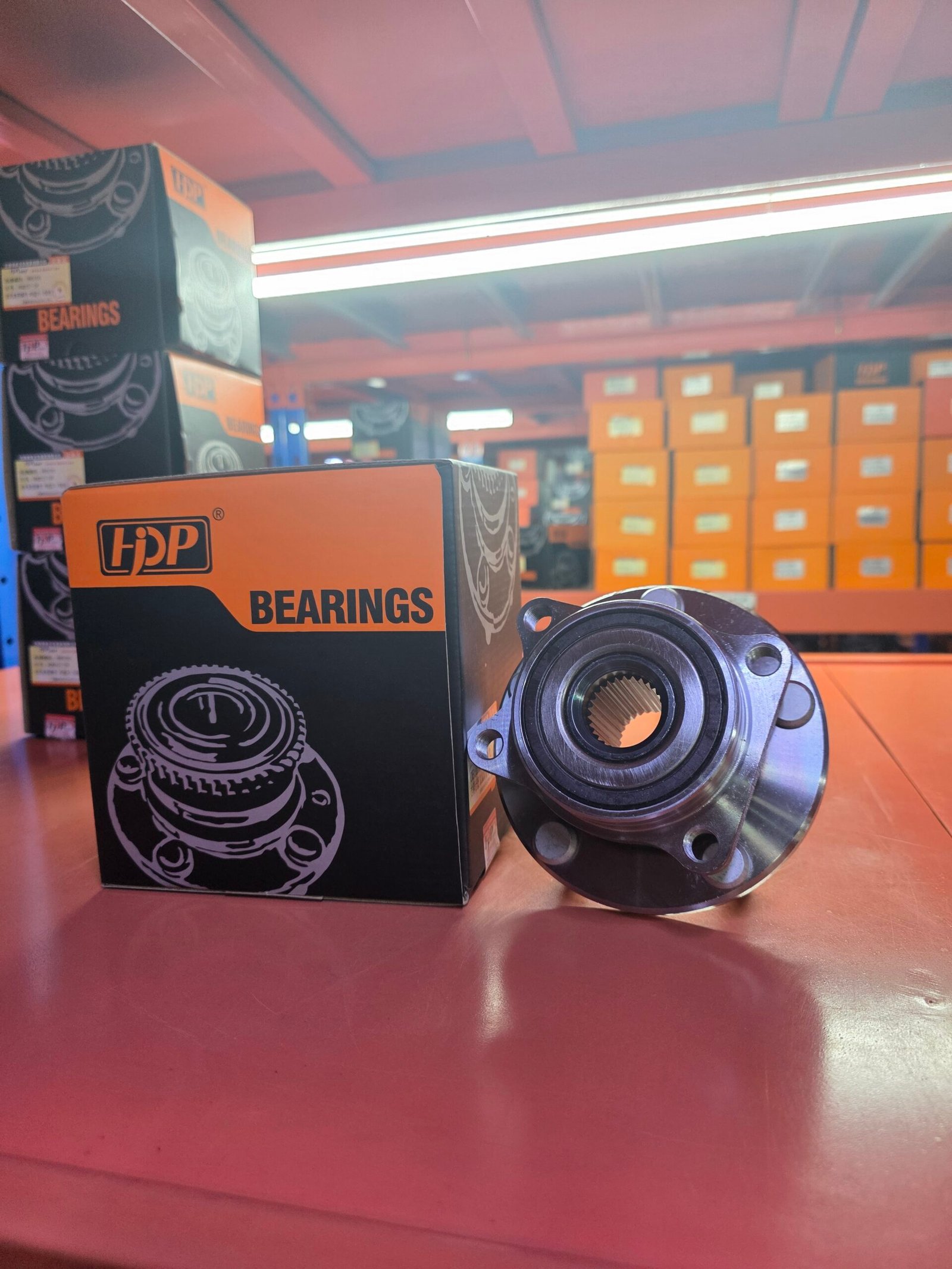
HJDP, the own brand of Jinan Huayuan Auto Bearing Co., Ltd. (jnhjdp.com), covers automotive wheel hub bearings, wheel hub units, tensioner bearings, constant-velocity joint assemblies, clutch release bearings and roller bearings for automotive use, alongside OECAT-referenced universal joint crosses such as the OECAT-1142 rugged driveline cross-shaft kit for harsh duty. For an importer the practical benefit is consolidation: one supplier relationship, one reference convention and one packaging standard across the hub side and the driveline side of the vehicle. The company supplies the aftermarket replacement market and OEM programmes, and typical buyers are importers, wholesalers, auto parts chains and repair-channel distributors in the Middle East, Southeast Asia, South America, Africa and the CIS.
Drawing and sample confirmation, custom packaging and private label
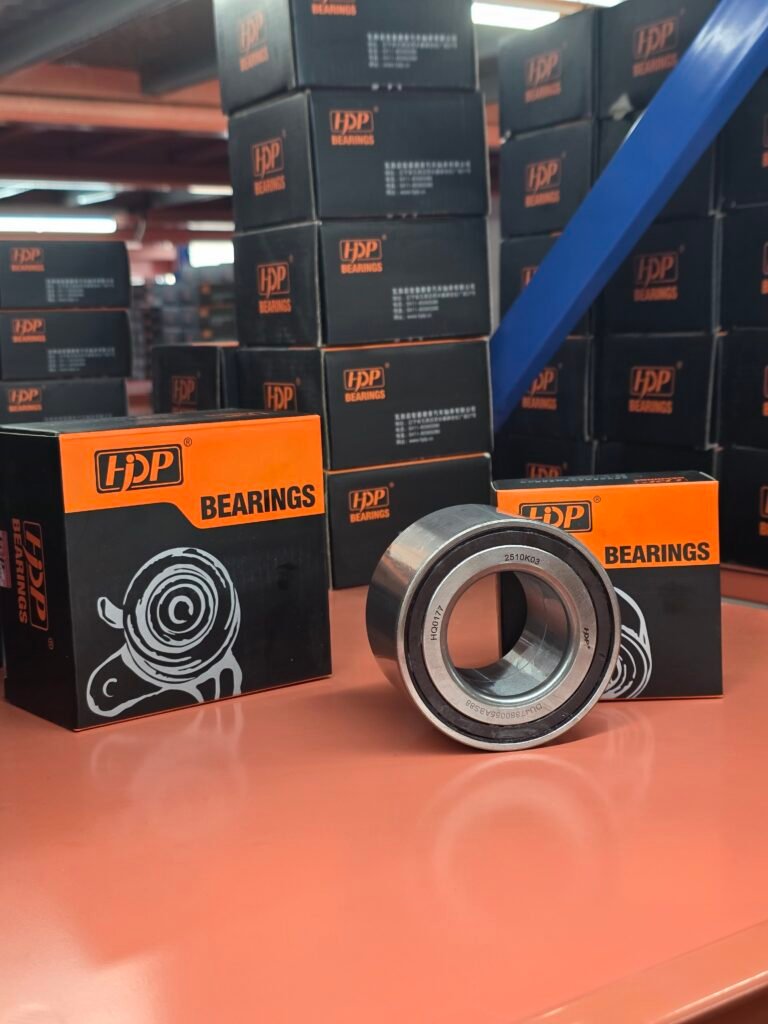
Buyers do not have to accept a catalogue number on trust. HJDP supports drawing and sample confirmation before production, custom packaging and own-brand (private label) marking, which is what importers, wholesalers and parts chains need when they sell under their own name. Carton printing, reference numbering and label content are agreed per order rather than assumed, and the technical confirmation and the commercial confirmation happen at the same time. Raise packaging with the reference and dimensions in the first enquiry rather than after production.
How to start
Send the reference or the measurements, whichever you hold, and state the application and the market. For OECAT-numbered crosses, the path normally ends in a drawing and a sample before a production quantity is agreed – the quickest way to keep a wrong part out of a container.
FAQ: OECAT Universal Joint Crosses
Is OECAT a brand or a part number?
In aftermarket driveline buying, OECAT is used as a part-number reference for universal joint crosses rather than as one manufacturer name. Different suppliers can publish a cross against the same reference, and the reference alone does not tell you the material, the seal design or the retaining method. Treat it as an identifier to be matched, then confirm dimensions, drawing and sample.
Can HJDP supply a cross that matches an OECAT number I already have?
You can request a cross against the reference you hold and have it checked against a drawing and a sample. Send the number exactly as printed, plus your own measurements of the joint being replaced, its position on the driveline and the working environment. If the reference cannot be confirmed, the part is confirmed from the sample instead.
What information is needed before ordering a bulk quantity?
Four things: the reference number, the measured dimensions (cap diameter, cap-to-cap span, snap-ring groove position, trunnion diameter, retaining method), the application and duty profile, and the packaging requirement. Quantity should be split by reference. A photograph with a ruler helps but does not replace measurements, and drawing plus sample confirmation should come before production.
Can OECAT crosses be supplied in our own packaging or brand?
Yes. HJDP supports custom packaging and own-brand marking, which suits importers, wholesalers and parts chains that sell under their own name. Carton printing, reference numbering and label content are agreed per order, and it is easier to settle them at the same time as the technical confirmation. Raise the packaging requirement with the reference and dimensions in the first enquiry.