Bearing Overheat Indicator: Wheel-End Inspection Guide
A bearing overheat indicator is useful only when it is tied to a repeatable measurement, a comparable baseline and the rest of the wheel-end evidence. One hot reading cannot, by itself, separate bearing friction from brake drag, recent driving, sensor error, installation conditions or normal application-specific heat.
What is a reliable bearing overheat indicator?
A reliable bearing overheat indicator is a repeatable rise or abnormal difference measured at the same wheel-end location, under comparable operating and cooling conditions, and confirmed with other evidence. Compare left and right positions with the same axle role, record ambient temperature, route, load, braking, elapsed time, instrument and target surface, then inspect for brake drag, lubrication loss or excess, contamination, seal damage, installation error, abnormal noise, vibration, play and roughness. Do not use one universal temperature cutoff for every passenger vehicle, truck, trailer or industrial bearing. Follow the vehicle or equipment maker’s service procedure and remove the unit from operation when the authorized procedure, rapid heat rise, severe noise, smoke, looseness or other safety evidence requires it.
Treat heat as a warning signal, not a complete diagnosis
Define the exact decision that a temperature observation is expected to support. This is the controlling question for bearing overheat indicator inspection, since wheel-end temperature can include heat from the brake, tire, road, lubricant, seal and nearby structures as well as the bearing. Procurement, catalog and quality teams should use the same definition so that a technical note cannot be converted into a stronger public or contractual claim downstream.
Collect the vehicle application, axle position, driven or non-driven layout, recent route, speed, load, braking events, ambient conditions and symptom history. After intake, classify the observation as a screening signal and test alternative heat sources before assigning a bearing failure cause. Do the comparison line by line rather than by overall resemblance, total price or a supplier’s confidence. Evidence can eliminate a candidate without proving the remaining candidate, and the workflow should preserve that distinction.
Decision rule and evidence owner
The evidence packet must connect the measured position, operating context, comparison point, supporting symptoms and service decision to one inspection record. Give files stable names, retain the unedited originals and connect every conclusion to its source. A screenshot without the URL and access date, or a photograph without the SKU and sample ID, is difficult to reuse and should not carry an approval by itself.
Worked situation: one front rotor was measured immediately after repeated braking while the opposite side was measured after several minutes of cooling. Hold the decision if the readings were not taken under comparable timing, duty or surface conditions. Explain the hold with the disputed field and required evidence rather than speculation. That approach gives suppliers and customers a solvable question while protecting the distributor from an accidental interchange, capability or delivery promise.
Standardize where and when temperature is measured
Make sequential and side-to-side readings comparable enough to show a genuine trend. This is the controlling question for bearing overheat indicator inspection, since infrared instruments respond to target surface, distance, angle, emissivity, reflections and the delay between stopping and measurement. Procurement, catalog and quality teams should use the same definition so that a technical note cannot be converted into a stronger public or contractual claim downstream.
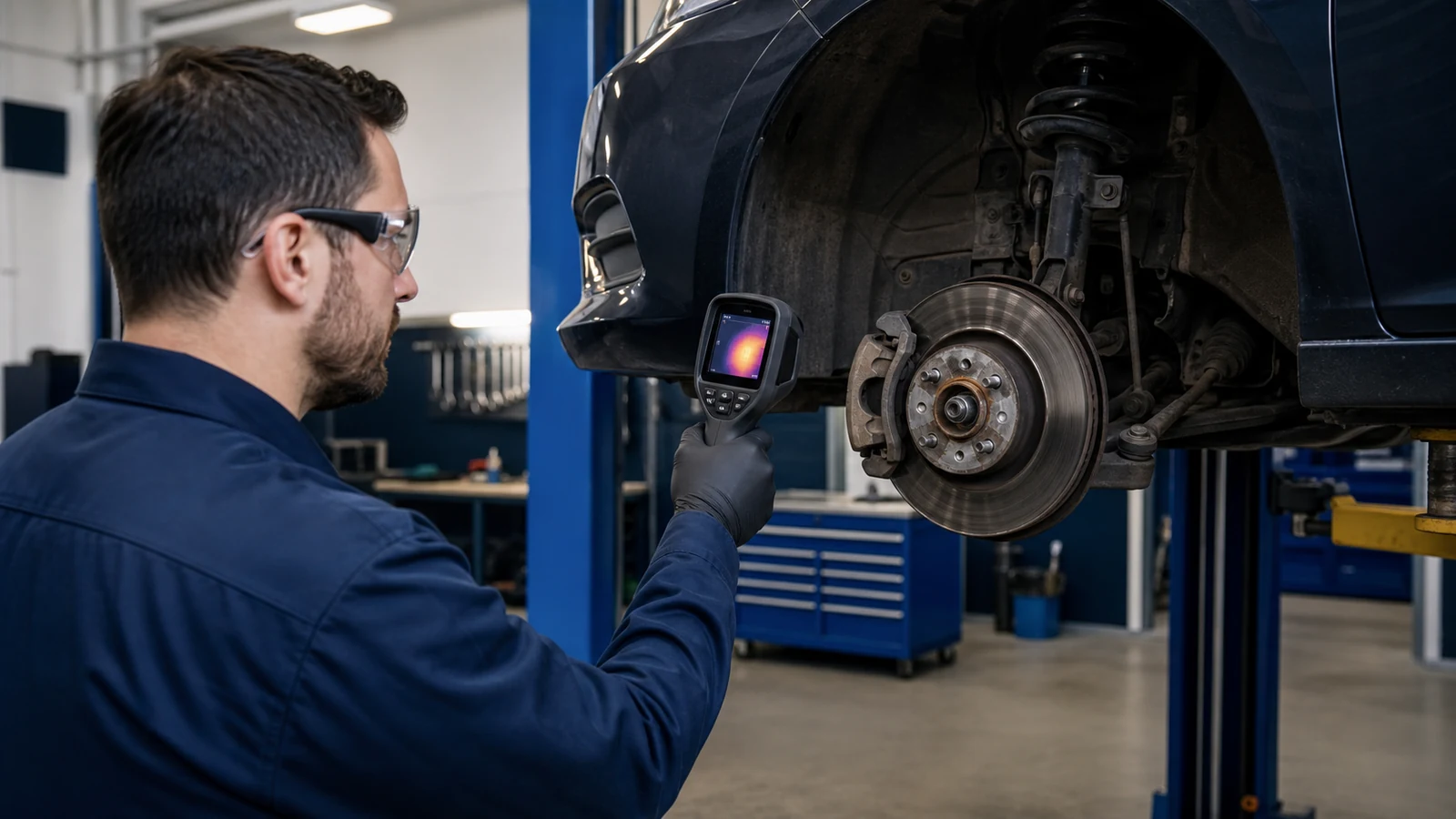
Collect instrument identity and condition, measurement point photographs, surface description, distance, angle, ambient temperature, route, speed, load, braking pattern and time after stopping. After intake, use the same safe target area and measurement sequence at each comparable wheel end without touching a hot component or aiming through an obstruction. Do the comparison line by line rather than by overall resemblance, total price or a supplier’s confidence. Evidence can eliminate a candidate without proving the remaining candidate, and the workflow should preserve that distinction.
A workable release condition
The evidence packet must preserve raw readings, timestamps, target location, operator, instrument, operating cycle and any limitation such as wind or reflective metal. Give files stable names, retain the unedited originals and connect every conclusion to its source. A screenshot without the URL and access date, or a photograph without the SKU and sample ID, is difficult to reuse and should not carry an approval by itself.
Worked situation: a shiny rotor face and a painted hub area give different infrared behavior even though the technician labels both readings as hub temperature. Hold the decision if the target location or measurement method changes between readings. Explain the hold with the disputed field and required evidence rather than speculation. That approach gives suppliers and customers a solvable question while protecting the distributor from an accidental interchange, capability or delivery promise.
Build a baseline and compare equivalent wheel ends
Use change over time and meaningful deltas before interpreting an isolated number. This is the controlling question for bearing overheat indicator inspection, since different vehicles, axles, brake designs, loads and lubricants reach different thermal equilibria. Procurement, catalog and quality teams should use the same definition so that a technical note cannot be converted into a stronger public or contractual claim downstream.
Collect a known-normal record for the same application where available, equal-position readings, repeated duty cycles, ambient conditions and vehicle-specific service information. After intake, compare like with like, graph the temperature rise and cooling behavior, and investigate persistent asymmetry instead of importing a threshold from an unrelated bearing. Do the comparison line by line rather than by overall resemblance, total price or a supplier’s confidence. Evidence can eliminate a candidate without proving the remaining candidate, and the workflow should preserve that distinction.
How to document the exception
The evidence packet must show absolute readings, temperature above ambient, side-to-side difference, trend direction, duty-cycle notes and the evidence source for any acceptance limit. Give files stable names, retain the unedited originals and connect every conclusion to its source. A screenshot without the URL and access date, or a photograph without the SKU and sample ID, is difficult to reuse and should not carry an approval by itself.
Worked situation: a fleet adopts a limit from a stationary industrial housing and applies it to every passenger-vehicle wheel end. Hold the decision if the threshold cannot be traced to the actual vehicle, bearing, lubricant, material or authorized service procedure. Explain the hold with the disputed field and required evidence rather than speculation. That approach gives suppliers and customers a solvable question while protecting the distributor from an accidental interchange, capability or delivery promise.
Separate bearing heat from brake drag and adjacent sources
Avoid replacing a hub assembly when the dominant heat source is a sticking brake or another wheel-end condition. This is the controlling question for bearing overheat indicator inspection, since the rotor and caliper can transfer substantial heat into the hub while a dragging pad can also create odor, discoloration and rolling resistance. Procurement, catalog and quality teams should use the same definition so that a technical note cannot be converted into a stronger public or contractual claim downstream.
Collect rotor and caliper observations, free-rotation or drag checks permitted by the service procedure, brake condition, parking-brake release, tire condition and thermal pattern across the assembly. After intake, compare the spatial heat pattern and mechanical observations while following the manufacturer’s lifting, brake and wheel-removal instructions. Do the comparison line by line rather than by overall resemblance, total price or a supplier’s confidence. Evidence can eliminate a candidate without proving the remaining candidate, and the workflow should preserve that distinction.
A case that exposes the hidden risk
The evidence packet must retain distinct fields for hub, rotor, caliper and ambient readings plus photographs and the technician’s approved service checks. Give files stable names, retain the unedited originals and connect every conclusion to its source. A screenshot without the URL and access date, or a photograph without the SKU and sample ID, is difficult to reuse and should not carry an approval by itself.
Worked situation: one rear wheel end is hot after a short trip and the parking-brake mechanism does not release completely. Hold the decision if brake drag has not been ruled out or the required safe inspection procedure is unavailable. Explain the hold with the disputed field and required evidence rather than speculation. That approach gives suppliers and customers a solvable question while protecting the distributor from an accidental interchange, capability or delivery promise.
Investigate lubrication, contamination, load and installation branches
Convert the warning signal into a structured cause investigation without assuming that every hot bearing is under-lubricated. This is the controlling question for bearing overheat indicator inspection, since insufficient lubricant, unsuitable lubricant, excess grease churning, contamination, damaged seals, excessive load, misalignment, fit, preload or installation damage can produce different but overlapping evidence. Procurement, catalog and quality teams should use the same definition so that a technical note cannot be converted into a stronger public or contractual claim downstream.
Collect application and part identity, lubricant and service history where applicable, seal condition, contamination evidence, installation records, fastener and torque records from the authorized procedure, load history and removed-part observations. After intake, test each plausible branch against the actual assembly and source documentation, keeping unknowns open rather than filling them from another vehicle or product family. Do the comparison line by line rather than by overall resemblance, total price or a supplier’s confidence. Evidence can eliminate a candidate without proving the remaining candidate, and the workflow should preserve that distinction.
What a second reviewer should see
The evidence packet must link each cause hypothesis to confirming and contradicting evidence, affected part or lot, inspection owner and disposition. Give files stable names, retain the unedited originals and connect every conclusion to its source. A screenshot without the URL and access date, or a photograph without the SKU and sample ID, is difficult to reuse and should not carry an approval by itself.
Worked situation: a recently serviced unit runs hot and receives additional grease even though excess grease and an incorrect adjustment or fit have not been excluded. Hold the decision if the corrective action is based only on the assumption that heat always means too little lubricant. Explain the hold with the disputed field and required evidence rather than speculation. That approach gives suppliers and customers a solvable question while protecting the distributor from an accidental interchange, capability or delivery promise.
Confirm temperature evidence with noise, vibration, play and condition
Use complementary observations because temperature is not the earliest or most specific indicator of every bearing failure mode. This is the controlling question for bearing overheat indicator inspection, since early surface damage may create vibration before a large temperature change, while road, tire and brake noise can imitate a bearing complaint. Procurement, catalog and quality teams should use the same definition so that a technical note cannot be converted into a stronger public or contractual claim downstream.
Collect approved road-test observations, noise conditions, vibration data where available, wheel play or roughness checks performed under the service procedure, ABS or sensor symptoms, lubricant leakage and visual evidence. After intake, correlate independent signals at the same wheel position and avoid declaring a root cause from sound, temperature or a scan code alone. Do the comparison line by line rather than by overall resemblance, total price or a supplier’s confidence. Evidence can eliminate a candidate without proving the remaining candidate, and the workflow should preserve that distinction.
Handling the unresolved branch
The evidence packet must preserve instrument data, operating condition, frequency or location notes, service-step result and the evidence that authorized continued use or removal. Give files stable names, retain the unedited originals and connect every conclusion to its source. A screenshot without the URL and access date, or a photograph without the SKU and sample ID, is difficult to reuse and should not carry an approval by itself.
Worked situation: a growling sound changes with road surface but the temperature and play remain comparable and the tire has irregular wear. Hold the decision if the symptom has not been localized or the inspection would require an unsafe improvised procedure. Explain the hold with the disputed field and required evidence rather than speculation. That approach gives suppliers and customers a solvable question while protecting the distributor from an accidental interchange, capability or delivery promise.
Turn the inspection into a service and sourcing record
Make the result useful for maintenance, warranty, purchasing and replacement-part verification. This is the controlling question for bearing overheat indicator inspection, since an undocumented replacement can remove the evidence needed to identify the real cause and can send purchasing toward the wrong configuration. Procurement, catalog and quality teams should use the same definition so that a technical note cannot be converted into a stronger public or contractual claim downstream.
Collect VIN or equipment ID where permitted, OE reference, installed part marking, axle and side, mileage or hours, symptom, measurements, service procedure, installation history, photographs, removed-part condition and final disposition. After intake, create a compact record that separates observed facts, technician interpretation, authorized limits, replacement identity and unresolved questions. Do the comparison line by line rather than by overall resemblance, total price or a supplier’s confidence. Evidence can eliminate a candidate without proving the remaining candidate, and the workflow should preserve that distinction.
Decision rule and evidence owner
The evidence packet must support future trend comparison, supplier communication and fitment confirmation without converting a field observation into an unsupported design claim. Give files stable names, retain the unedited originals and connect every conclusion to its source. A screenshot without the URL and access date, or a photograph without the SKU and sample ID, is difficult to reuse and should not carry an approval by itself.
Worked situation: a removed hub is discarded before its marking, sensor configuration, seal condition and installation evidence are photographed. Hold the decision if the replacement identity or root-cause conclusion cannot be traced to adequate evidence. Explain the hold with the disputed field and required evidence rather than speculation. That approach gives suppliers and customers a solvable question while protecting the distributor from an accidental interchange, capability or delivery promise.
Bearing overheat indicator decision matrix
Use the matrix to keep a temperature warning, a suspected cause and an authorized service decision as separate steps.
| Evidence | What to record | Decision boundary |
|---|---|---|
| Temperature | Point, time, ambient, duty, instrument | Repeatable and comparable? |
| Difference | Same-axle and baseline delta | Persistent abnormal pattern? |
| Brake | Rotor, caliper, drag and release checks | Adjacent source excluded? |
| Bearing | Noise, vibration, play, roughness | Signals correlate? |
| Cause | Lubrication, seal, load, fit, installation | Evidence supports branch? |
| Action | Service source, owner and disposition | Authorized and traceable? |
Use trend-based inspection instead of a copied universal limit
SKF explains that bearing operating temperature is shaped by load, bearing size, speed, lubrication and the surrounding system, and that the steady value occurs when heat generation and heat removal reach equilibrium.
Schaeffler describes temperature monitoring as a practical way to detect lubricant-related trouble while noting that vibration monitoring is more suitable for recognizing fatigue damage at an earlier stage.
SKF automotive guidance recommends investigating higher-than-normal wheel-end temperature through comparable readings and possible causes such as lubrication, contamination, load, installation and wear. The actual vehicle maker's service information controls the inspection and removal decision.
Claim boundary: This guide does not provide a universal safe temperature, diagnose a particular vehicle, authorize continued operation, or replace the vehicle or equipment maker's safety and service procedure.
Related wheel hub buyer resources
- Wheel Hub Assembly catalog
- Wheel Hub Bearing catalog
- wheel bearing versus wheel hub assembly guide
- ABS encoder identification guide
- wheel hub OE number and RFQ guide
- fitment verification workflow
- sample approval workflow
- kit contents and BOM verification
- supplier evaluation evidence guide
- export packaging checklist
- MOQ and lead-time planning guide
- incoming inspection checklist
- About Jinan Huayuan Auto Bearing
Sources, dates and claim boundaries
- SKF: Bearing operating temperature and lubrication conditions — temperature as the result of load, bearing size, speed, lubrication and thermal equilibrium rather than one universal limit
- Schaeffler/FAG: Rolling Bearing Lubrication — temperature trends as a practical lubrication-damage signal, plus the need for vibration monitoring for earlier fatigue detection
- SKF: Hot running due to lubrication and cooling conditions — lubricant selection, relubrication practice, heat removal and excess-grease churning as investigation branches
- SKF: Bearing operational limits — temperature limits as component- and lubricant-dependent, including viscosity, lubricant stability and material constraints
- SKF Automotive: Heat is a warning sign — wheel-end heat investigation using comparable readings and checks for lubrication, contamination, load, installation and wear
- Timken: Bearing speed ratings — speed rating as an application-selection input associated with heat and wear, not a field diagnosis by itself
Technical review: Jinan Huayuan Auto Bearing editorial review for source fidelity, procurement-data consistency and unsupported-claim removal. This review does not replace an OE catalog, vehicle service procedure, legal or customs advice, a customer-approved drawing, or mutually agreed commercial and inspection terms.
Corrections: Send the page URL and supporting evidence through the contact page. Material corrections are reviewed, linked records are rechecked and the updated date is changed when warranted.