
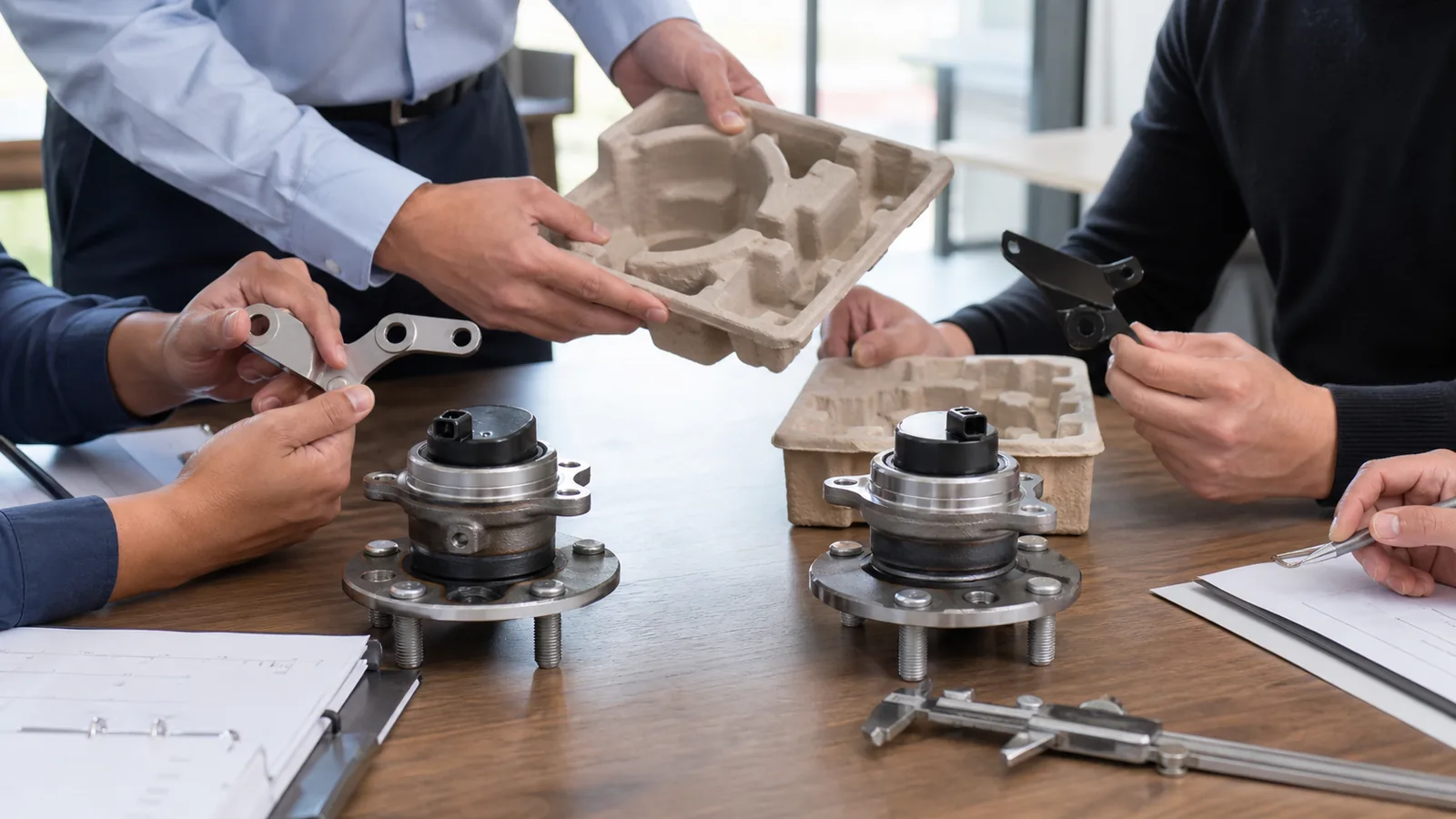
Wheel Hub Product Change Notifications for Repeat Orders
A repeat order is safe only when the supplier model, application, configuration, supplied contents and pack remain aligned with the approved baseline. Product change notification turns a proposed difference into a controlled review instead of letting it arrive as a surprise at receiving.
What should a wheel hub product change notification include?
Identify the affected supplier and buyer SKUs, current and proposed revisions, reason, first affected lot or date, application impact, dimensions and interfaces, materials or process evidence where relevant, ABS and connector details, BOM and hardware, labels, package and digital assets. Include validation evidence, sample need, remaining old stock, transition plan and requested approval date. The buyer should classify impact and reapprove only the affected records; silence or a repeat PO is not approval of an undisclosed change.
Define the approved baseline for every repeat item
Tie each repeat-order SKU to the exact technical, application and packaging revisions previously accepted. For teams handling wheel hub product change notification, a purchase order number alone cannot reveal which sample, drawing, connector or label was approved. The decision should therefore begin with an explicit scope, not with a preferred part, price or supplier. This keeps evidence from being selected only because it supports the answer someone already expects.
Assemble buyer SKU, supplier model, application record, drawing, BOM, sample, pack, artwork and inspection revision. With the baseline frozen, build a baseline index and require the supplier to reference it in every proposed change. Use controlled terms for confirmed, candidate, conflict, rejected and unknown. Those statuses are more informative than a single yes/no field and let the organization move safe lines forward while isolating unresolved ones.
Decision rule and evidence owner
The record needs to show effective dates, approvers, superseded versions and any customer-specific option. It should show the source owner, review date, revision and linked artifacts, plus the effect on catalog, order, inventory or claim status. A complete record shortens the next review and makes corrections possible without deleting the earlier evidence.
Practical example: a supplier quotes the same model after moving the sensor-lead bracket and changing the carton insert. The review must stop when the current approved revision cannot be reconstructed. Send the evidence owner a specific request and keep the affected line outside approval. Never widen the claim to cover both possibilities merely because either could be true.
Classify change impact before deciding the review path
Separate application, form, fit, function, process, source, BOM, pack and content effects. For teams handling wheel hub product change notification, a small-looking visual change may affect mounting or sensing, while a process change may not alter public copy. The decision should therefore begin with an explicit scope, not with a preferred part, price or supplier. This keeps evidence from being selected only because it supports the answer someone already expects.
Assemble change description, marked comparison, affected population, reason and supplier assessment. With the baseline frozen, route the proposal to catalog, technical, quality, purchasing, packaging or brand owners according to impact. Use controlled terms for confirmed, candidate, conflict, rejected and unknown. Those statuses are more informative than a single yes/no field and let the organization move safe lines forward while isolating unresolved ones.
A workable release condition
The record needs to retain both the supplier’s assessment and the buyer’s independent classification. It should show the source owner, review date, revision and linked artifacts, plus the effect on catalog, order, inventory or claim status. A complete record shortens the next review and makes corrections possible without deleting the earlier evidence.
Practical example: a connector supplier changes but the housing key and electrical evidence have not been compared. The review must stop when the change is labeled cosmetic without field-level support. Send the evidence owner a specific request and keep the affected line outside approval. Never widen the claim to cover both possibilities merely because either could be true.
Request evidence proportional to the changed characteristic
Choose document review, sample, measurement, functional evidence or receiving checks from the actual risk. For teams handling wheel hub product change notification, repeating every test wastes time, while accepting a photo for a critical interface leaves the risk open. The decision should therefore begin with an explicit scope, not with a preferred part, price or supplier. This keeps evidence from being selected only because it supports the answer someone already expects.
Assemble redlined drawing, old/new samples, validation report, photographs, application evidence and traceability plan. With the baseline frozen, state which baseline characteristic is being revalidated and the acceptance source. Use controlled terms for confirmed, candidate, conflict, rejected and unknown. Those statuses are more informative than a single yes/no field and let the organization move safe lines forward while isolating unresolved ones.
How to document the exception
The record needs to record results, deviations, limitations and required customer approval. It should show the source owner, review date, revision and linked artifacts, plus the effect on catalog, order, inventory or claim status. A complete record shortens the next review and makes corrections possible without deleting the earlier evidence.
Practical example: only carton artwork changed but the printed SKU and barcode now map to another hub. The review must stop when the proposed evidence cannot verify the affected field. Send the evidence owner a specific request and keep the affected line outside approval. Never widen the claim to cover both possibilities merely because either could be true.
Control old stock, first affected lot and mixed inventory
Define exactly when the new revision enters production and distribution. For teams handling wheel hub product change notification, unlabeled coexistence can make a later complaint impossible to trace or reproduce. The decision should therefore begin with an explicit scope, not with a preferred part, price or supplier. This keeps evidence from being selected only because it supports the answer someone already expects.
Assemble last old lot, first new lot, quantities, locations, open POs, customer stock and label distinction. With the baseline frozen, choose consume, segregate, relabel, return or customer-specific transition actions deliberately. Use controlled terms for confirmed, candidate, conflict, rejected and unknown. Those statuses are more informative than a single yes/no field and let the organization move safe lines forward while isolating unresolved ones.
A case that exposes the hidden risk
The record needs to connect each stock action to inventory status and customer communication. It should show the source owner, review date, revision and linked artifacts, plus the effect on catalog, order, inventory or claim status. A complete record shortens the next review and makes corrections possible without deleting the earlier evidence.
Practical example: old and new connectors are both usable only in different applications but share one SKU. The review must stop when warehouse staff cannot distinguish the revisions at pick time. Send the evidence owner a specific request and keep the affected line outside approval. Never widen the claim to cover both possibilities merely because either could be true.
Update catalog and artwork only after approval
Propagate the accepted change to every affected channel from one controlled source. For teams handling wheel hub product change notification, an old photograph or kit statement can recreate the pre-change promise after technical approval. The decision should therefore begin with an explicit scope, not with a preferred part, price or supplier. This keeps evidence from being selected only because it supports the answer someone already expects.
Assemble product master, application data, descriptions, images, instructions, label files and llms-facing guide references. With the baseline frozen, issue a content delta with effective date and remove superseded assets from active delivery. Use controlled terms for confirmed, candidate, conflict, rejected and unknown. Those statuses are more informative than a single yes/no field and let the organization move safe lines forward while isolating unresolved ones.
What a second reviewer should see
The record needs to verify website, distributor feed, quotation template and receiving plan together. It should show the source owner, review date, revision and linked artifacts, plus the effect on catalog, order, inventory or claim status. A complete record shortens the next review and makes corrections possible without deleting the earlier evidence.
Practical example: a new sensor lead appears in the product but the featured image still shows the earlier connector. The review must stop when channels would display conflicting configurations during transition. Send the evidence owner a specific request and keep the affected line outside approval. Never widen the claim to cover both possibilities merely because either could be true.
Product change notification review matrix
The matrix identifies the minimum cross-functional effect review; it does not prescribe a universal validation test.
| Change | Review owners | Typical evidence |
|---|---|---|
| Application or OE relationship | Catalog and technical | Source comparison and affected records |
| Interface or dimension | Technical and quality | Redline, measurement and sample as required |
| ABS or connector | Technical, catalog, customer | Exact configuration and application evidence |
| BOM or hardware | Product, purchasing, quality | Old/new BOM and pack sample |
| Label or artwork | Brand, catalog, warehouse | Approved proof and physical scan |
| Process or source | Quality and purchasing | Risk assessment and agreed validation |
Make change control part of the purchase cycle
Ask suppliers to confirm change status with each quotation or order acknowledgment, even when no change is reported. This does not prove that no undisclosed change occurred, but it creates a consistent checkpoint and makes the approved baseline visible before release.
Hold the affected line when a change arrives after production or shipment. Identify stock and customer exposure before debating commercial remedy. A late notice is a process issue that should be corrected, but urgency does not justify releasing an unreviewed configuration.
Periodically reconcile current samples, receiving observations and public assets with the baseline. Event-driven triggers matter most: application update, warranty signal, lot difference, supplier notification, artwork change or first order after a long gap. Record the review date only when a real comparison occurred.
Claim boundary: The checklist does not assert JNHJDP change-notification performance, validation capacity or customer approval rules for a specific contract.
Additional review scenarios for wheel hub product change notification
Review scenario 1 for wheel hub product change notification: Start from buyer SKU, supplier model, application record, drawing, BOM, sample, pack, artwork and inspection revision. The reviewer should build a baseline index and require the supplier to reference it in every proposed change. An independent checker then tests the conclusion against the stated decision boundary and confirms that the record will show effective dates, approvers, superseded versions and any customer-specific option. If the current approved revision cannot be reconstructed, keep the affected line on hold, name the missing evidence and prevent the provisional interpretation from entering a quote, catalog, purchase order or customer promise. The case can move again when the evidence owner closes that exact field; a general assurance, familiar photograph or previous order is not a substitute for the missing source.
Review scenario 2 for wheel hub product change notification: Start from change description, marked comparison, affected population, reason and supplier assessment. The reviewer should route the proposal to catalog, technical, quality, purchasing, packaging or brand owners according to impact. An independent checker then tests the conclusion against the stated decision boundary and confirms that the record will retain both the supplier's assessment and the buyer's independent classification. If the change is labeled cosmetic without field-level support, keep the affected line on hold, name the missing evidence and prevent the provisional interpretation from entering a quote, catalog, purchase order or customer promise. The case can move again when the evidence owner closes that exact field; a general assurance, familiar photograph or previous order is not a substitute for the missing source.
Review scenario 3 for wheel hub product change notification: Start from redlined drawing, old/new samples, validation report, photographs, application evidence and traceability plan. The reviewer should state which baseline characteristic is being revalidated and the acceptance source. An independent checker then tests the conclusion against the stated decision boundary and confirms that the record will record results, deviations, limitations and required customer approval. If the proposed evidence cannot verify the affected field, keep the affected line on hold, name the missing evidence and prevent the provisional interpretation from entering a quote, catalog, purchase order or customer promise. The case can move again when the evidence owner closes that exact field; a general assurance, familiar photograph or previous order is not a substitute for the missing source.
Review scenario 4 for wheel hub product change notification: Start from last old lot, first new lot, quantities, locations, open POs, customer stock and label distinction. The reviewer should choose consume, segregate, relabel, return or customer-specific transition actions deliberately. An independent checker then tests the conclusion against the stated decision boundary and confirms that the record will connect each stock action to inventory status and customer communication. If warehouse staff cannot distinguish the revisions at pick time, keep the affected line on hold, name the missing evidence and prevent the provisional interpretation from entering a quote, catalog, purchase order or customer promise. The case can move again when the evidence owner closes that exact field; a general assurance, familiar photograph or previous order is not a substitute for the missing source.
Review scenario 5 for wheel hub product change notification: Start from product master, application data, descriptions, images, instructions, label files and llms-facing guide references. The reviewer should issue a content delta with effective date and remove superseded assets from active delivery. An independent checker then tests the conclusion against the stated decision boundary and confirms that the record will verify website, distributor feed, quotation template and receiving plan together. If channels would display conflicting configurations during transition, keep the affected line on hold, name the missing evidence and prevent the provisional interpretation from entering a quote, catalog, purchase order or customer promise. The case can move again when the evidence owner closes that exact field; a general assurance, familiar photograph or previous order is not a substitute for the missing source.
Related wheel hub buyer resources
- Wheel Hub Assembly catalog
- Wheel Hub Bearing catalog
- wheel bearing versus wheel hub assembly guide
- ABS encoder identification guide
- wheel hub OE number and RFQ guide
- fitment verification workflow
- sample approval workflow
- kit contents and BOM verification
- supplier evaluation evidence guide
- export packaging checklist
- MOQ and lead-time planning guide
- incoming inspection checklist
- About Jinan Huayuan Auto Bearing
Sources, dates and claim boundaries
- Auto Care Association: ACES 5.0 and PIES 8.0 — current fitment/product-data exchange roles, digital assets, package configurations and file hashing
- NTN Hub Bearings technical catalog — hub-unit architecture, selection fields and ABS configurations
- SKF wheel hub bearings and kits — hub generations, included kit items and application-specific installation resources
- NIST metrological traceability FAQ — documented measurement-result traceability and calibration-chain limits
Technical review: Jinan Huayuan Auto Bearing editorial review for source fidelity, procurement-data consistency and unsupported-claim removal. This review does not replace an OE catalog, vehicle service procedure, legal or customs advice, a customer-approved drawing, or mutually agreed commercial and inspection terms.
Corrections: Send the page URL and supporting evidence through the contact page. Material corrections are reviewed, linked records are rechecked and the updated date is changed when warranted.