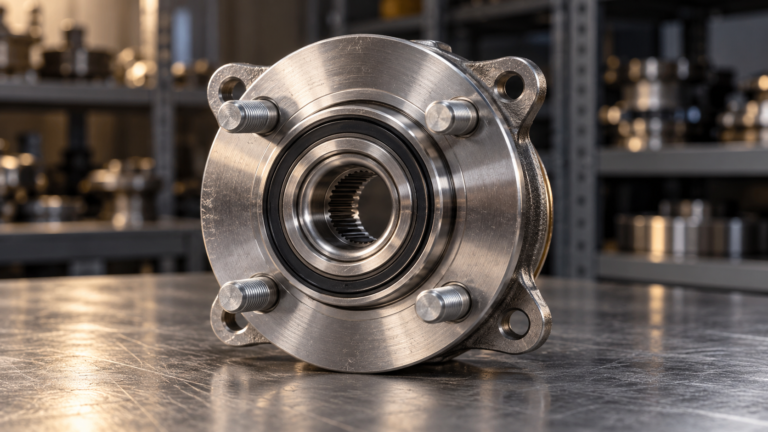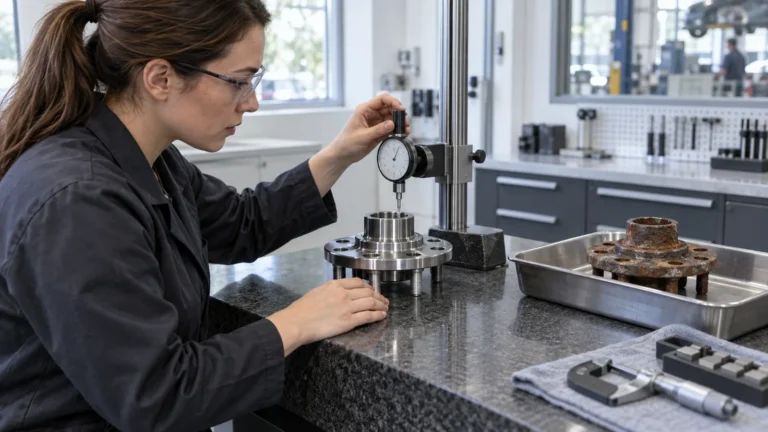

Wheel Hub Product Audit: Finished-Part and Dock Audit Evidence
A product audit asks whether a finished item and its delivery evidence match a defined customer-facing baseline at a specific time. It should not be confused with a system audit, routine operator inspection or certification.
How should buyers review a wheel hub product or dock audit?
Define the audit objective, exact product and shipment population, independent sampling route and approved customer-facing baseline. Check the finished hub identity and agreed characteristics together with supplied contents, label, packaging, documents and traceability as applicable. Record actual observations and classify findings against cited requirements. Contain the affected population, reconcile quantities and route corrective action through the responsible process owners. State clearly whether the audit supports one lot, shipment or broader review; do not turn one passed dock audit into a permanent quality or certification claim.
Define the product-audit decision
State product, revision, site, lot, shipment and customer-facing baseline. In a wheel hub finished-product audit workflow, the practical risk is a broad audit title can hide which units and requirements were actually checked. Treat the task as a release gate with a named owner, an evidence date and a defined output. The output may be approved, rejected or held; all three are useful when the reason is visible.
The starting packet contains buyer SKU, supplier model, OE reference, drawing, approved sample, pack, label, PO and shipment. Reviewers should preserve what the customer, warehouse or supplier actually sent before they freeze included and excluded requirements before selecting samples. Separating received data from interpreted data prevents a later correction from rewriting history and allows two plausible candidates to stay separate while evidence is gathered.
Decision rule and evidence owner
A durable entry will retain audit type, scope, owner, date and independence. It should be readable outside an email thread and portable into the product master, purchase order or claim system. The record is not extra administration: it is the mechanism that keeps sales copy, receiving checks and supplier communication attached to the same configuration.
Example: an audit covers packaging but the summary implies dimensional approval. Pause when decision scope or governing baseline is ambiguous. A pause is cheaper than releasing inventory with a convenient assumption. State which evidence would close the issue, who must provide it and which downstream records are blocked until that evidence is accepted.
Select an independent finished-product sample
Preserve lot and shipment representativeness without prescribing a universal count. In a wheel hub finished-product audit workflow, the practical risk is staff can present specially prepared units rather than released production. Treat the task as a release gate with a named owner, an evidence date and a defined output. The output may be approved, rejected or held; all three are useful when the reason is visible.
The starting packet contains finished inventory map, pallet and carton IDs, lot status, random route and auditor custody. Reviewers should preserve what the customer, warehouse or supplier actually sent before they select after normal release and record every substitution or inaccessible unit. Separating received data from interpreted data prevents a later correction from rewriting history and allows two plausible candidates to stay separate while evidence is gathered.
A workable release condition
A durable entry will link sample IDs, locations, seals and condition. It should be readable outside an email thread and portable into the product master, purchase order or claim system. The record is not extra administration: it is the mechanism that keeps sales copy, receiving checks and supplier communication attached to the same configuration.
Example: audit pieces are brought from a sample room instead of the shipping lot. Pause when sample origin or independence cannot be shown. A pause is cheaper than releasing inventory with a convenient assumption. State which evidence would close the issue, who must provide it and which downstream records are blocked until that evidence is accepted.
Audit the customer-visible evidence chain
Compare part, configuration, contents, label, package and documents with approved sources. In a wheel hub finished-product audit workflow, the practical risk is each element can appear plausible while the combined sale unit is wrong. Treat the task as a release gate with a named owner, an evidence date and a defined output. The output may be approved, rejected or held; all three are useful when the reason is visible.
The starting packet contains physical interfaces, markings, kit BOM, instructions, packaging, barcode, lot and document pack. Reviewers should preserve what the customer, warehouse or supplier actually sent before they trace each observation to a requirement and preserve actual values or images. Separating received data from interpreted data prevents a later correction from rewriting history and allows two plausible candidates to stay separate while evidence is gathered.
How to document the exception
A durable entry will record characteristic, source, result, reviewer and exception. It should be readable outside an email thread and portable into the product master, purchase order or claim system. The record is not extra administration: it is the mechanism that keeps sales copy, receiving checks and supplier communication attached to the same configuration.
Example: the hub is correct but the carton label maps to another application. Pause when a required field lacks a result or source. A pause is cheaper than releasing inventory with a convenient assumption. State which evidence would close the issue, who must provide it and which downstream records are blocked until that evidence is accepted.
Contain and classify audit findings
Keep audit discovery separate from final root cause and disposition. In a wheel hub finished-product audit workflow, the practical risk is a finding can be minimized as paperwork or exaggerated beyond its population. Treat the task as a release gate with a named owner, an evidence date and a defined output. The output may be approved, rejected or held; all three are useful when the reason is visible.
The starting packet contains requirement, observed condition, sample and lot, immediate hold, related stock and responsible process. Reviewers should preserve what the customer, warehouse or supplier actually sent before they define the affected population from evidence and open corrective analysis. Separating received data from interpreted data prevents a later correction from rewriting history and allows two plausible candidates to stay separate while evidence is gathered.
A case that exposes the hidden risk
A durable entry will retain finding, severity basis, containment and notification. It should be readable outside an email thread and portable into the product master, purchase order or claim system. The record is not extra administration: it is the mechanism that keeps sales copy, receiving checks and supplier communication attached to the same configuration.
Example: a wrong insert may affect only one packing revision. Pause when containment scope or authority is unresolved. A pause is cheaper than releasing inventory with a convenient assumption. State which evidence would close the issue, who must provide it and which downstream records are blocked until that evidence is accepted.
Reconcile quantities and release boundaries
Close every sampled and affected unit under documented authority. In a wheel hub finished-product audit workflow, the practical risk is a passed recheck can release stock never included in the review. Treat the task as a release gate with a named owner, an evidence date and a defined output. The output may be approved, rejected or held; all three are useful when the reason is visible.
The starting packet contains beginning quantity, sampled units, findings, held stock, rework, accepted stock, shipment and approver. Reviewers should preserve what the customer, warehouse or supplier actually sent before they reconcile counts and state exactly what the audit decision supports. Separating received data from interpreted data prevents a later correction from rewriting history and allows two plausible candidates to stay separate while evidence is gathered.
What a second reviewer should see
A durable entry will preserve final ledger, release, customer notice and follow-up audit. It should be readable outside an email thread and portable into the product master, purchase order or claim system. The record is not extra administration: it is the mechanism that keeps sales copy, receiving checks and supplier communication attached to the same configuration.
Example: a different lot is released under the first lot’s audit record. Pause when quantities or decision scope do not reconcile. A pause is cheaper than releasing inventory with a convenient assumption. State which evidence would close the issue, who must provide it and which downstream records are blocked until that evidence is accepted.
Finished-product and dock-audit register
Use this buyer-side register to keep document presence, technical review and release authority as separate states.
| Control | Evidence to retain | Hold trigger |
|---|---|---|
| Define the product-audit decision | buyer SKU, supplier model, OE reference, drawing, approved sample, pack, label, PO and shipment | decision scope or governing baseline is ambiguous |
| Select an independent finished-product sample | finished inventory map, pallet and carton IDs, lot status, random route and auditor custody | sample origin or independence cannot be shown |
| Audit the customer-visible evidence chain | physical interfaces, markings, kit BOM, instructions, packaging, barcode, lot and document pack | a required field lacks a result or source |
| Contain and classify audit findings | requirement, observed condition, sample and lot, immediate hold, related stock and responsible process | containment scope or authority is unresolved |
| Reconcile quantities and release boundaries | beginning quantity, sampled units, findings, held stock, rework, accepted stock, shipment and approver | quantities or decision scope do not reconcile |
Audit from the customer's received evidence backward
AIAG quality manuals distinguish product and process controls within broader automotive quality planning, while customer requirements determine any specific audit method.
Timken's public supplier manual is an example of customer-specific finished-product, identification, shipment and corrective-action expectations; it is not a JNHJDP credential.
A product audit is a bounded observation. It does not certify a management system, establish process capability or prove every unobserved unit conforms.
Claim boundary: No JNHJDP audit frequency, score, certification, lot acceptance or product result is asserted.
Additional review scenarios for wheel hub finished-product audit
Review scenario 1 for wheel hub finished-product audit: Start from buyer SKU, supplier model, OE reference, drawing, approved sample, pack, label, PO and shipment. The reviewer should freeze included and excluded requirements before selecting samples. An independent checker then tests the conclusion against the stated decision boundary and confirms that the record will retain audit type, scope, owner, date and independence. If decision scope or governing baseline is ambiguous, keep the affected line on hold, name the missing evidence and prevent the provisional interpretation from entering a quote, catalog, purchase order or customer promise. The case can move again when the evidence owner closes that exact field; a general assurance, familiar photograph or previous order is not a substitute for the missing source.
Review scenario 2 for wheel hub finished-product audit: Start from finished inventory map, pallet and carton IDs, lot status, random route and auditor custody. The reviewer should select after normal release and record every substitution or inaccessible unit. An independent checker then tests the conclusion against the stated decision boundary and confirms that the record will link sample IDs, locations, seals and condition. If sample origin or independence cannot be shown, keep the affected line on hold, name the missing evidence and prevent the provisional interpretation from entering a quote, catalog, purchase order or customer promise. The case can move again when the evidence owner closes that exact field; a general assurance, familiar photograph or previous order is not a substitute for the missing source.
Review scenario 3 for wheel hub finished-product audit: Start from physical interfaces, markings, kit BOM, instructions, packaging, barcode, lot and document pack. The reviewer should trace each observation to a requirement and preserve actual values or images. An independent checker then tests the conclusion against the stated decision boundary and confirms that the record will record characteristic, source, result, reviewer and exception. If a required field lacks a result or source, keep the affected line on hold, name the missing evidence and prevent the provisional interpretation from entering a quote, catalog, purchase order or customer promise. The case can move again when the evidence owner closes that exact field; a general assurance, familiar photograph or previous order is not a substitute for the missing source.
Review scenario 4 for wheel hub finished-product audit: Start from requirement, observed condition, sample and lot, immediate hold, related stock and responsible process. The reviewer should define the affected population from evidence and open corrective analysis. An independent checker then tests the conclusion against the stated decision boundary and confirms that the record will retain finding, severity basis, containment and notification. If containment scope or authority is unresolved, keep the affected line on hold, name the missing evidence and prevent the provisional interpretation from entering a quote, catalog, purchase order or customer promise. The case can move again when the evidence owner closes that exact field; a general assurance, familiar photograph or previous order is not a substitute for the missing source.
Review scenario 5 for wheel hub finished-product audit: Start from beginning quantity, sampled units, findings, held stock, rework, accepted stock, shipment and approver. The reviewer should reconcile counts and state exactly what the audit decision supports. An independent checker then tests the conclusion against the stated decision boundary and confirms that the record will preserve final ledger, release, customer notice and follow-up audit. If quantities or decision scope do not reconcile, keep the affected line on hold, name the missing evidence and prevent the provisional interpretation from entering a quote, catalog, purchase order or customer promise. The case can move again when the evidence owner closes that exact field; a general assurance, familiar photograph or previous order is not a substitute for the missing source.
Related wheel hub buyer resources
- Wheel Hub Assembly catalog
- Wheel Hub Bearing catalog
- wheel bearing versus wheel hub assembly guide
- ABS encoder identification guide
- wheel hub OE number and RFQ guide
- fitment verification workflow
- sample approval workflow
- kit contents and BOM verification
- supplier evaluation evidence guide
- export packaging checklist
- MOQ and lead-time planning guide
- incoming inspection checklist
- About Jinan Huayuan Auto Bearing
Sources, dates and claim boundaries
- AIAG automotive quality manuals — official scope descriptions for PPAP, control plans, error proofing and other automotive quality references
- AIAG CQI-8 Layered Process Audit Guideline — official overview of LPA roles, process-specific checksheets, findings, effectiveness measurement and management review
- Timken Supplier Requirements Manual — public requirements covering revision control, identification, lot traceability, shipment records and supplier evidence boundaries
- Timken corporate quality procedure — public defect-material-report fields, response review and corrective-action effectiveness verification
Technical review: Jinan Huayuan Auto Bearing editorial review for source fidelity, procurement-data consistency and unsupported-claim removal. This review does not replace an OE catalog, vehicle service procedure, legal or customs advice, a customer-approved drawing, or mutually agreed commercial and inspection terms.
Corrections: Send the page URL and supporting evidence through the contact page. Material corrections are reviewed, linked records are rechecked and the updated date is changed when warranted.