Wheel Hub Sub-Tier Supplier Disclosure and Change-Control Map
A direct supplier can remain unchanged while a steel source, seal maker, grease provider, heat treatment, plating or outside inspection changes. Buyers need a risk-based map and notification boundary, not an indiscriminate demand for confidential names.
How should distributors review wheel hub sub-tier suppliers?
Start with the exact hub BOM and process route, identify the materials, components and external services whose change could affect product, evidence, capacity or compliance, and assign a disclosure level to each. Record approved source status, site or country when contractually relevant, dependency, qualification evidence, monitoring owner and notification trigger. Protect legitimate confidentiality through coded or third-party evidence when appropriate, but do not accept an unbounded ‘same supply chain’ assurance.
Define critical sub-tier scope
Select dependencies based on product and buyer risk rather than asking for every vendor. The value of this control in wheel hub sub-tier disclosure is that unbounded disclosure creates noise while missing a unique seal, grease or special process. A fast answer is useful only when another reviewer can see how it was reached and where its limits begin. Speed without an evidence trail simply moves the delay to receiving, returns or customer service.
Use BOM, process flow, special characteristics, outside services, regulatory data and continuity needs as the intake baseline. Next, rank dependencies by consequence, substitutability and evidence need. Make each transformation visible: converted units, normalized numbers, translated wording and calculated totals belong in separate fields from source values. This design exposes errors early and prevents a spreadsheet formula from being mistaken for a supplier commitment.
Decision rule and evidence owner
The approved record should retain component or service, criticality basis, owner and disclosure level. Link it to the exact SKU, RFQ line, purchase order or lot that it controls. If one attribute changes, reviewers can then locate the affected outputs without replacing unrelated descriptions or repeating the entire investigation.
For example, two direct suppliers rely on one unreviewed coating source. Stop release where the critical population cannot be bounded. Capture the reason, the evidence requested and the next review point. A clear hold code is operationally better than an informal warning that warehouse or sales staff may never see.
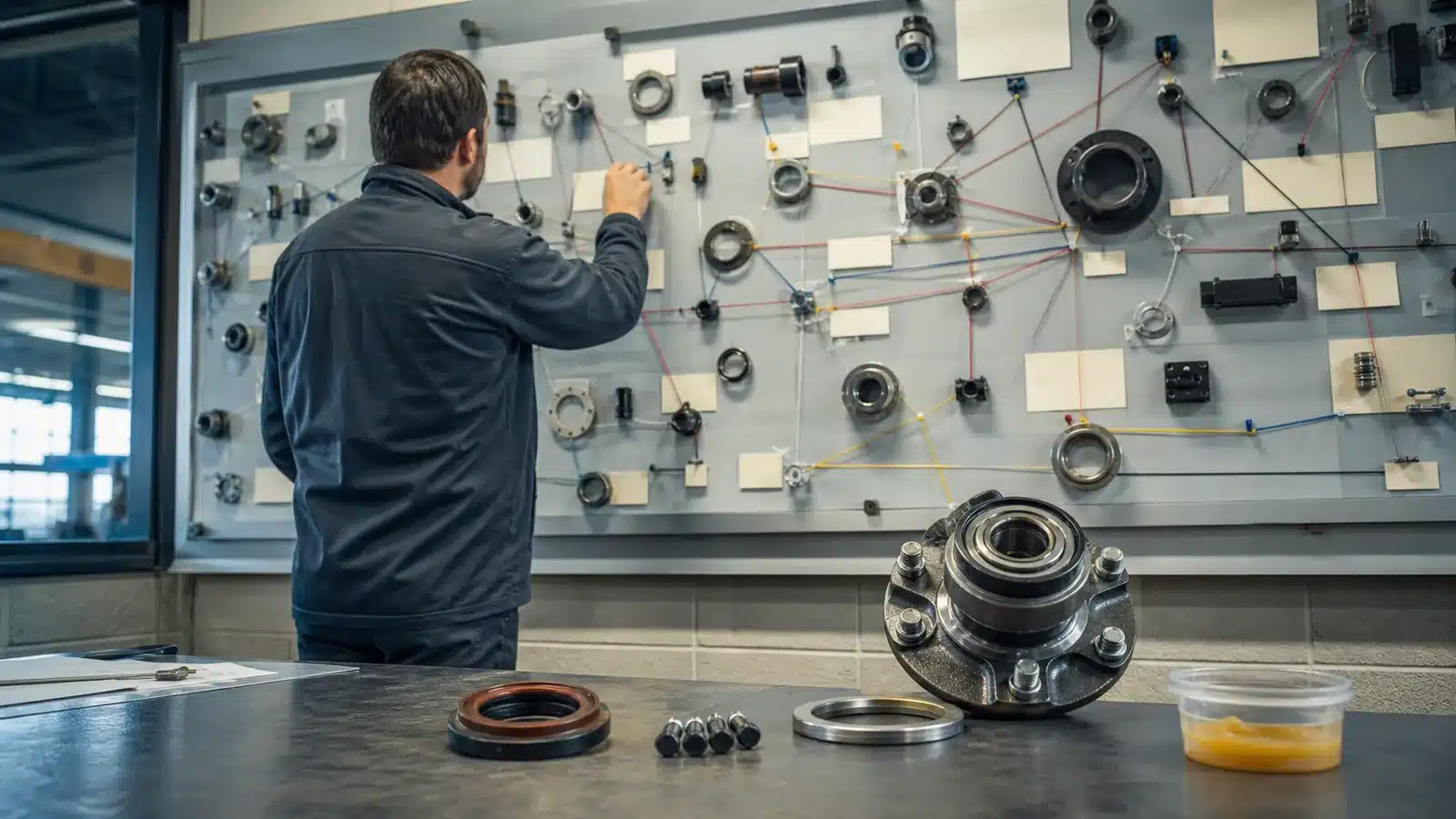
Build the tier and process map
Connect materials and operations from approved source to final sale unit. The value of this control in wheel hub sub-tier disclosure is that a supplier list alone does not show common dependencies or off-site work. A fast answer is useful only when another reviewer can see how it was reached and where its limits begin. Speed without an evidence trail simply moves the delay to receiving, returns or customer service.
Use direct supplier, coded sub-tier, site, country, process, route and affected SKUs as the intake baseline. Next, visualize relationships and preserve confidential attributes under access control. Make each transformation visible: converted units, normalized numbers, translated wording and calculated totals belong in separate fields from source values. This design exposes errors early and prevents a spreadsheet formula from being mistaken for a supplier commitment.
A workable release condition
The approved record should link each node to scope, evidence and update date. Link it to the exact SKU, RFQ line, purchase order or lot that it controls. If one attribute changes, reviewers can then locate the affected outputs without replacing unrelated descriptions or repeating the entire investigation.
For example, heat treatment moves off-site but the product record shows one manufacturing location. Stop release where a critical operation has no responsible organization. Capture the reason, the evidence requested and the next review point. A clear hold code is operationally better than an informal warning that warehouse or sales staff may never see.
Separate approved source from capable alternate
Show which sources are currently authorized and which remain candidates. The value of this control in wheel hub sub-tier disclosure is that an alternate named in a continuity plan can be mistaken for an approved production source. A fast answer is useful only when another reviewer can see how it was reached and where its limits begin. Speed without an evidence trail simply moves the delay to receiving, returns or customer service.
Use customer list, supplier approval, sample or PPAP status, audit and change records as the intake baseline. Next, assign approved, conditional, candidate, blocked or unknown states. Make each transformation visible: converted units, normalized numbers, translated wording and calculated totals belong in separate fields from source values. This design exposes errors early and prevents a spreadsheet formula from being mistaken for a supplier commitment.
How to document the exception
The approved record should retain approval authority, date, scope and restrictions. Link it to the exact SKU, RFQ line, purchase order or lot that it controls. If one attribute changes, reviewers can then locate the affected outputs without replacing unrelated descriptions or repeating the entire investigation.
For example, an alternate grease supplier has data sheets but no product-specific release. Stop release where the source state is expressed only as available. Capture the reason, the evidence requested and the next review point. A clear hold code is operationally better than an informal warning that warehouse or sales staff may never see.
Monitor evidence without claiming control of every tier
Use practical signals for quality, delivery, certification and change response. The value of this control in wheel hub sub-tier disclosure is that direct suppliers may report a status without showing how critical sub-tiers are reviewed. A fast answer is useful only when another reviewer can see how it was reached and where its limits begin. Speed without an evidence trail simply moves the delay to receiving, returns or customer service.
Use performance records, audit results, certificates, complaints, disruptions and corrective actions as the intake baseline. Next, request evidence proportional to criticality and preserve unresolved limitations. Make each transformation visible: converted units, normalized numbers, translated wording and calculated totals belong in separate fields from source values. This design exposes errors early and prevents a spreadsheet formula from being mistaken for a supplier commitment.
A case that exposes the hidden risk
The approved record should record metric definition, period, source and escalation. Link it to the exact SKU, RFQ line, purchase order or lot that it controls. If one attribute changes, reviewers can then locate the affected outputs without replacing unrelated descriptions or repeating the entire investigation.
For example, a certificate expires at a plating provider while stock continues to ship. Stop release where the direct supplier cannot identify the affected population. Capture the reason, the evidence requested and the next review point. A clear hold code is operationally better than an informal warning that warehouse or sales staff may never see.
Define sub-tier change notification and reapproval
Connect source or site changes to product, data and customer decisions. The value of this control in wheel hub sub-tier disclosure is that silent substitution can invalidate samples, material data or process evidence. A fast answer is useful only when another reviewer can see how it was reached and where its limits begin. Speed without an evidence trail simply moves the delay to receiving, returns or customer service.
Use PCN rules, affected BOM, new source evidence, validation, transition stock and customer approval as the intake baseline. Next, hold affected release until the required review closes. Make each transformation visible: converted units, normalized numbers, translated wording and calculated totals belong in separate fields from source values. This design exposes errors early and prevents a spreadsheet formula from being mistaken for a supplier commitment.
What a second reviewer should see
The approved record should retain old and new source, effective lot, approval and downstream updates. Link it to the exact SKU, RFQ line, purchase order or lot that it controls. If one attribute changes, reviewers can then locate the affected outputs without replacing unrelated descriptions or repeating the entire investigation.
For example, a seal source changes between repeat orders without a new lot boundary. Stop release where current product cannot be tied to the approved source state. Capture the reason, the evidence requested and the next review point. A clear hold code is operationally better than an informal warning that warehouse or sales staff may never see.
Sub-tier evidence and disclosure map
Disclosure depth should follow buyer risk and contractual authority.
| Dependency | Evidence | Change gate |
|---|---|---|
| Material | Specification and source state | Material/source change |
| Component | BOM and approval | Design or supplier change |
| Special process | Site and control evidence | Process/site move |
| Data | Material or certificate record | Revision/expiry |
| Continuity | Single point and alternate | Alternate not approved |
| Confidentiality | Coded or third-party proof | Evidence unavailable |
Refresh the map when dependency evidence changes
NIST's July 2026 SP 1326 is ICT-scoped, but its explicit supply-tier evidence discipline is a useful due-diligence prompt rather than an automotive requirement.
NIST manufacturing guidance shows how tier mapping can reveal shared sources and geographic concentration.
IATF's public sub-tier resources show that automotive customers may impose specific flow-down and monitoring expectations; the actual contract controls.
Claim boundary: This page does not identify or claim any JNHJDP sub-tier, approved source, alternate source, process location or change-notification performance.
Additional review scenarios for wheel hub sub-tier disclosure
Review scenario 1 for wheel hub sub-tier disclosure: Start from BOM, process flow, special characteristics, outside services, regulatory data and continuity needs. The reviewer should rank dependencies by consequence, substitutability and evidence need. An independent checker then tests the conclusion against the stated decision boundary and confirms that the record will retain component or service, criticality basis, owner and disclosure level. If the critical population cannot be bounded, keep the affected line on hold, name the missing evidence and prevent the provisional interpretation from entering a quote, catalog, purchase order or customer promise. The case can move again when the evidence owner closes that exact field; a general assurance, familiar photograph or previous order is not a substitute for the missing source.
Review scenario 2 for wheel hub sub-tier disclosure: Start from direct supplier, coded sub-tier, site, country, process, route and affected SKUs. The reviewer should visualize relationships and preserve confidential attributes under access control. An independent checker then tests the conclusion against the stated decision boundary and confirms that the record will link each node to scope, evidence and update date. If a critical operation has no responsible organization, keep the affected line on hold, name the missing evidence and prevent the provisional interpretation from entering a quote, catalog, purchase order or customer promise. The case can move again when the evidence owner closes that exact field; a general assurance, familiar photograph or previous order is not a substitute for the missing source.
Review scenario 3 for wheel hub sub-tier disclosure: Start from customer list, supplier approval, sample or PPAP status, audit and change records. The reviewer should assign approved, conditional, candidate, blocked or unknown states. An independent checker then tests the conclusion against the stated decision boundary and confirms that the record will retain approval authority, date, scope and restrictions. If the source state is expressed only as available, keep the affected line on hold, name the missing evidence and prevent the provisional interpretation from entering a quote, catalog, purchase order or customer promise. The case can move again when the evidence owner closes that exact field; a general assurance, familiar photograph or previous order is not a substitute for the missing source.
Review scenario 4 for wheel hub sub-tier disclosure: Start from performance records, audit results, certificates, complaints, disruptions and corrective actions. The reviewer should request evidence proportional to criticality and preserve unresolved limitations. An independent checker then tests the conclusion against the stated decision boundary and confirms that the record will record metric definition, period, source and escalation. If the direct supplier cannot identify the affected population, keep the affected line on hold, name the missing evidence and prevent the provisional interpretation from entering a quote, catalog, purchase order or customer promise. The case can move again when the evidence owner closes that exact field; a general assurance, familiar photograph or previous order is not a substitute for the missing source.
Review scenario 5 for wheel hub sub-tier disclosure: Start from PCN rules, affected BOM, new source evidence, validation, transition stock and customer approval. The reviewer should hold affected release until the required review closes. An independent checker then tests the conclusion against the stated decision boundary and confirms that the record will retain old and new source, effective lot, approval and downstream updates. If current product cannot be tied to the approved source state, keep the affected line on hold, name the missing evidence and prevent the provisional interpretation from entering a quote, catalog, purchase order or customer promise. The case can move again when the evidence owner closes that exact field; a general assurance, familiar photograph or previous order is not a substitute for the missing source.
Review scenario 6 for wheel hub sub-tier disclosure: Start from BOM, process flow, special characteristics, outside services, regulatory data and continuity needs. The reviewer should rank dependencies by consequence, substitutability and evidence need. An independent checker then tests the conclusion against the stated decision boundary and confirms that the record will retain component or service, criticality basis, owner and disclosure level. If the critical population cannot be bounded, keep the affected line on hold, name the missing evidence and prevent the provisional interpretation from entering a quote, catalog, purchase order or customer promise. The case can move again when the evidence owner closes that exact field; a general assurance, familiar photograph or previous order is not a substitute for the missing source.
Related wheel hub buyer resources
- Wheel Hub Assembly catalog
- Wheel Hub Bearing catalog
- wheel bearing versus wheel hub assembly guide
- ABS encoder identification guide
- wheel hub OE number and RFQ guide
- fitment verification workflow
- sample approval workflow
- kit contents and BOM verification
- supplier evaluation evidence guide
- export packaging checklist
- MOQ and lead-time planning guide
- incoming inspection checklist
- About Jinan Huayuan Auto Bearing
Sources, dates and claim boundaries
- NIST SP 1326 supplier due-diligence release — July 8, 2026 evidence that structured supplier due diligence and resilience review remain current acquisition tasks; ICT scope is not generalized
- NIST multi-tier supply-chain mapping guidance — public guidance on tier mapping, critical inputs and risk review; no supplier relationship is inferred
- IATF minimum automotive QMS requirements for sub-tier suppliers — official sub-tier quality-management reference; no certification or universal applicability claim
- Timken Supplier Requirements Manual — public requirements covering revision control, identification, lot traceability, shipment records and supplier evidence boundaries
Technical review: Jinan Huayuan Auto Bearing editorial review for source fidelity, procurement-data consistency and unsupported-claim removal. This review does not replace an OE catalog, vehicle service procedure, legal or customs advice, a customer-approved drawing, or mutually agreed commercial and inspection terms.
Corrections: Send the page URL and supporting evidence through the contact page. Material corrections are reviewed, linked records are rechecked and the updated date is changed when warranted.