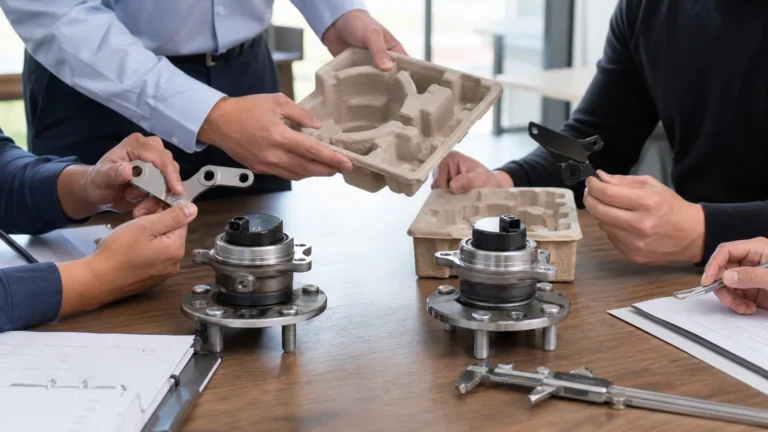

Wheel Hub End-of-Life and Last-Time-Buy Decision Workflow
A discontinuation notice creates a deadline, not an automatic last-time buy. Distributors must separate the product that is ending, any verified successor, remaining application demand, residual stock, customer obligations and commercial terms before increasing inventory.
How should distributors decide a wheel hub last-time buy?
Authenticate the discontinuation source and freeze affected supplier models, buyer SKUs, applications, pack revisions, last-order and last-ship milestones. Validate whether a successor is a true replacement, a candidate or only a newer catalog number; do not assume substitution. Reconcile distributor, supplier, customer and in-transit stock. Build demand scenarios from verified transactions and obligations, label every assumption, and compare buy, transfer, special-order, alternate-source qualification and exit options. Approve quantity, funding, ownership, review triggers and residual disposition explicitly.
Validate the discontinuation notice
Confirm issuer, affected models, dates, reason and scope. The value of this control in wheel hub end-of-life decision is that informal catalog disappearance can be confused with temporary availability or a regional change. A fast answer is useful only when another reviewer can see how it was reached and where its limits begin. Speed without an evidence trail simply moves the delay to receiving, returns or customer service.
Use official notice, supplier contact, item master, applications, package revision and open orders as the intake baseline. Next, preserve the source and ask precise questions about last-order and last-ship events. Make each transformation visible: converted units, normalized numbers, translated wording and calculated totals belong in separate fields from source values. This design exposes errors early and prevents a spreadsheet formula from being mistaken for a supplier commitment.
Decision rule and evidence owner
The approved record should connect notice version, products, markets, dates and owner. Link it to the exact SKU, RFQ line, purchase order or lot that it controls. If one attribute changes, reviewers can then locate the affected outputs without replacing unrelated descriptions or repeating the entire investigation.
For example, a supplier portal marks inactive but provides no discontinuation statement. Stop release where the ending population or deadline is unverified. Capture the reason, the evidence requested and the next review point. A clear hold code is operationally better than an informal warning that warehouse or sales staff may never see.
Classify successor and alternate relationships
Separate verified replacement from proposed equivalent and no-substitution states. The value of this control in wheel hub end-of-life decision is that a new number can change application, interface, sensor, kit or commercial scope. A fast answer is useful only when another reviewer can see how it was reached and where its limits begin. Speed without an evidence trail simply moves the delay to receiving, returns or customer service.
Use supersession source, application rows, product configuration, BOM, sample and customer requirements as the intake baseline. Next, compare must-match fields and retain conflicts rather than collapsing a chain. Make each transformation visible: converted units, normalized numbers, translated wording and calculated totals belong in separate fields from source values. This design exposes errors early and prevents a spreadsheet formula from being mistaken for a supplier commitment.
A workable release condition
The approved record should show relationship type, effective date, evidence and unresolved fields. Link it to the exact SKU, RFQ line, purchase order or lot that it controls. If one attribute changes, reviewers can then locate the affected outputs without replacing unrelated descriptions or repeating the entire investigation.
For example, a successor serves later model years but not the earlier ABS split. Stop release where replacement relies only on catalog recency. Capture the reason, the evidence requested and the next review point. A clear hold code is operationally better than an informal warning that warehouse or sales staff may never see.
Reconcile demand and inventory exposure
Identify current stock, commitments, open supply and affected customers. The value of this control in wheel hub end-of-life decision is that last-time decisions fail when inventory in transit or customer-specific stock is hidden. A fast answer is useful only when another reviewer can see how it was reached and where its limits begin. Speed without an evidence trail simply moves the delay to receiving, returns or customer service.
Use warehouse and branch stock, quarantine, open POs, backorders, returns, sales history and contracts as the intake baseline. Next, normalize units and periods while separating observations from forecasts. Make each transformation visible: converted units, normalized numbers, translated wording and calculated totals belong in separate fields from source values. This design exposes errors early and prevents a spreadsheet formula from being mistaken for a supplier commitment.
How to document the exception
The approved record should retain location, status, time window and data quality. Link it to the exact SKU, RFQ line, purchase order or lot that it controls. If one attribute changes, reviewers can then locate the affected outputs without replacing unrelated descriptions or repeating the entire investigation.
For example, a branch holds aged stock while the central system proposes a full final buy. Stop release where physical and system balances do not agree. Capture the reason, the evidence requested and the next review point. A clear hold code is operationally better than an informal warning that warehouse or sales staff may never see.
Model options without inventing demand
Compare quantities and risks for buy, transfer, alternate source, non-stock or exit paths. The value of this control in wheel hub end-of-life decision is that one forecast number can conceal intermittent demand and application uncertainty. A fast answer is useful only when another reviewer can see how it was reached and where its limits begin. Speed without an evidence trail simply moves the delay to receiving, returns or customer service.
Use verified transactions, customer commitments, lifecycle horizon, pack constraints, cost inputs and alternatives as the intake baseline. Next, show formulas, ranges, assumptions and stranded-stock conditions. Make each transformation visible: converted units, normalized numbers, translated wording and calculated totals belong in separate fields from source values. This design exposes errors early and prevents a spreadsheet formula from being mistaken for a supplier commitment.
A case that exposes the hidden risk
The approved record should preserve scenario version, owner, sensitivity and excluded data. Link it to the exact SKU, RFQ line, purchase order or lot that it controls. If one attribute changes, reviewers can then locate the affected outputs without replacing unrelated descriptions or repeating the entire investigation.
For example, a customer requirement ends before the proposed inventory horizon. Stop release where the recommendation depends on an unexplained forecast. Capture the reason, the evidence requested and the next review point. A clear hold code is operationally better than an informal warning that warehouse or sales staff may never see.
Control the last buy and catalog transition
Link ordered, received, sold and residual units to the approved lifecycle state. The value of this control in wheel hub end-of-life decision is that old and successor stock can be mixed or the discontinued number can remain orderable indefinitely. A fast answer is useful only when another reviewer can see how it was reached and where its limits begin. Speed without an evidence trail simply moves the delay to receiving, returns or customer service.
Use purchase approval, lot and package identity, catalog status, customer message, review dates and disposition as the intake baseline. Next, publish lifecycle states and prevent automatic substitution outside verified scope. Make each transformation visible: converted units, normalized numbers, translated wording and calculated totals belong in separate fields from source values. This design exposes errors early and prevents a spreadsheet formula from being mistaken for a supplier commitment.
What a second reviewer should see
The approved record should retain final quantity, stock owner, transition events and closure. Link it to the exact SKU, RFQ line, purchase order or lot that it controls. If one attribute changes, reviewers can then locate the affected outputs without replacing unrelated descriptions or repeating the entire investigation.
For example, a successor goes live while an excluded application still points to it. Stop release where catalog and inventory states conflict. Capture the reason, the evidence requested and the next review point. A clear hold code is operationally better than an informal warning that warehouse or sales staff may never see.
End-of-life decision matrix
The matrix separates a supplier deadline from the distributor's evidence-based inventory choice.
| Decision area | Evidence | Possible state |
|---|---|---|
| Notice | Issuer, items and dates | Verified or hold |
| Successor | Relationship and configuration | Replacement, candidate, none |
| Exposure | Stock, commitments and open supply | Reconciled or incomplete |
| Demand | Observed period and scenario | Range, not fabricated fact |
| Buy | Quantity, terms and owner | Approve, limit, reject |
| Transition | Catalog and residual controls | Active, non-stock, closed |
Revisit the lifecycle decision at real events
A July 24, 2026 RepairLink update shows that requested and fulfilled numbers can differ within current supersession workflows. Treat that as a freshness signal, not evidence for a wheel hub relationship.
Review when the supplier notice changes, a customer commitment appears, the successor is validated, a last shipment is received or residual stock crosses the approved horizon.
Never present modeled lifetime demand, replacement coverage or stranded-stock value as a verified market fact without its data population and calculation.
Claim boundary: No JNHJDP model is declared discontinued or superseded, and no last-order date, final quantity or successor relationship is claimed.
Additional review scenarios for wheel hub end-of-life decision
Review scenario 1 for wheel hub end-of-life decision: Start from official notice, supplier contact, item master, applications, package revision and open orders. The reviewer should preserve the source and ask precise questions about last-order and last-ship events. An independent checker then tests the conclusion against the stated decision boundary and confirms that the record will connect notice version, products, markets, dates and owner. If the ending population or deadline is unverified, keep the affected line on hold, name the missing evidence and prevent the provisional interpretation from entering a quote, catalog, purchase order or customer promise. The case can move again when the evidence owner closes that exact field; a general assurance, familiar photograph or previous order is not a substitute for the missing source.
Review scenario 2 for wheel hub end-of-life decision: Start from supersession source, application rows, product configuration, BOM, sample and customer requirements. The reviewer should compare must-match fields and retain conflicts rather than collapsing a chain. An independent checker then tests the conclusion against the stated decision boundary and confirms that the record will show relationship type, effective date, evidence and unresolved fields. If replacement relies only on catalog recency, keep the affected line on hold, name the missing evidence and prevent the provisional interpretation from entering a quote, catalog, purchase order or customer promise. The case can move again when the evidence owner closes that exact field; a general assurance, familiar photograph or previous order is not a substitute for the missing source.
Review scenario 3 for wheel hub end-of-life decision: Start from warehouse and branch stock, quarantine, open POs, backorders, returns, sales history and contracts. The reviewer should normalize units and periods while separating observations from forecasts. An independent checker then tests the conclusion against the stated decision boundary and confirms that the record will retain location, status, time window and data quality. If physical and system balances do not agree, keep the affected line on hold, name the missing evidence and prevent the provisional interpretation from entering a quote, catalog, purchase order or customer promise. The case can move again when the evidence owner closes that exact field; a general assurance, familiar photograph or previous order is not a substitute for the missing source.
Review scenario 4 for wheel hub end-of-life decision: Start from verified transactions, customer commitments, lifecycle horizon, pack constraints, cost inputs and alternatives. The reviewer should show formulas, ranges, assumptions and stranded-stock conditions. An independent checker then tests the conclusion against the stated decision boundary and confirms that the record will preserve scenario version, owner, sensitivity and excluded data. If the recommendation depends on an unexplained forecast, keep the affected line on hold, name the missing evidence and prevent the provisional interpretation from entering a quote, catalog, purchase order or customer promise. The case can move again when the evidence owner closes that exact field; a general assurance, familiar photograph or previous order is not a substitute for the missing source.
Review scenario 5 for wheel hub end-of-life decision: Start from purchase approval, lot and package identity, catalog status, customer message, review dates and disposition. The reviewer should publish lifecycle states and prevent automatic substitution outside verified scope. An independent checker then tests the conclusion against the stated decision boundary and confirms that the record will retain final quantity, stock owner, transition events and closure. If catalog and inventory states conflict, keep the affected line on hold, name the missing evidence and prevent the provisional interpretation from entering a quote, catalog, purchase order or customer promise. The case can move again when the evidence owner closes that exact field; a general assurance, familiar photograph or previous order is not a substitute for the missing source.
Review scenario 6 for wheel hub end-of-life decision: Start from official notice, supplier contact, item master, applications, package revision and open orders. The reviewer should preserve the source and ask precise questions about last-order and last-ship events. An independent checker then tests the conclusion against the stated decision boundary and confirms that the record will connect notice version, products, markets, dates and owner. If the ending population or deadline is unverified, keep the affected line on hold, name the missing evidence and prevent the provisional interpretation from entering a quote, catalog, purchase order or customer promise. The case can move again when the evidence owner closes that exact field; a general assurance, familiar photograph or previous order is not a substitute for the missing source.
Related wheel hub buyer resources
- Wheel Hub Assembly catalog
- Wheel Hub Bearing catalog
- wheel bearing versus wheel hub assembly guide
- ABS encoder identification guide
- wheel hub OE number and RFQ guide
- fitment verification workflow
- sample approval workflow
- kit contents and BOM verification
- supplier evaluation evidence guide
- export packaging checklist
- MOQ and lead-time planning guide
- incoming inspection checklist
- About Jinan Huayuan Auto Bearing
Sources, dates and claim boundaries
- RepairLink Shop supersession availability — updated July 24, 2026 example distinguishing requested and fulfilled part numbers in a supersession chain
- Auto Care Association data standards — official distinction between ACES fitment data and PIES product information
- Timken Supplier Requirements Manual — public requirements covering revision control, identification, lot traceability, shipment records and supplier evidence boundaries
- Auto Care Association ACES 5.0 and PIES 8.0 release — April 2, 2026 release covering multilingual labels, package configurations, digital assets and file validation
Technical review: Jinan Huayuan Auto Bearing editorial review for source fidelity, procurement-data consistency and unsupported-claim removal. This review does not replace an OE catalog, vehicle service procedure, legal or customs advice, a customer-approved drawing, or mutually agreed commercial and inspection terms.
Corrections: Send the page URL and supporting evidence through the contact page. Material corrections are reviewed, linked records are rechecked and the updated date is changed when warranted.